Florence’s lampredotto is a hot offal sandwich, and whether you enjoy it depends as much on texture as on flavour. Before you join the queue, it helps to know what the filling is and what the seller means by dipped bread and two sauces.
Eating at a street-food counter
- What it is
- Florentine offal, usually served in a roll
- When to eat it
- Lunchtime or a snack
- Established reference
- Da Nerbone, Florence
Allow roughly €5–€8 for a sandwich at a street-food counter, with the size and location affecting the price. A water or soft drink usually adds around €1–€3. Eating standing up keeps this a straightforward, inexpensive meal.
Order at the counter and follow the seller’s direction for payment: some counters take your money directly, while others use a separate till. Keep the receipt if you are sent back to collect your food.
A seat does not automatically mean restaurant service. Where you do receive table service, a cover charge, called coperto, commonly adds around €2–€4 per person, and drinks may cost more too. Treat that as a different bill from a takeaway sandwich, rather than assuming a nearby table is free to use.
What is lampredotto?
Lampredotto is made from the cow’s fourth stomach, the abomasum. That is the stomach compartment which digests food, rather than one of the earlier compartments involved in processing it. In English, tripe is a broader term for stomach offal, so you can describe the food as a Florentine tripe sandwich. The Italian name identifies a particular cut, not just any tripe.
The cut is slowly simmered in a vegetable broth. Onion, celery, carrot and tomato give the broth its base, with parsley and sometimes other aromatics such as bay leaf and peppercorns. The long cooking softens the offal, and the liquid also becomes part of the way the sandwich is served.
On a Florentine menu, lampredotto and trippa are different dishes. Trippa refers to other stomach parts, especially the rumen, and is commonly offered as trippa alla fiorentina, Florentine-style tripe. If you want the street-food filling discussed here, ask for lampredotto rather than using trippa as an interchangeable name.
Its association with Florence comes from the city’s working-class food tradition. Carts and stalls sold it as an inexpensive, filling meal, making use of a cut quite different from a steak or roasting joint. That history still explains its customary setting: a quick meal from a specialist counter, not necessarily a dish requiring a restaurant table.
What does lampredotto taste like?
Cooked lampredotto tastes rich and savoury, with a mildly gamey note and the herbs and aromatics of its broth. It is not simply a substitute for sliced beef: the filling is soft and tender, but also slightly chewy and gelatinous. Those qualities sit together in the same mouthful.

Lucarelli · CC BY-SA 3.0 · Edited
If you enjoy slow-cooked meat with soft, yielding pieces, that texture may appeal. If you prefer a firm bite or dislike the slippery feel of offal, the sauce will not change the underlying texture. Make that the deciding point rather than choosing it solely because it is a Florentine speciality.
For a bread-based meal without offal, other Florence street foods include schiacciata, a Tuscan flatbread often used for filled sandwiches. A bakery or sandwich counter gives you that alternative without turning a quick lunch into a restaurant meal.
How to order a lampredotto sandwich
- Choose a panino, the sandwich, or a bowl where offered.
- Ask for bagnato if you want the bread dipped in the cooking broth, or leave it undipped if you prefer a firmer roll.
- Choose salsa verde, the green sauce, and optional spicy oil or chilli sauce.
The traditional sandwich uses a semelle, a round roll with a soft interior and a crust, filled with finely chopped lampredotto. At the counter, look for the filling being chopped for the roll and the bread dipped into the cooking broth, sometimes just its top half. These are characteristic serving practices you can see before your sandwich is handed over.
The dip makes the bread softer and brings the broth into each bite. Green sauce usually contains parsley, garlic, capers, anchovies, vinegar and olive oil, often with bread, but recipes vary. It adds a sharp, herbal contrast. The spicy option may be olio piccante, meaning spicy oil, or chilli sauce, so choose it according to how much heat you enjoy.
For dipped bread with both sauces, say “Un lampredotto bagnato con tutte e due le salse, per favore.” That means “A lampredotto sandwich with dipped bread and both sauces, please.” Pronounce the name lam-pre-DROT-toh, stressing “drot” and giving the double “t” a distinct sound.
If you want it without bread, a bowl is another customary serving, often with cooking broth and sometimes green sauce. Ask for that option where the counter offers it.
Tripe stalls and market counters
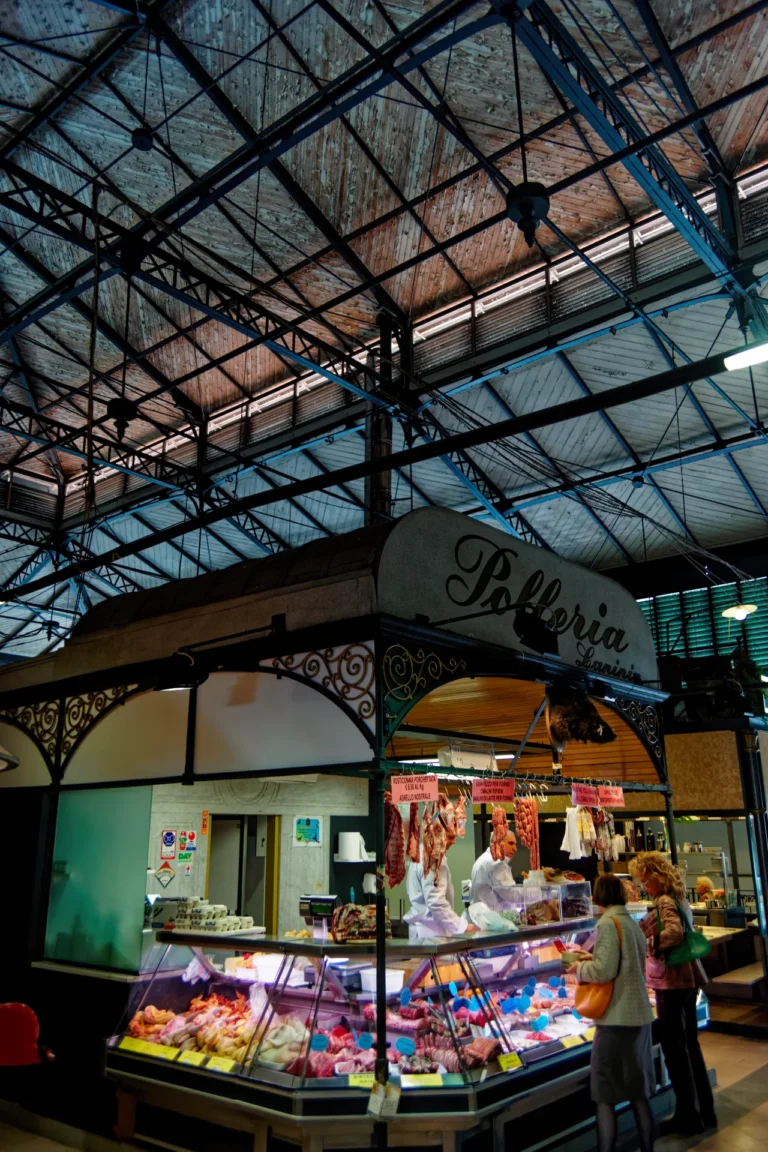
Florence’s specialist trippai, meaning tripe sellers, are the customary people to seek out for lampredotto. They work from street carts, small kiosks and market counters. The Italian name describes their trade rather than a restaurant style. Lampredotto is available year-round, so you need not plan around a particular season.
Da Nerbone is one of the city’s historic, best-known names associated with the dish, making it an established reference for a first encounter. Its inexpensive counter setting suits a casual meal rather than a table-service occasion. Within the Central Market, distinguish the traditional market counters from the upstairs food hall when looking for it.
- Name
- Da Nerbone
- Location
- Ground floor of the Central Market, San Lorenzo, Florence Maps
- Hours
- Mon–Sat 08:30–15:00
- Sun Closed
- Essential fact
- A food counter on the ground floor of Florence’s Central Market.
- Price range
- €