Choose Lisbon for neighbourhood-led days and usually lower everyday spending. Choose Barcelona for Gaudí architecture and a beach within the city. Lisbon’s tiled buildings and hilltop viewpoints reward wandering, while Barcelona gives you major architectural sights alongside neighbourhood squares. Neither is a universal first-trip winner.
The deciding question is how you want to spend the hours between the big sights. Hills, sleeping near nightlife and the cost of a central room can matter as much as a landmark. Leave space for a meal or an unhurried neighbourhood afternoon rather than making every day a sequence of admissions.
Lisbon and Barcelona at a glance
| Criterion | Lisbon | Barcelona |
|---|---|---|
| Sightseeing character | Historic lanes, tiles, viewpoints; Jerónimos Monastery | Gaudí architecture, Sagrada Família, neighbourhood squares |
| Beach access | Coastal excursion beyond the centre | City beaches alongside urban sightseeing |
| Walking effort | Hills, cobbles and climbs between districts | Flatter central grid; hills beyond it |
| Central mid-range double, two adults, spring or autumn outside holidays | About €120–€180 per room per night, before tourist tax | About €160–€240 per room per night, before tourist tax |
| Casual sit-down main course and drink | About €15–€25 per person | About €20–€30 per person |
For a central mid-range stay outside holidays, Lisbon’s estimated room range is roughly €40 lower at the lower end and €60 lower at the upper end, and its meal range is roughly €5 lower at either end. Peak summer dates, holidays and major events push rooms upwards, while a less central address or simpler property can reduce the bill.
Barcelona suits a break that mixes architecture with beach time without a separate coastal outing. Lisbon’s coast is better treated as a deliberate excursion. In either city, a terrace table and several courses will cost more than the simple meal compared here, and choosing a neighbourhood restaurant rather than a landmark-facing address also changes what you spend.
Neighbourhoods, food and evenings
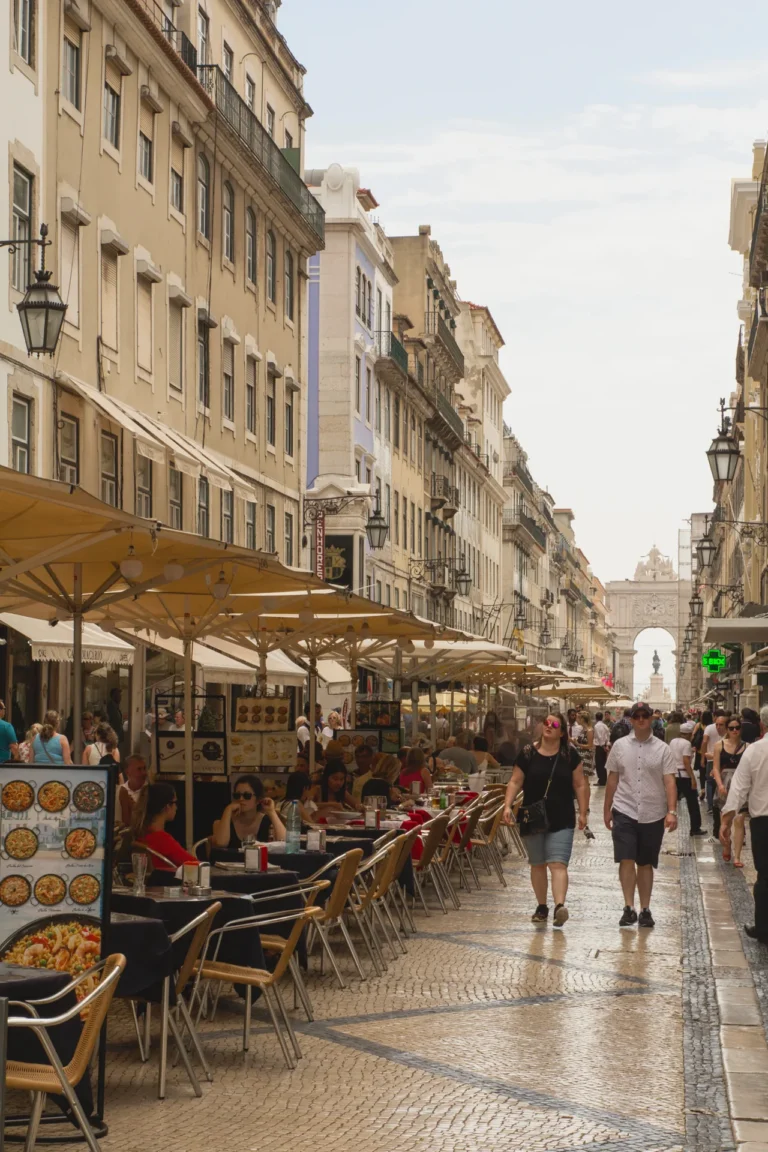
Alfama makes Lisbon’s historic lanes part of the visit rather than simply a way between attractions. Tiled façades and a fado evening, with Portugal’s sung musical tradition, offer a different focus from a day built around museums. Nearby Mouraria combines Portuguese and international cooking, giving a food-led wander more variety than sticking to one restaurant district.

Renata Martins · CC BY-SA 2.0 · Edited
Príncipe Real offers wine bars and an evening that can centre on a seated drink, while Bairro Alto is the choice for later bar-hopping. Treat Bairro Alto as a place to go out, not an automatic place to sleep. Bars, crowds and street activity continue late, so light sleepers are better served by a quieter street away from the busiest nightlife.
For something simple, a bifana is a Portuguese pork sandwich, usually made with thin slices of seasoned pork. Peixinhos da horta, literally ‘little fish from the garden’, are battered, fried green beans rather than fish. Lisbon food markets offer another way to organise meals, from communal counter eating to seated market restaurants, depending on whether you want a quick choice or a longer pause.
Gràcia gives Barcelona a square-led neighbourhood day: Plaça de la Vila de Gràcia, with its clock tower, is a natural place to pause between streets and dining choices. El Born pairs its old lanes with restaurants and wine bars. Noise there varies by street and property, with particular late-night pressure near Passeig del Born and bar streets at weekends, so lodging away from those clusters makes more sense if sleep is a priority.
Pa amb tomàquet, bread rubbed with tomato and usually finished with olive oil and salt, is a staple of Catalan eating. Fideuà is a noodle dish, commonly cooked with seafood and stock, rather than rice. Choose food-led evenings by the cooking you want, not by assuming either city has just one dining style. Both allow a modest meal or a more elaborate night out.
Lisbon
Pros
- Historic neighbourhood wandering can be the main activity, with fado adding a distinct evening focus.
- Portuguese staples and Mouraria’s international cooking support varied, informal meals.
- Príncipe Real and Bairro Alto offer different styles of evening.
Cons
- Sleeping amid Bairro Alto’s nightlife can mean persistent street and bar noise.
Barcelona
Pros
- Gràcia’s squares give neighbourhood meals and breaks a clear focus.
- Catalan dishes and El Born’s wine bars provide evening variety beyond headline sightseeing.
Cons
- A room near El Born’s nightlife can be noisy, especially at weekends.
- Visitor-heavy old-centre streets can make neighbourhood wandering crowded.
Accommodation costs and tourist taxes
Lisbon is generally the cheaper choice for everyday spending, but your dates and room choice can reverse the accommodation difference. A central hotel during a busy holiday may cost more than a simpler Barcelona property away from the main sights. Compare the same room standard and location before treating the city name as a budget guarantee.
A double-room price covers the room for a couple, but tourist taxes are charged to each eligible guest. In Lisbon, the hotel levy is €4 per guest aged 13 or over per night, capped at seven nights per stay, or €28 per guest. Exemptions may apply.
For a Barcelona three-star hotel, the charge from 1 April 2026 to 31 March 2027 is €7 per adult per night: €2 for the Catalan regional component plus a €5 municipal surcharge.
Allow for these charges beyond the room price when comparing accommodation. Meal format matters too: a casual main course and drink is not the same budget as sharing several plates, ordering wine and adding dessert. Keep spending per room separate from spending per person so a cheaper-looking nightly rate does not obscure the total for two travellers.
Airports, walking and where to stay
Lisbon Airport, also called Humberto Delgado Airport, is the usual international gateway. Rossio is a useful central arrival point, with its patterned paving and position at the foot of the hills. The bus 722 journey from Av. Berlim (Aeroporto) to Restauradores, followed by the walk to Rossio, takes about 33 minutes.
Barcelona El Prat is the main international gateway, while Girona–Costa Brava and Reus also handle some low-cost and seasonal flights but are farther from Barcelona. Plaça de Catalunya sits between the old centre and Eixample. From El Prat’s Aeroport – Terminal C stop, the A2 to Pl. Catalunya – Fontanella followed by the walk into the square takes about 35 minutes.
Both journey times cover the bus and final walk, not airport formalities, waiting before departure or the onward journey to your accommodation. Choose the airport as well as the fare when comparing flights: a farther-out arrival can change how much of a short break you have left to enjoy.
Lisbon and Barcelona are almost the same size by municipal land area: 100.05 km² and 101.4 km² respectively. For sightseeing effort, terrain matters more than that small difference. Lisbon’s climbs can make a nearby destination feel demanding, while Barcelona’s central grid is easier to walk across, though the whole city is not flat.
Baixa around Rossio has relatively flat, broad, straight streets beneath Lisbon’s surrounding hills. Rossio has the metro’s Green Line and a railway station on the Sintra Line, and nearby Baixa-Chiado connects the Blue and Green Lines. This makes Baixa a useful sleeping base if you want to use transport rather than repeatedly climb back to your room.
Central Eixample has a broad, generally flat grid with gentle gradients. Metro lines L1, L2, L3, L4 and L5 and the city bus network serve the district. The X1 express bus connects the tram terminals on the Llobregat and Besòs sides through Eixample, so you can combine easy street walking with rides to farther sights.
A flatter neighbourhood does not guarantee step-free access. Steps at a hotel entrance, stairs inside an attraction and station access are separate considerations. If stairs are a barrier, the particular building and transport entrance matter, not just the district around them.
Seasons, crowds and advance tickets
In either city, keep exposed walks away from the hottest part of a summer day. Lisbon’s summers are hot and dry, with strong sunshine and little rain. Barcelona also has hot, sunny summers and occasional intense heat. Spring and autumn are generally milder, while its relatively mild winters can be rainy. A shaded meal or indoor visit makes a better midday pause than another long stretch outdoors.
Lisbon’s visitor pressure rises from Easter through summer, with June–September especially busy and weekends adding pressure at central sights. Alfama’s narrow lanes and central trams can feel crowded even when your day is mostly neighbourhood wandering.
Barcelona is busiest in summer, particularly July and August, with additional surges around Easter and major-event weeks. Late spring and early autumn tend to be less crowded outside those peaks. La Rambla, the Gothic Quarter and the Sagrada Família concentrate visitors, so quieter neighbourhood time is worth protecting alongside the headline sights.
Sagrada Família rewards an interior visit for its branching columns and coloured light. Jerónimos Monastery gives Lisbon a contrasting architectural focus through its richly carved Manueline cloister in Belém. Build your day around the entry arrangement for the sight that matters most to you, rather than leaving it until after an open-ended walk.
Keep bags closed and valuables secure in crowded streets and on public transport. Putting a phone or wallet out of easy reach is a useful ordinary precaution in both cities, particularly when boarding or stopping to look at a sight.
Time for one city or both
Allow about three usable sightseeing days for Lisbon and three to four for Barcelona. These are planning allowances, not nights including travel. A late arrival and early departure can leave a seemingly long stay with little time on the ground. Lisbon benefits from room for viewpoints, Belém and neighbourhood meals, while Barcelona needs breathing space between architectural visits, squares and a beach break.
For a longer holiday, visit Barcelona first, then Lisbon: begin with headline architectural sightseeing and follow it with more neighbourhood-led days. Scheduled nonstop flights connect Barcelona El Prat and Lisbon Airport, making the combination feasible. Give the transfer its own day rather than counting it as another full day of sightseeing.
Your departure origin determines which inbound and outbound airports make sense. Flying into Barcelona and home from Lisbon avoids returning to the first city simply for departure, where suitable connections exist.
Add time if Sintra’s palace landscapes appeal from Lisbon, or if Montserrat’s monastery and striking rock formations appeal from Barcelona. Each is a reason to extend the relevant stay, not to squeeze another excursion into days already set aside for the city.
Which city suits your trip?
- For a first visit, choose the sights you most want: Lisbon for tiled streets, viewpoints and Jerónimos; Barcelona for Gaudí and the Sagrada Família. Neither wins independently of your interests.
- For a budget-conscious, neighbourhood-led break, favour Lisbon. Its usual everyday spending advantage matters most when you keep rooms and meals comparable.
- For limited hill tolerance, favour central Barcelona. A Baixa base and transport can reduce uphill walking in Lisbon, but neither choice guarantees step-free buildings.
- For beach time alongside city sightseeing, choose Barcelona. Lisbon suits you better if you are happy to make the coast a separate excursion.
- For food-led evenings, choose your preferred cooking: Portuguese staples and fado in Lisbon, or Catalan dishes and square-led dining in Barcelona. Keep nightlife and sleeping locations distinct.
- For a longer holiday, include both: Barcelona followed by Lisbon, with enough time for each city and a separate transfer day.
Let the activity you would most regret missing decide the city, then choose a sleeping base that makes the rest of your days comfortable.
Sources & fact-checking
Checks against the sources below cover: fares and charges and services.
- Lisbon City Council (Câmara Municipal de Lisboa) — fares and charges
- Agencia Tributaria de Cataluña; Barcelona City Council (municipal surcharge) — fares and charges
- Aena — service
- Fundació Junta Constructora del Temple Expiatori de la Sagrada Família — service
- Museus e Monumentos de Portugal, E.P.E. — service
- Visit Lisboa — service
- Transports Metropolitans de Barcelona (TMB) — service