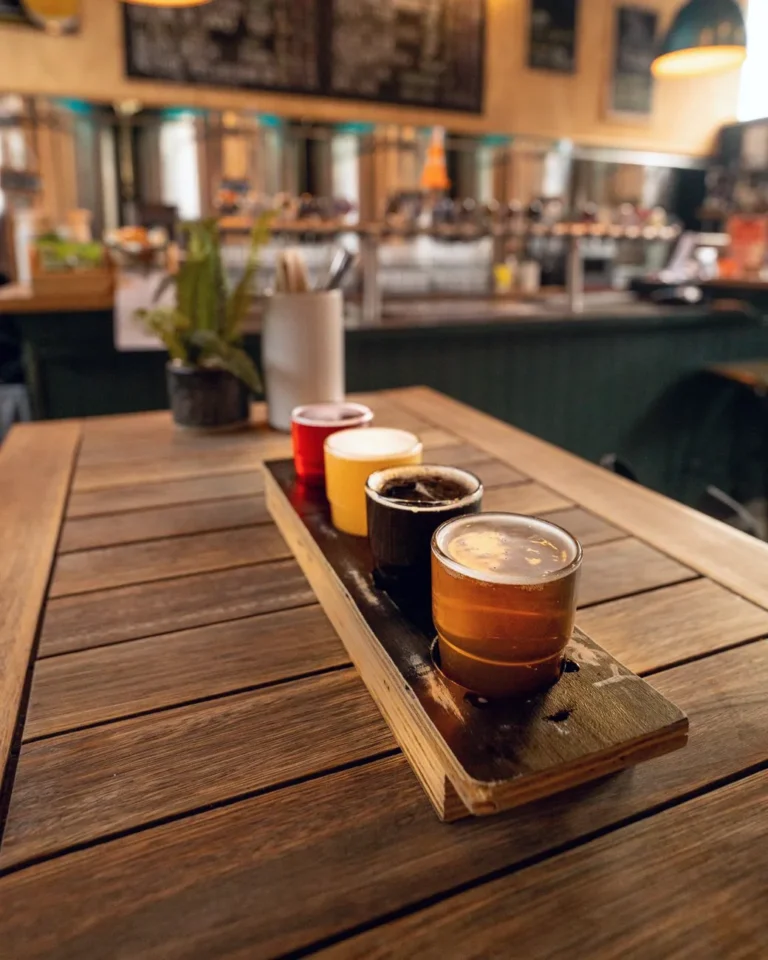
A Munich beer menu makes more sense once you separate the everyday lagers from the beers tied to a season. Start with Helles for a gentle, malt-led lager, choose Weissbier for a cloudy wheat beer, or look for Oktoberfestbier and Starkbier when their festivals come round. The names describe what is in your glass, not a ranking of breweries.
How to order beer in Munich
| Beer | What it is | When to drink it | Typical price |
|---|---|---|---|
| Helles | Soft pale lager | With a meal or friends | €4–7 / 0.5 litre |
| Dunkel | Toasty dark lager | With a hearty meal | €4–7 / 0.5 litre |
| Weissbier | Cloudy wheat beer | Breakfast or later | €4–7 / 0.5 litre |
| Oktoberfestbier | Fuller festival lager | During Oktoberfest | €14–18 / 1 litre |
| Starkbier | Strong malty beer | During Lent | €5–8 / 0.5 litre |
At a beer-hall table, tell the server the style and size you want, and at a pub or beer-garden counter, give the same order when you pay. Ask for a Helles or Dunkel and specify half a litre if you do not want a litre mug. A Maß means a one-litre mug, particularly familiar at Oktoberfest. Weissbier may be poured into its own tall glass rather than a mug.
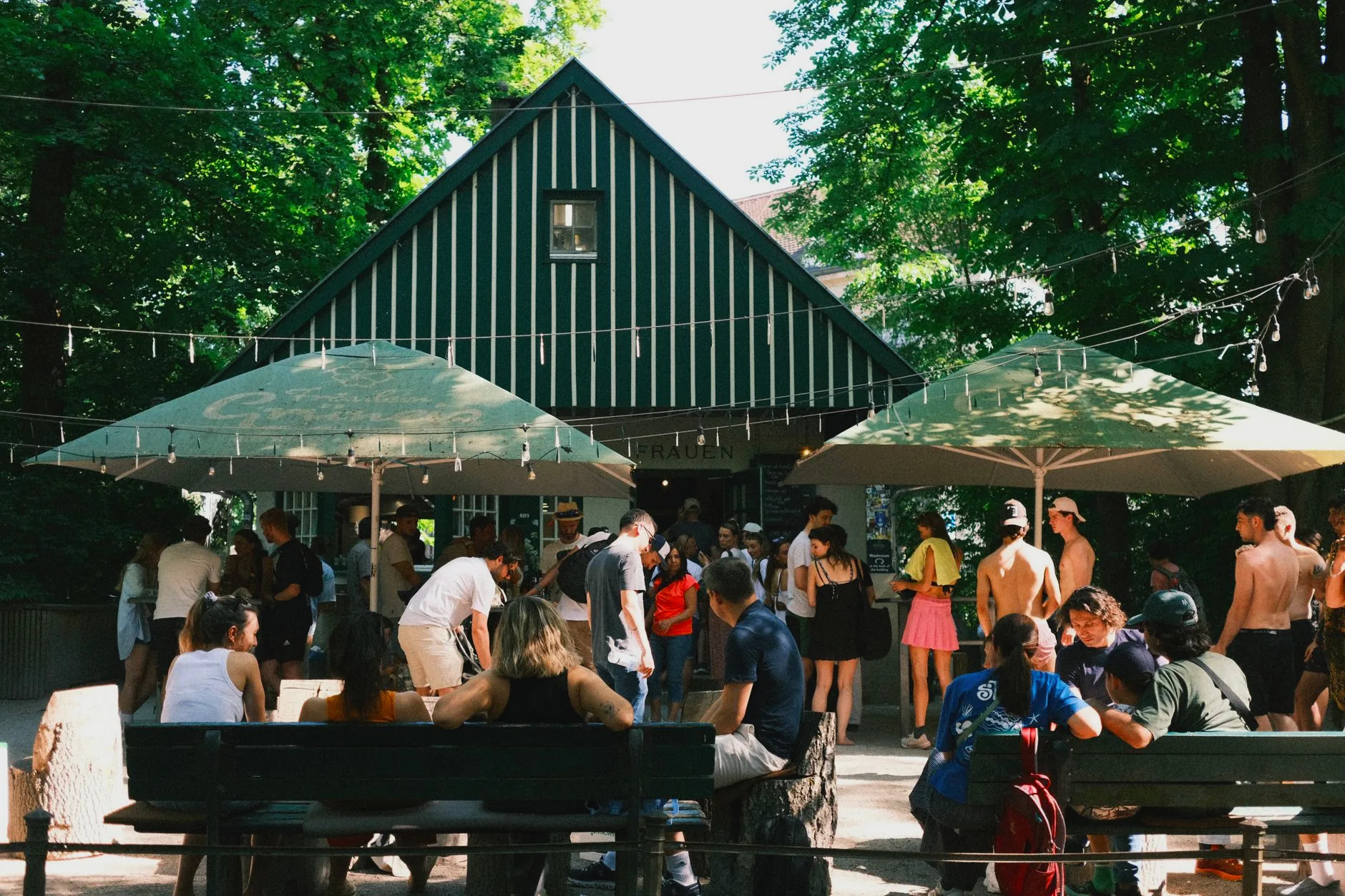
Budget more for a litre in a festival tent than for a half-litre at a pub or beer-garden counter, and table service can also cost more than a counter drink. In a traditional Biergarten (beer garden), you can bring a Brotzeit (cold snack) such as bread, cheese, radishes or cold cuts, while buying your drinks there. At a beer hall, order food from the kitchen instead.
Helles: the everyday pale lager
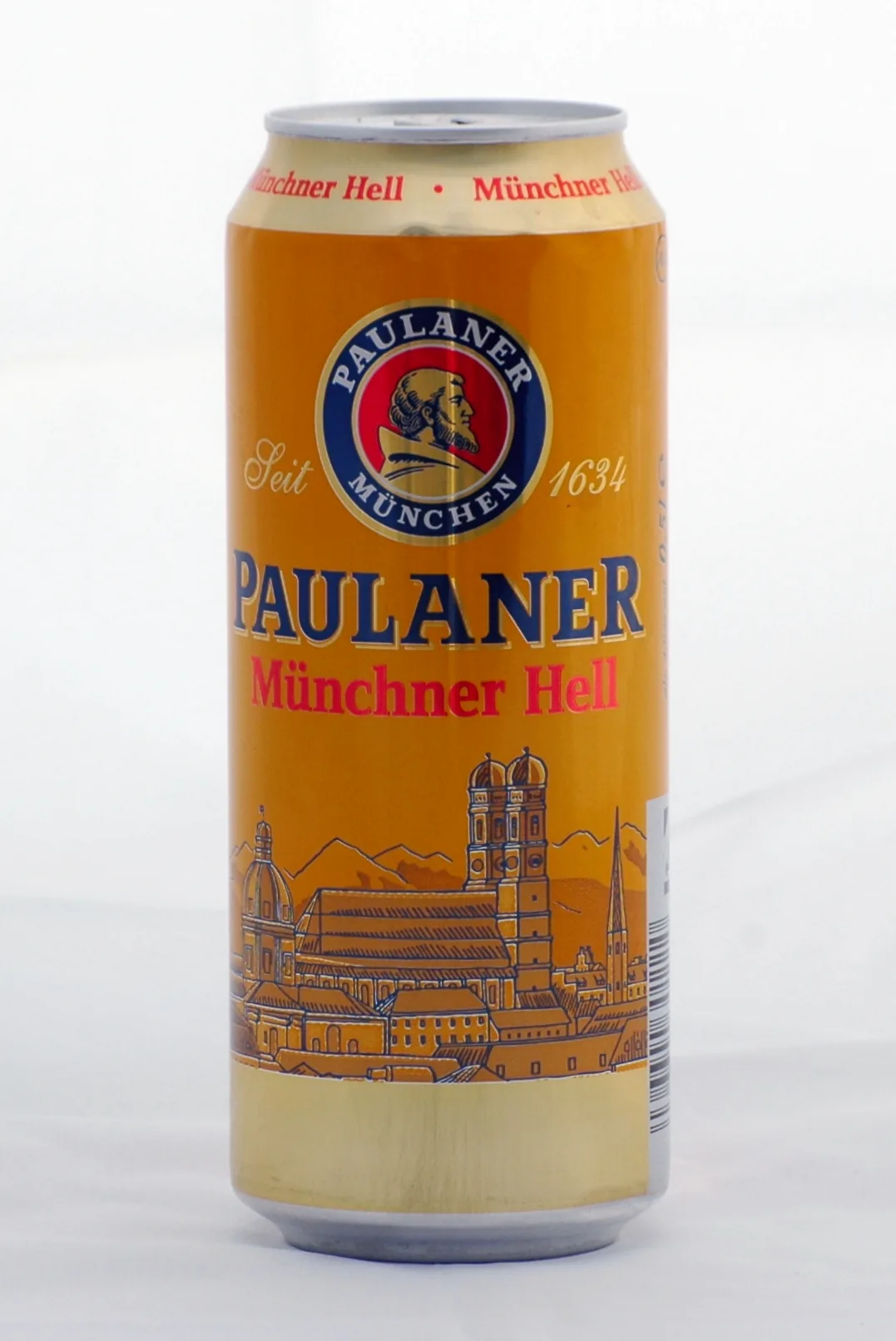
Helles is the everyday beer most closely associated with Munich. Münchner Hell, meaning Munich pale lager, is clear and light in colour, with rounded malt sweetness, restrained bitterness and a clean finish. Cold-lagered and bottom-fermented, it lets the malt lead without tasting heavy, so if you find Pils rather sharp, Helles is the gentler choice.
Order it with an ordinary meal or a relaxed gathering in a beer hall or beer garden. A pretzel works when you want a small bite, while roast meat suits its soft malt character. For more ideas beyond a pretzel, see Munich snacks to eat with beer. Augustiner-Bräu makes Augustiner Lagerbier Hell, one example to recognise on a menu rather than the only Helles worth ordering.
Radosław Drożdżewski (Zwiadowca21) · CC BY-SA 4.0 · Edited
Dunkel: the dark Munich lager
Münchner Dunkel, Munich dark lager, has a smooth, rounded character built around toasted-bread and caramel malt flavours. Like Helles, it is bottom-fermented and cold-lagered, with restrained bitterness and a clean finish. Choose Dunkel when you want more toast than Helles, not simply a stronger drink: dark colour does not by itself tell you the alcohol strength.
At a beer hall, ask for a Dunkel and give the size you want. It suits a hearty roast, whose savoury richness makes the beer’s toasted notes more noticeable. This is still a lager for an ordinary meal rather than a beer reserved for a festival. If you are deciding between the two at the same table, choose Helles for a paler, softer malt impression and Dunkel for a darker, toastier one.
Weissbier: wheat beer for breakfast
Weissbier, or Weißbier (wheat beer), combines wheat and barley malt and is top-fermented rather than brewed as a lager. Typically cloudy, it brings banana and clove notes, a creamy texture and a gently tart finish. Choose it for its fruit-and-spice character, not as another pale Helles.
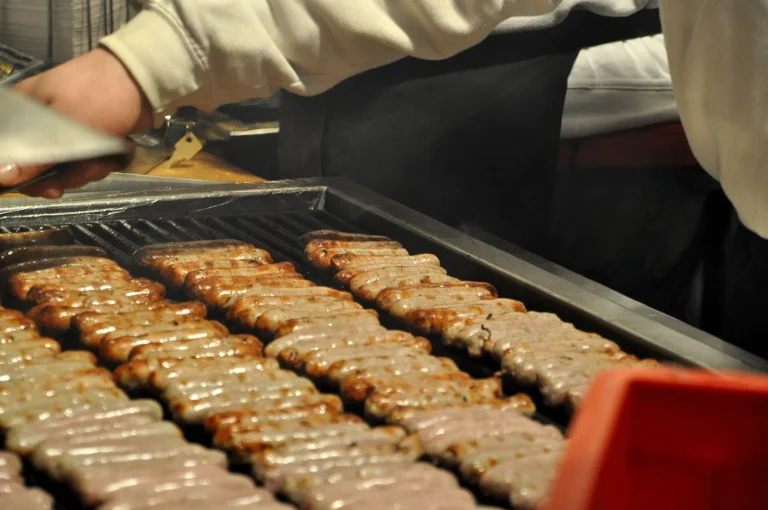
You may see Weizenbier on the menu, but ask for a Weißes or a Weizen when ordering. It is traditionally drunk with a Munich white-sausage breakfast at a Bavarian inn or beer hall, though it need not be limited to mornings. The sausage’s mild seasoning sits comfortably alongside the wheat beer’s soft texture and spice. Look for it in the tall wheat-beer glass rather than assuming every pale-looking pour is Helles.

Nemracc · CC BY-SA 4.0 · Edited
Oktoberfestbier and the six breweries
Oktoberfestbier is brewed for Munich’s recurring festival, from mid-September to the first Sunday in October. Fuller, maltier and stronger than everyday Helles, it is typically around 6% ABV, while Helles is about 4.7–5.2%. At the festival it comes in a one-litre Maß. Pair this substantial pour with a substantial meal, such as roast chicken, rather than treating it as the same order as a casual half-litre lager.
The often-mentioned “six Munich beers” are six breweries permitted to supply Oktoberfest, not six beer styles:
- Augustiner-Bräu
- Hacker-Pschorr
- Hofbräu
- Löwenbräu
- Paulaner
- Spaten
Each brewery can make different beers. The list does not define everything brewed in the city. Giesinger Bräu also makes beer in Munich but is not one of those six festival suppliers. Away from festival season, order by the style you want rather than assuming every Munich beer will taste like Oktoberfestbier.
Starkbier: strong beer for Lent
Starkbier, literally strong beer, is fuller and more emphatically malty than Helles, often with a sweeter impression. At roughly 7–9% ABV, it is a beer to take more slowly than an everyday lager. Look for it during the Lenten strong-beer season, traditionally running from around mid-February to Palm Sunday. A hearty roast gives its pronounced malt character something equally substantial to sit alongside.
Paulaner am Nockherberg hosts the annual Starkbierfest during Lent. It is a useful reference point for the seasonal celebration, rather than the definition of the beer itself. If you are choosing between beers at a hall, Starkbier is the richer, stronger seasonal option. Choose Helles when you want a gentler lager with an ordinary meal. At Nockherberg, expect a mid-priced venue rather than a budget drink.
- Name
- Paulaner am Nockherberg
- Location
- Au-Haidhausen, Munich Maps
- Site
- paulaner-nockherberg.com
- Hours
- 12:00–00:00
- Typical visit
- 1 hour 30 minutes
- Essential fact
- A reference venue for Munich’s seasonal strong-beer celebration.
- Price range
- €€