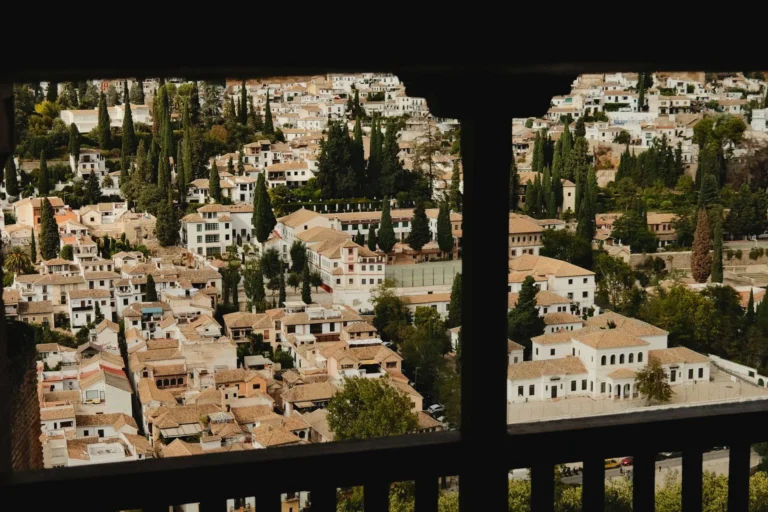
Choose Nerja for a holiday built around repeated beach days, or choose Málaga for cultural visits with the coast alongside them. Nerja puts Burriana, small coves and a smaller-town evening setting at the heart of your stay. Málaga offers the Alcazaba, museums and a wider choice of places to eat and go out, with an airport railway connection.
Both work without a car if you stay centrally, but they ask different things of you: in Nerja, allow for coach journeys and excursions beyond town, and in Málaga, choose between sleeping near the historic sights and nearer the sand. Beach access also matters, especially if stairs rule out a cove.
Nerja and Málaga at a glance
| Criterion | Nerja | Málaga |
|---|---|---|
| Beach setting | Burriana and smaller town-centre coves | Urban beaches and eastern seafront neighbourhoods |
| Cultural sights | Nerja Caves excursion | Alcazaba, Roman Theatre and art museums |
| Evening choice | Concentrated around Plaza Tutti Frutti | Wider historic-centre bar and restaurant choice |
| Málaga Airport access | Direct coach or train and city coach interchange | C1 train into the city |
| Mid-range double room, spring or autumn outside holidays | About €80–140 per room per night | About €90–160 per room per night |
These room estimates use the same basis: a private double with en-suite bathroom in a mid-range hotel, outside peak summer and major holidays. Málaga’s estimated range is €10 higher at the lower end and €20 higher at the upper end. Sea views, central addresses and busy dates push either upwards, while simpler rooms away from the busiest areas can cost less.
Choose your location around the outing you want to repeat. In Nerja, staying near Burriana favours beach days, while a town-centre room suits evenings around the Balcón de Europa. In Málaga, the historic centre favours museum visits and dining; a seafront room makes returning to the beach easier but puts some cultural visits farther away.
Beaches, sights and food
Burriana and La Malagueta give these bases quite different beach-day settings. Nerja makes the coast the main event, with the caves as a change of scene. Málaga lets you move between historic sights, paintings and the seafront, without treating each cultural visit as a separate excursion.
Nerja: Burriana, Calahonda and the caves
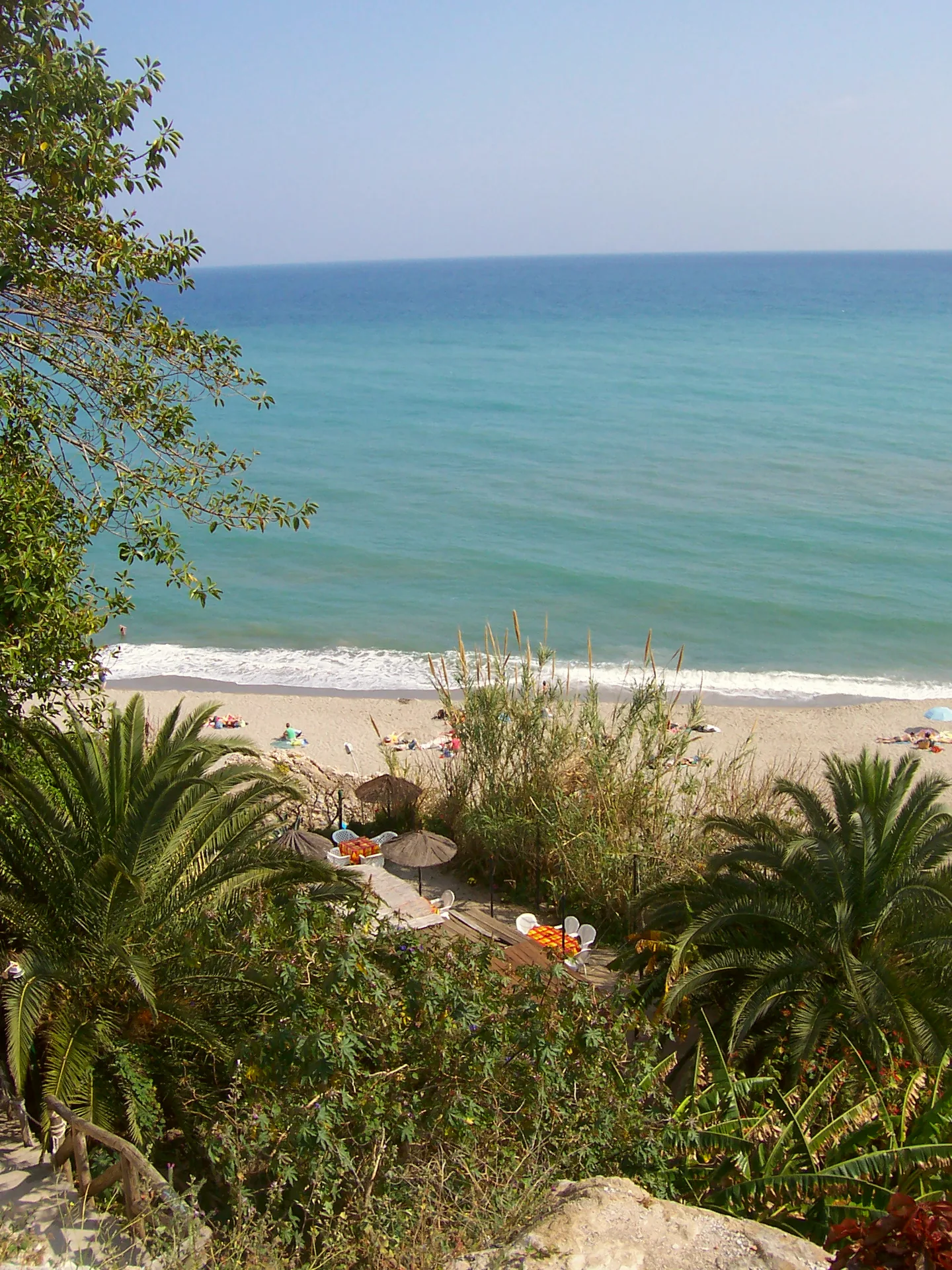
Burriana is Nerja’s choice for a beach day with facilities and places to eat close to the sand. It suits settling in for a swim and lunch rather than moving between coves. Staying nearby makes returning to the same beach straightforward, while from the town centre, the slopes matter when you head back after a day out.
(WT-shared) Tim Sandell · CC BY-SA 2.5 · Edited
Calahonda is a smaller beach below the Balcón de Europa, useful when you want the town centre and the shore together. Its entrance from the Boquete de Calahonda, at the end of Puerta del Mar, uses a stone staircase. Choose another beach if you need step-free access: Calahonda’s public entrance involves stairs. Its central position does not make it an easy-access substitute for a larger beach.
The Nerja Caves offer a contrasting visit through substantial underground chambers and rock formations. They are outside central Nerja, so give them their own excursion rather than assuming you can fit them into a stroll between the town’s beaches.
Málaga: the Alcazaba, museums and beaches
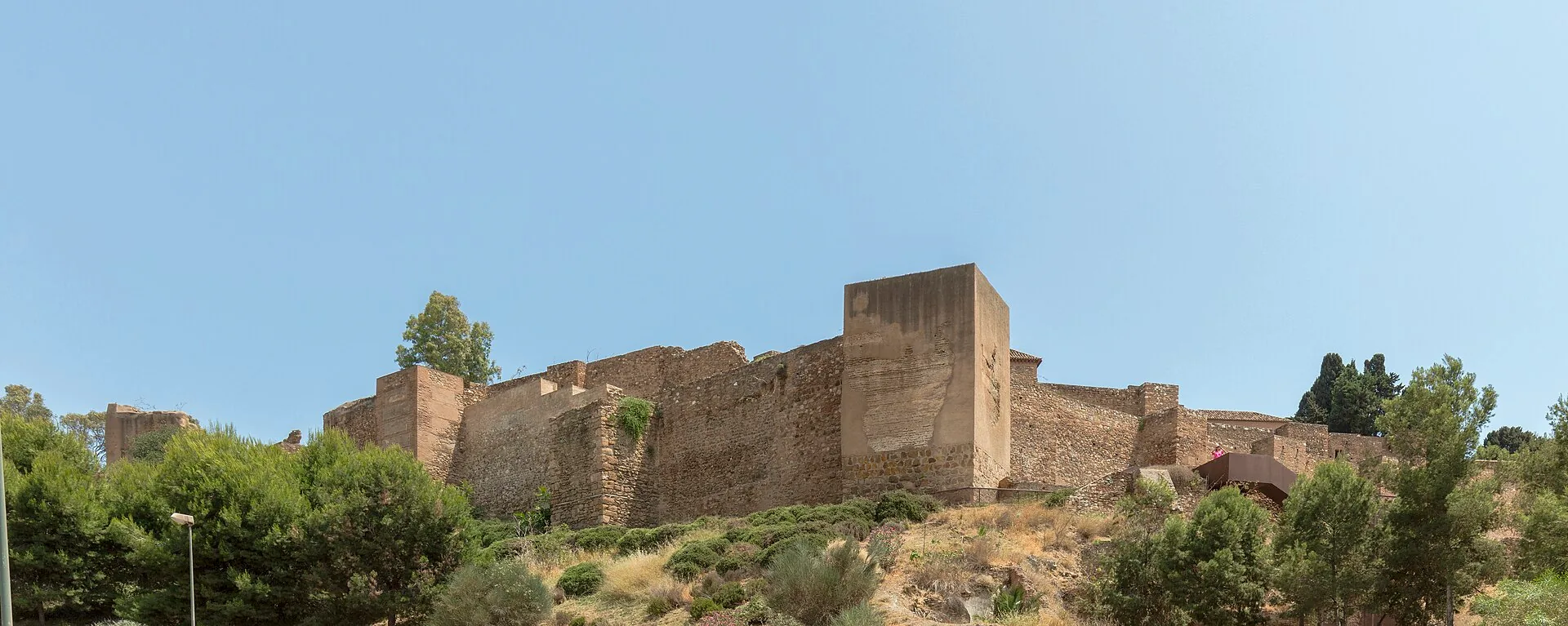
The Alcazaba rewards a visit for its fortified walls and courtyards, with the Roman Theatre at its foot making the city’s different historical layers easy to see together. The Carmen Thyssen Museum adds paintings, particularly nineteenth-century Spanish and Andalusian works, to a stay that need not depend on swimming weather.
Diego Delso · CC BY-SA 4.0 · Edited
Pedregalejo and El Palo offer a food-focused reason to leave the historic centre for the eastern seafront. Try espetos, sardine skewers typically grilled beside a wood fire, often in a sand-filled boat. These neighbourhoods suit a meal by the beach rather than another stop in the museum district.
La Malagueta combines an urban beach with step-free concrete walkways, including a connection towards the nearest sunbed area. Its accessible bathing point is on Avenida Ciudad de Melilla, by the military residence. Assisted bathing requires an advance appointment. Stay near the historic centre for repeated cultural visits, or nearer the seafront if beach outings will shape most of your days.
Airport transfers and getting around
Málaga–Costa del Sol Airport is the practical international arrival for both bases, with trains and buses into Málaga and a scheduled direct coach to Nerja. Granada Airport also works for Nerja via Granada city, but the connection is less convenient. Nerja has no passenger railway station, so a rail arrival still needs a road connection.
The C1 airport train runs approximately every 20 minutes. From Málaga Airport railway station to María Zambrano, the journey takes about 8 minutes. For Málaga’s historic centre, continue on foot to Plaza de la Constitución: about 1.6 km and about 23 minutes. Those train and walking legs total about 31 minutes.
For Nerja via the city, leave María Zambrano for Málaga bus station, a walk of about 300 metres and about 4 minutes. The coach leg takes just over an hour. The single fare is €5.48 per ticket. Coaches run daily, with more than 47 services between Málaga and Nerja, but departures vary between weekdays, Saturdays and Sundays.
- Name
- Málaga bus station
- Location
- P.º de los Tilos, s/n, Distrito Centro, Málaga Maps
- Essential fact
- Málaga’s intercity bus station, used for coaches to Nerja.
From the Nerja bus stop on Avenida de Pescia, the walk to the Balcón de Europa is about 900 metres and about 11 minutes. The airport train, interchange walk, coach and final walk total about an hour and a half. Both arrival totals cover those travel legs, but allow extra time for leaving the terminal, waiting for services and reaching your accommodation.
- Name
- Nerja bus stop
- Location
- Av. de Pescia, s/n, Nerja, Málaga Maps
- Essential fact
- Nerja’s intercity coach stop on Avenida de Pescia.
A central room lets you manage either stay without a car. In Nerja, a car helps with outlying coves and countryside outings, but adds parking to beach days. In Málaga, walking and local public transport suit city visits and the eastern seafront.
Daily spending and the time of year
For a casual main course and a drink, allow roughly €15–25 per person in Nerja and €15–25 in Málaga. On this matching basis, neither base has a clear meal-cost advantage. A seafront table or a restaurant in a busy visitor area tends towards the upper end, while starters, dessert and more drinks take the bill beyond it.
Your choice of outings can change spending more than the town you sleep in. Beach-led days in Nerja can keep paid visits occasional, although trips to the caves or farther along the coast add transport. Málaga makes it tempting to include several paid cultural visits, while walks through the centre and time by the sea can keep other days inexpensive.
Nerja’s official bathing season runs from 1 June to 30 September each year, while Málaga city’s runs from 15 June to 15 September inclusive. These are designated bathing-season dates, not promises of warm water, calm seas or suitable swimming weather on a particular day.
For winter, Málaga offers more indoor cultural visits alongside coastal walks. Nerja still suits walking and time around town, but choose it for that quieter coastal stay rather than guaranteed swimming. With fewer days, pick the activities you most want to repeat instead of spending much of the holiday travelling between bases.
Evenings and the compromises of each base
Nerja has a lively nightlife pocket, rather than a party atmosphere everywhere. Plaza Tutti Frutti is the focus for late bars, so a room nearby suits nights out but can be a poor match for early sleep. Málaga’s historic centre spreads the evening choice across a much larger city setting.
Nerja
Pros
- A smaller-town setting suits evenings that move from dinner to a stroll around the Balcón de Europa.
- Lodging away from the nightlife pocket can suit a quieter stay.
- The caves give a distinctive outing when swimming is not the plan.
Cons
- Rooms close to late bars can bring night-time noise.
- Visitor-oriented surroundings may feel less like everyday Spanish city life.
Málaga
Pros
- A working city offers everyday neighbourhood life alongside visitor areas.
- Museums give non-swimming days a substantial programme.
- Staying near central dining areas makes spontaneous evenings easy.
Cons
- Central lodging can bring late street noise and busier surroundings.
- Quieter seafront lodging means travelling back for some evening plans.
- City traffic and the urban waterfront remain part of a beach stay.
British visitors are a noticeable part of Nerja’s visitor mix, but not its whole identity. They account for 35% of foreign visitors in an undated annual figure: the share concerns visitors from abroad, not everyone visiting Nerja. Expect an international, visitor-oriented town rather than an exclusively British resort.
Combining Málaga and Nerja
Stay in Málaga first for cultural visits, then move to Nerja for the beach-led part of the holiday. This gives museums and historic sights their own days before you settle into a smaller coastal town. Use the intercity coach described above, allowing for packing, journeys to and from accommodation, and waiting as well as the ride itself.
The included luggage allowance is one suitcase or backpack up to 20 kg plus one small hand bag or accessory that fits in the overhead tray. You can add one extra luggage item up to 25 kg, from €5 per trip. Ordinary travel needs a ticket purchase, not a separate compulsory advance seat reservation.
Once in central Nerja, enjoy the Balcón de Europa and town-centre beaches as local outings. The caves and outlying coves remain separate trips. A split stay is worthwhile when each base has room for days you actually want there, not just an arrival evening before packing again.
Which base should you choose?
- Choose Nerja for repeated beach days and a smaller-town setting, with evenings that need not revolve around nightlife.
- Choose Málaga for cultural visits, wider evening choice and rail-linked airport arrivals without a car.
- For step-free beach access, choose Málaga’s La Malagueta accessible point rather than Calahonda, and arrange assisted bathing ahead if needed.
- Choose Málaga for a winter stay centred on indoor visits, or choose Nerja if coastal walks and quieter town days are the appeal.
- With enough time to enjoy both, stay in Málaga first, then Nerja, rather than letting packing and transfers dominate a short break.
Choose the base that puts your preferred daily outings closest to your room.
Sources & fact-checking
Checks against the sources below cover: services, fares and charges, and key figures.
- Renfe — service
- ALSA — fares and charges
- ALSA — service
- RENFE — service
- Alsa — service
- Nerja City Council — key figures
- Ayuntamiento de Nerja — service
- Ayuntamiento de Málaga, Área de Servicios Operativos, Régimen Interior, Playas y Fiestas — service
- Spanish Ministry of Health — service
- Málaga City Council — service