Choose April–May for Granada’s outdoor sights, with May the strongest single month. October is the cooler autumn alternative. The Alhambra, Generalife gardens and Albaicín hillside walks are easier to combine when heat does not dominate the day. These appealing windows also bring pressure on Alhambra tickets, so mild weather does not mean quiet monuments.
For heat-sensitive travellers, July–August is the least suitable choice for full-day sightseeing. Winter offers better accommodation value if you are happy to pair shorter outdoor visits with substantial time inside.
The best months for sightseeing
- Recommended window
- April–May; May is the best single month
- Autumn alternative
- October
- Avoid for heat-sensitive daytime sightseeing
- July–August
- Hottest month
- July
- Coldest month
- January
- Wettest month
- December
- Alhambra high-season months
- April, May, August, September, October
May offers the best balance for gardens and hillside walks, while October trades some warmth for more rain. September remains a warmer choice, not an equivalent cool-weather alternative. Both recommended windows coincide with strong Alhambra demand, so moving into autumn does not remove the need to arrange tickets ahead.
For a central mid-range double room, ordinary spring and early-autumn dates generally cost more than winter, while summer can offer savings against those popular sightseeing windows. Weekends and event dates can push costs higher; quieter weekdays tend to offer better value within each season.
Winter’s saving comes with cold mornings and less daylight for outdoor sights. Summer’s possible room saving instead costs you comfortable walking time, especially on the Albaicín’s climbs.
Weather by month
| Month | High °C | Low °C | Rain mm | Rainy days | Alhambra demand | Sightseeing verdict |
|---|---|---|---|---|---|---|
| January | 13.0 | 0.0 | 42 | 5.6 | Variable | Mixed: cold mornings |
| February | 15.4 | 1.6 | 38 | 5.9 | Variable | Mixed: chilly starts |
| March | 19.0 | 3.8 | 32 | 4.9 | Variable; Easter possible | Good fit: mild afternoons |
| April | 20.6 | 6.0 | 36 | 6.2 | High season | Good fit: mild walking |
| May | 25.0 | 9.4 | 28 | 4.2 | High season | Good fit: warm, less rain |
| June | 31.0 | 13.6 | 11 | 1.7 | Variable | Mixed: daytime heat |
| July | 34.8 | 15.7 | 2 | 0.3 | Variable | Avoid: strong daytime heat |
| August | 34.2 | 15.5 | 4 | 0.6 | High season | Avoid: strong daytime heat |
| September | 29.4 | 12.8 | 19 | 2.8 | High season | Mixed: lingering heat |
| October | 23.2 | 8.7 | 40 | 5.0 | High season | Good fit: cooler walking |
| November | 17.0 | 4.2 | 54 | 6.8 | Variable | Mixed: cooler, wetter |
| December | 13.4 | 1.7 | 56 | 7.4 | Variable | Mixed: cold and rain |
Choose the milder months for long outdoor sightseeing days and the colder months for a more indoor-focused break. The summer avoidance verdict applies to heat-sensitive daytime sightseeing. For a trip centred on gardens and hillside walks, comfortable daytime conditions matter more than dry weather alone.
Granada’s inland setting produces a substantial gap between daytime and overnight temperatures. An afternoon that suits an outdoor monument can follow a cold start. A warm month does not necessarily promise similarly warm evenings. This is particularly useful when deciding between spring’s earlier and later months.
Rainfall volume and frequency answer different questions. The millimetres show how much rain falls on average across a month, while rainy-day counts indicate how often at least some rain interrupts dry conditions. April has more rainy days than March despite its warmer afternoons, so a spring visit still benefits from time for indoor sights between walks.
Spring: March to May
March suits travellers who want mild afternoon sightseeing and can accept cold mornings and evenings. April and May make it easier to give outdoor monuments and walks a larger share of the day. Choose ordinary spring dates if the celebrations are not a reason for your trip: mild weather and event demand are separate considerations.
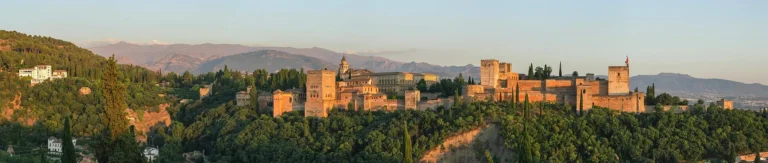
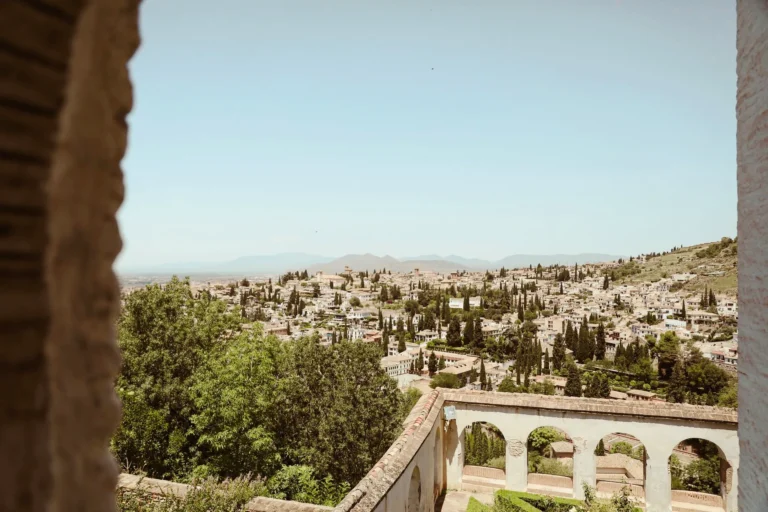
The Generalife gardens reward time beyond the palace interiors, with planted courts and water channels to explore. In the milder spring window, you can combine them with the Albaicín’s hillside viewpoints without summer’s need to retreat from midday heat. May’s warmer conditions and lower rain frequency give it an edge over April for a predominantly outdoor visit.

AdriPozuelo · CC BY-SA 3.0 es · Edited
Holy Week runs from Palm Sunday through Easter Sunday. Easter follows the movable calendar, falling on the first Sunday after the first full moon on or after the spring equinox, so the celebrations can affect March or April dates.
Holy Week 2024 brought 117,625 visitors to Granada city, including tourists and day-trippers, and 43.7% came because of the celebrations. For a central mid-range double, expect stronger room-price pressure during the celebrations than on ordinary spring weekdays.
Corpus Christi adds another date consideration. Granada celebrates in the week leading up to the feast, the Thursday after Trinity Sunday, 60 days after Easter. Its usual late-May or June window can overlap a sightseeing trip: choose it for the festivities, or favour another week if monuments and walks are your priority.
Summer: June to August
June is already a hot sightseeing month, but July and August intensify the trade-off between dry weather and comfortable time outdoors. Reliable summer dryness is not a good reason to choose a full day of hillside walking. If heat affects your enjoyment, changing season is more useful than trying to squeeze every outdoor sight into a summer day.
Start outdoor visits early, leave the hottest part of the day for a rest or an indoor interval, and return to walks later. An Alhambra visit still involves outdoor areas between interiors, so it is not an entirely sheltered escape from the heat. Give the Generalife gardens the cooler part of your visit rather than treating them as an afterthought.
The Albaicín demands particular care with walking plans. Its narrow, winding streets include steep slopes, cobbles and frequent stairways, so a short-looking route can involve considerable uphill effort. These features also challenge visitors with limited mobility. Choose a limited set of viewpoints rather than assuming you can comfortably cross the whole hillside on foot.

Jl FilpoC · CC BY 4.0 · Edited
Heat and crowd pressure do not follow exactly the same pattern. August is among the Alhambra’s named high-season months, while June and July still require attention to weekends, holidays and school vacations. For the same central mid-range double, summer can offer savings against popular spring dates, but a cheaper room does not restore the outdoor hours lost to heat. It is a better trade for travellers content with a slower, split sightseeing day.
Autumn: September to November
September keeps much of summer’s warmth, so it suits travellers who prefer warm afternoons and can still separate walks from the hottest part of the day. It is not the best autumn choice if escaping heat is your main aim. October allows a more continuous outdoor day, although rain becomes a more significant interruption.
Choose October over September for cooler hillside walking, not for quieter Alhambra access. Both fall within the monument’s named high season. October’s balance works well for the Generalife gardens and Albaicín viewpoints, but you should leave room to move an outdoor walk around a wet interval.
Against April–May, October offers milder conditions than late spring but a wetter pattern than May. The central mid-range double-room budget is broadly comparable to popular spring dates, so neither season is automatically the economical choice. Ordinary weekdays give you a better chance of value than a holiday stay, while Alhambra tickets remain a separate date constraint.
November changes the emphasis. Colder mornings and more rain make shorter walks and substantial indoor visits more appealing than a day built around gardens and hill climbs. It can be a value-led alternative to October for the same room category, provided you accept the weather trade-off. Choose it because that balance suits your interests, rather than expecting an extension of early-autumn warmth.
Winter: December to February
Winter suits a cultural break with a lower accommodation budget more than a trip centred on long outdoor days. January has the sharpest cold, while December combines chilly conditions with the strongest rainfall pattern. February brings somewhat milder afternoons, though cold starts and rain interruptions remain part of the choice.
Give outdoor monuments and hillside walks the daylight, and use indoor visits for colder or wetter intervals. The Alhambra and Generalife need outdoor time even when palace interiors are your main interest. Granada Cathedral and the Royal Chapel, with the tombs of the Catholic Monarchs, offer a different cultural focus when a long hillside walk is unappealing. The same balance helps in summer, when heat rather than cold limits time outside.
For a central mid-range double, ordinary winter dates generally offer better value than the favoured spring and autumn windows. The saving is most useful if you genuinely want indoor sights, rather than seeing them only as a substitute for a walking trip. Holiday dates can weaken that price advantage.
If December is your preferred month, Granada in December develops the choices within that cultural break, including how to combine indoor visits with the outdoor sights you most want to see.
Seasonal access at the Alhambra
- Give the Alhambra a larger share of your daylight sightseeing from 15 October to 31 March, when daytime access ends earlier than in the warmer season.
- Choose Friday or Saturday for a Nasrid Palaces night visit from 15 October to 31 March, while from 1 April to 14 October, night visits run Tuesday to Saturday.
- Arrange Alhambra tickets ahead for April, May, August, September and October, and for weekends, public holidays and school vacations.
- Treat same-day tickets as a fallback only: availability depends on remaining capacity.
The Alhambra brings together the Nasrid palace courts, the Alcazaba fortress and the Generalife gardens, so the season affects more than your time inside. Allow the outdoor parts of the complex a comfortable place in the day, rather than choosing dates solely around the palace visit.
Daytime access is daily in both seasons. From 1 April to 14 October it runs from 08:30 to 20:00, and warmer-season Nasrid Palace night visits run from 22:00 to 23:30. The shorter-season hours below apply from 15 October to 31 March. The seasonal change falls within October, which matters when choosing between an early- and late-month stay.
- Name
- Alhambra
- Location
- C. Real de la Alhambra, s/n, Centro, Granada Maps
- Site
- alhambra-patronato.es
- Hours
- Mon–Thu 08:30–18:00
- Fri–Sat 08:30–18:00, 20:00–21:30
- Sun 08:30–18:00
A night visit offers a different way to see the Nasrid Palaces, but its restricted weekly calendar can determine which nights you stay in Granada. In summer, later access helps separate a palace visit from daytime heat, while in winter, the shorter outdoor day favours giving the gardens and fortress daylight priority. Settle the monument visit before building the rest of your sightseeing around it.
Sources & fact-checking
Checks against the sources below cover: key figures and opening hours.