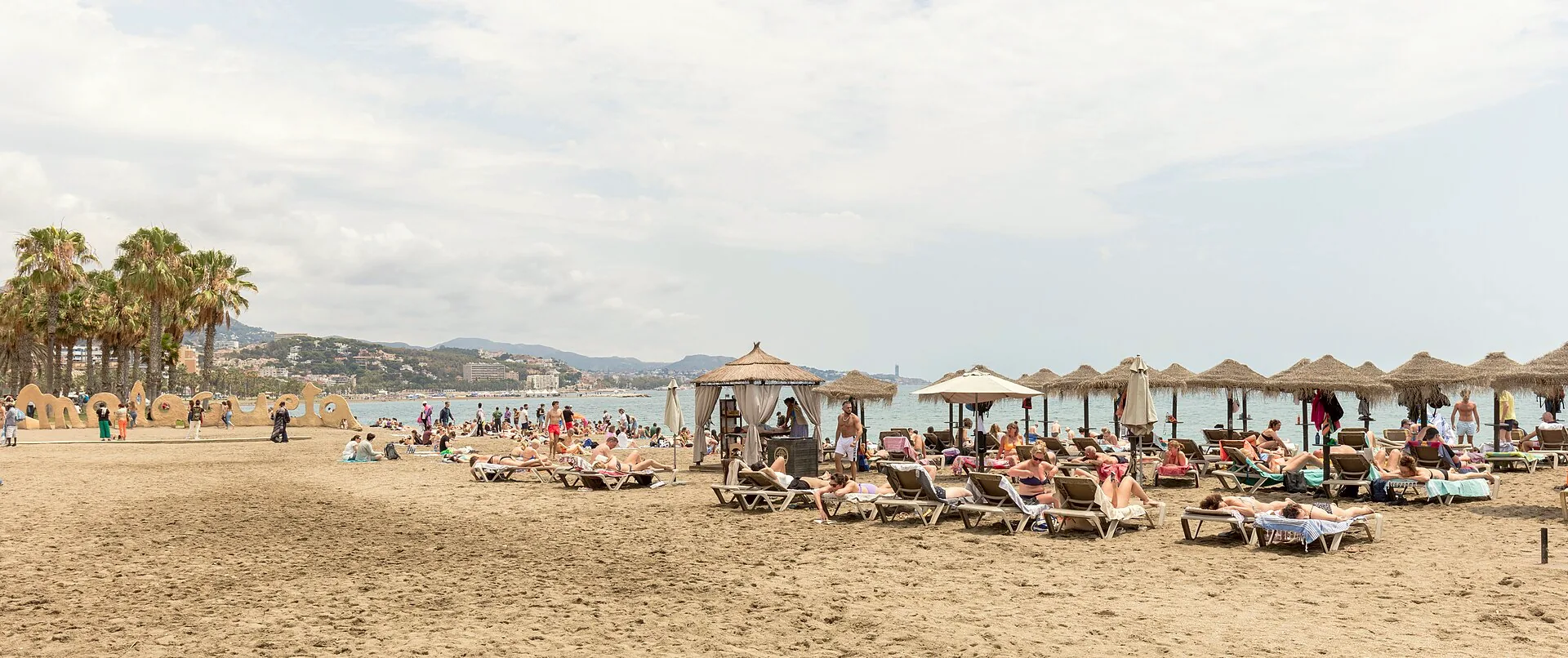
For sightseeing in Málaga, choose August dates outside the August Fair celebrations, but for a cooler walking holiday, favour September. August suits a stay that combines beach time with outdoor visits early and late in the day, rather than hours of uninterrupted sightseeing. Choose the fair period deliberately if joining the celebrations is your priority: it brings a different rhythm to the historic centre and greater pressure on accommodation.
August dates and the fair
- August sightseeing window
- Outside the August Fair celebrations
- Best fit for August
- Beach time with heat-aware sightseeing; fair participation
- Hottest of the three months
- August
- Coolest and wettest
- September
- Driest
- July
- Busiest period
- August Fair celebrations
The fair’s annual calendar uses 19 August as its required reference, marking Málaga’s incorporation into the Crown of Castile. The council’s Local Government Board sets each edition’s dates and duration.
For comparable rooms, summer demand puts upward pressure on accommodation prices, with fair participation adding pressure around the celebrations. Value-led travellers should favour September, especially after the first week, over an August fair stay. Outside the fair, August still means summer demand and heat, but makes sightseeing easier to separate from the festivities.
July, August and September weather
| Month | Maximum °C | Minimum °C | Rainfall mm | Crowds | Verdict |
|---|---|---|---|---|---|
| July | 30.5 | 20.5 | 0 | Busy; weekend beach peaks | Mixed: hot, beach-focused |
| August | 30.8 | 21.1 | 6 | Busy; fair peak | Mixed: heat and celebrations |
| September | 28.2 | 18.8 | 20 | Easing after first week | Good: cooler walking weather |
September offers the strongest nearby compromise for a sightseeing-led stay. Both daytime and overnight averages fall from August, so walking is less demanding and nights are less warm. The trade-off is a higher rainfall total. These are climate averages, not a forecast for your dates, and a monthly rainfall total does not tell you how often it rains.
The small daytime difference between July and August matters less than their shared summer heat. August’s warmer nights also make a room with effective cooling more useful than one chosen solely for its proximity to the beach. Organise outdoor visits around shorter outings rather than assuming sunset immediately ends the heat.
July’s beach crowds are particularly noticeable at weekends, when popular stretches fill by midday. Go earlier if space matters. September’s easing visitor pressure makes a more relaxed city stay possible, but popular sights and local events can still draw crowds. Calmer does not mean empty.
If your dates extend beyond these summer months, the best time to visit Málaga also depends on whether you prioritise walking weather, beach supervision or lower visitor pressure across the year.
The August Fair and sightseeing crowds
The Feria, Málaga’s August Fair, has two broad settings: the historic centre for daytime celebrations and Cortijo de Torres fairground on the outskirts for the main evening festivities. In the centre, Calle Larios and surrounding streets are part of the daytime gathering area. A visit there during the fair is as much about joining the celebrations as looking at the city.
Heavy pedestrian flows can slow your progress through central streets, while traffic restrictions or diversions affect approaches to the celebrations. Crowding varies between editions, and more activity at the outlying fairground can ease the crush in the centre. Do not plan an unhurried central sightseeing day around fair participation: give each its own time, or choose dates outside the event.
The main evening festivities at Cortijo de Torres do not mean the centre becomes quiet at night. Residents’ accounts from particular editions describe amplified music in Huelin and noisy late-night street gatherings in the historic centre. Choose accommodation away from celebration areas if uninterrupted sleep is a priority.
Stay near the celebrations you want to join if easy access is your priority. For a quieter sightseeing stay, dates outside the fair let you explore the historic centre without combining your visits with the daytime festivities.
Heat, terral winds and beach days
Start outdoor sightseeing early, pause indoors or in shade through the hottest hours, and return outside later. An August city stay is more enjoyable when you leave room for a proper break rather than crossing the historic centre repeatedly in the afternoon. A museum visit, lunch and rest can replace an exposed walk without turning the day into a succession of hurried stops.
The terral is a hot, dry offshore wind that can sharply raise Málaga’s summer temperatures, sometimes above 40 °C. Episodes occur mainly from June to September. The monthly averages therefore cannot rule out a much hotter spell during your stay, so reduce outdoor exertion during a terral episode, rather than treating your original sightseeing plan as fixed.
During intense heat, avoid outdoor activity generally between 12:00 and 17:00, choosing early morning or evening for exercise instead. Drink water regularly, seek shade, use sun protection and shorten strenuous outings. Moving a walk later helps with timing, but does not remove the need to respond to the day’s heat.
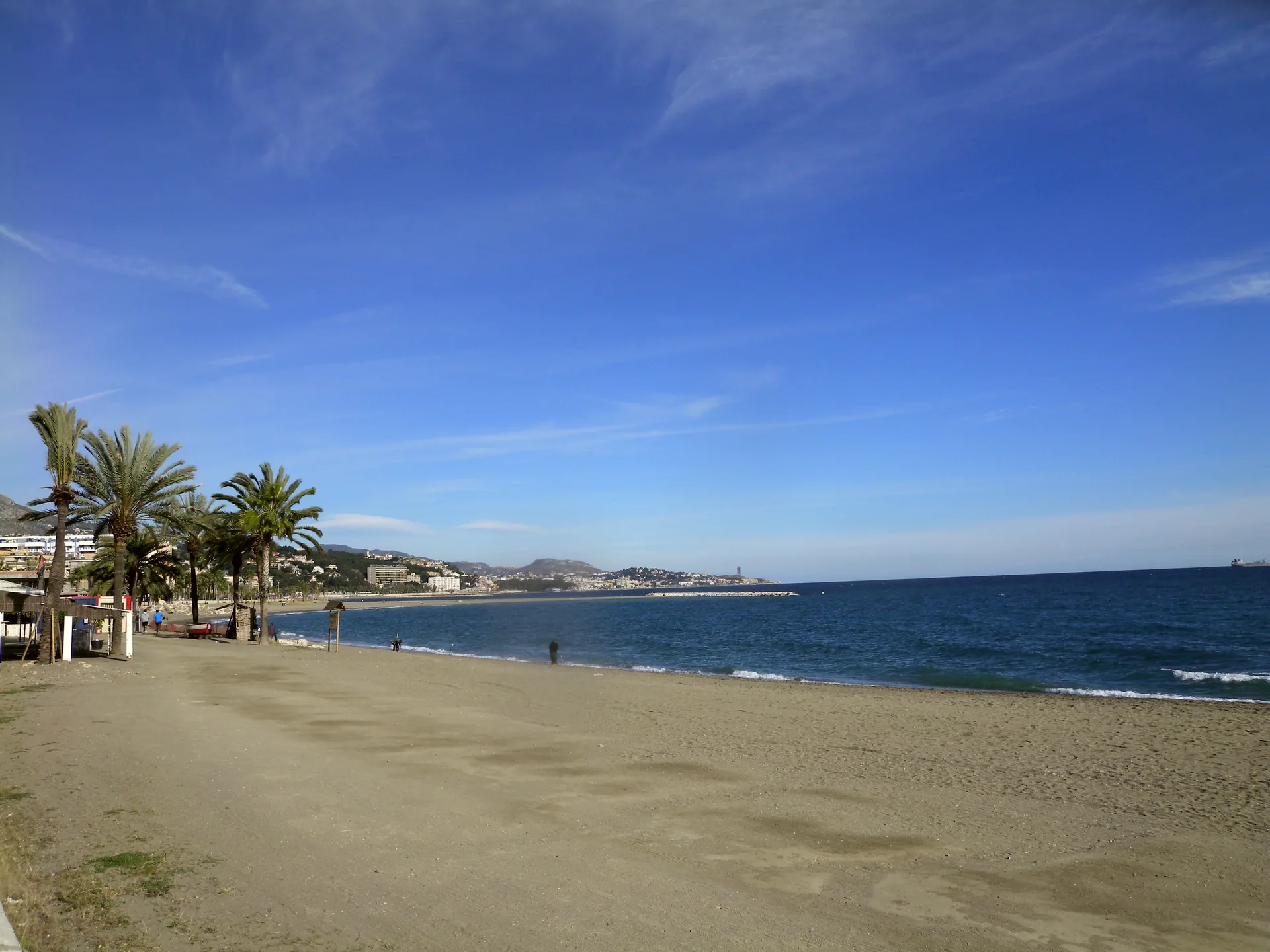
La Malagueta beach gives you a seaside pause within a Málaga city stay, rather than requiring a separate coastal excursion. Use it for a shorter beach visit around the heat, not a whole day in the sun. An early or late visit also needs to fit the supervision window if you intend to swim.
Ricardo Ricote Rodrí… · CC BY 3.0 · Edited
Beach services and summer access
- La Malagueta lifeguards: daily from 15 June to 15 September, 10:00–20:00; weekends from 16 to 30 September, 11:00–19:00.
- Beach flags: green permits swimming, yellow requires caution, and red prohibits swimming. Follow lifeguards’ instructions and additional beach-specific warnings.
- Alcazaba summer opening: 09:00–20:00.
Choose supervised beach time as well as cooler hours. August offers daily coverage, but later September changes that choice for weekday swimmers. Very early or late beach outings can fall outside service hours. Air temperature is not a swimming-safety signal: the flags govern whether you enter the water.
The Alcazaba’s fortified terraces make it an outdoor sightseeing stop, so use the beginning of its opening day or a later visit rather than the hottest hours. Allow time to enjoy the grounds, not merely reach the entrance.
Sources & fact-checking
Checks against the sources below cover: services and key figures.


