Choose May for a walking-led trip to Granada if your dates are flexible. October is a cooler autumn alternative, though rain becomes more likely. Neither window means quiet sightseeing. August suits fixed dates better than long days on foot: keep outdoor outings short, take a substantial midday break and give the Alhambra’s admission time priority over an improvised change of plan.
August and cooler visiting windows
- Recommended walking windows
- May; October for a cooler, wetter alternative
- Hottest month
- July
- Coldest month
- January
- Wettest month
- December
- Elevated visitor pressure
- April–May and August–October
August is a mixed choice: dry weather, but demanding heat and elevated visitor pressure. The milder recommended windows are busy too, so moving your trip improves walking comfort rather than guaranteeing fewer people.
| Month | Mean daily maximum °C | Mean daily minimum °C | Precipitation mm | Visitor pressure | Suitability and cause |
|---|---|---|---|---|---|
| January | 12.6 | 0.0 | 42 | Outside elevated stretches | Mixed: cold nights |
| February | 14.6 | 1.6 | 38 | Outside elevated stretches | Mixed: chilly evenings |
| March | 18.0 | 3.8 | 32 | Outside elevated stretches | Good fit: mild days |
| April | 19.5 | 6.0 | 36 | Elevated | Good fit: mild, busy |
| May | 24.0 | 9.4 | 28 | Elevated | Good fit: walking warmth |
| June | 30.2 | 13.6 | 11 | Outside elevated stretches | Mixed: daytime heat |
| July | 34.2 | 15.7 | 2 | Outside elevated stretches | Avoid: sustained hot walks |
| August | 33.5 | 15.5 | 4 | Elevated | Mixed: heat and demand |
| September | 28.7 | 12.8 | 19 | Elevated | Mixed: warm, busy |
| October | 22.6 | 8.7 | 40 | Elevated | Good fit: cooler, wetter |
| November | 16.5 | 4.2 | 54 | Outside elevated stretches | Mixed: rain and chill |
| December | 13.1 | 1.7 | 56 | Outside elevated stretches | Mixed: wet, cold nights |
These separate station series describe the seasons, not a paired temperature range for a single city-centre day. Likewise, the visitor-pressure labels distinguish the documented elevated stretches from the rest of the year, not busy days from empty streets. Spring festivals contribute to demand. The later elevated stretch continues beyond summer.
Very little summer rain does not make an exposed hillside climb comfortable. May gives you more scope to linger outdoors, while October trades cooler walking for a greater chance of needing an indoor alternative. For the broader best time to visit Granada decision, weigh those differences against how much of your trip you want to spend exploring on foot.
Heat and hillside walks
Granada can be too hot in summer for prolonged daytime walking, particularly on its hills. Shorter morning and evening outings are a more workable choice than treating the day as one continuous sightseeing walk. Climate averages describe historical patterns, not the conditions of your individual visit.
August has about 13.5–14 hours of daylight, calculated from sunrise to sunset at Granada, approximately 37.2° N, 3.6° W. Day length changes through the month as the Sun’s declination shifts. That leaves scope for two separate outdoor outings, but daylight is not the same as comfortable walking weather.
Reduce exertion during the central hours of the day and choose early morning or evening for outdoor exercise. Begin with the outdoor sightseeing you most want to do, then take a substantial indoor or accommodation break before returning outside later. Use shade, carry drinking water and keep exposed stretches short rather than adding another climb when your energy is fading.
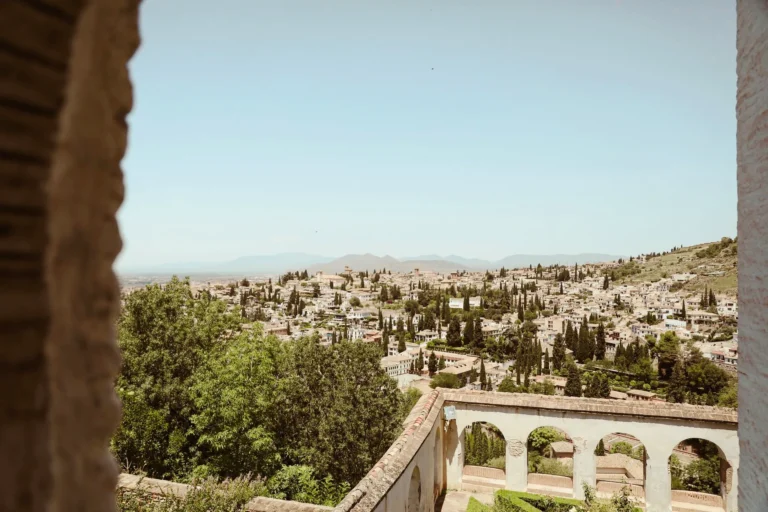
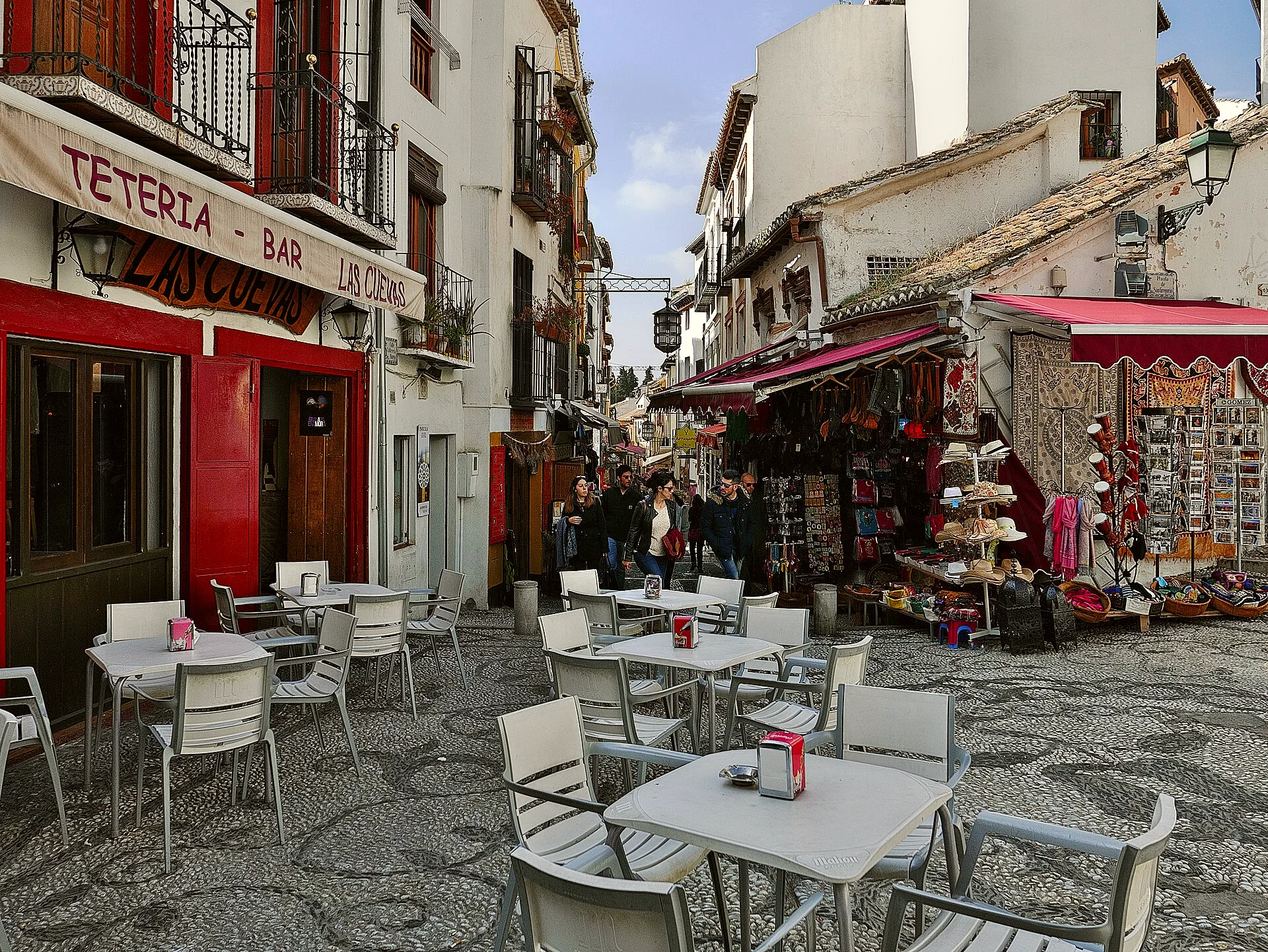
The Albaicín rewards a shorter walk through narrow, winding streets and viewpoints towards the Alhambra. Its steep gradients, frequent descents and often cobbled surfaces make it a hill walk rather than a flat stroll. Uneven footing also slows your progress, so leave room to pause instead of building a long chain of sights.
Cuesta del Chapiz illustrates the uphill streets that shape an Albaicín outing. Choose a smaller part of the quarter rather than trying to cover every slope in one go. Shoes with secure footing matter here, and an evening return is a chance to enjoy another stretch, not an obligation to finish everything left from the morning.
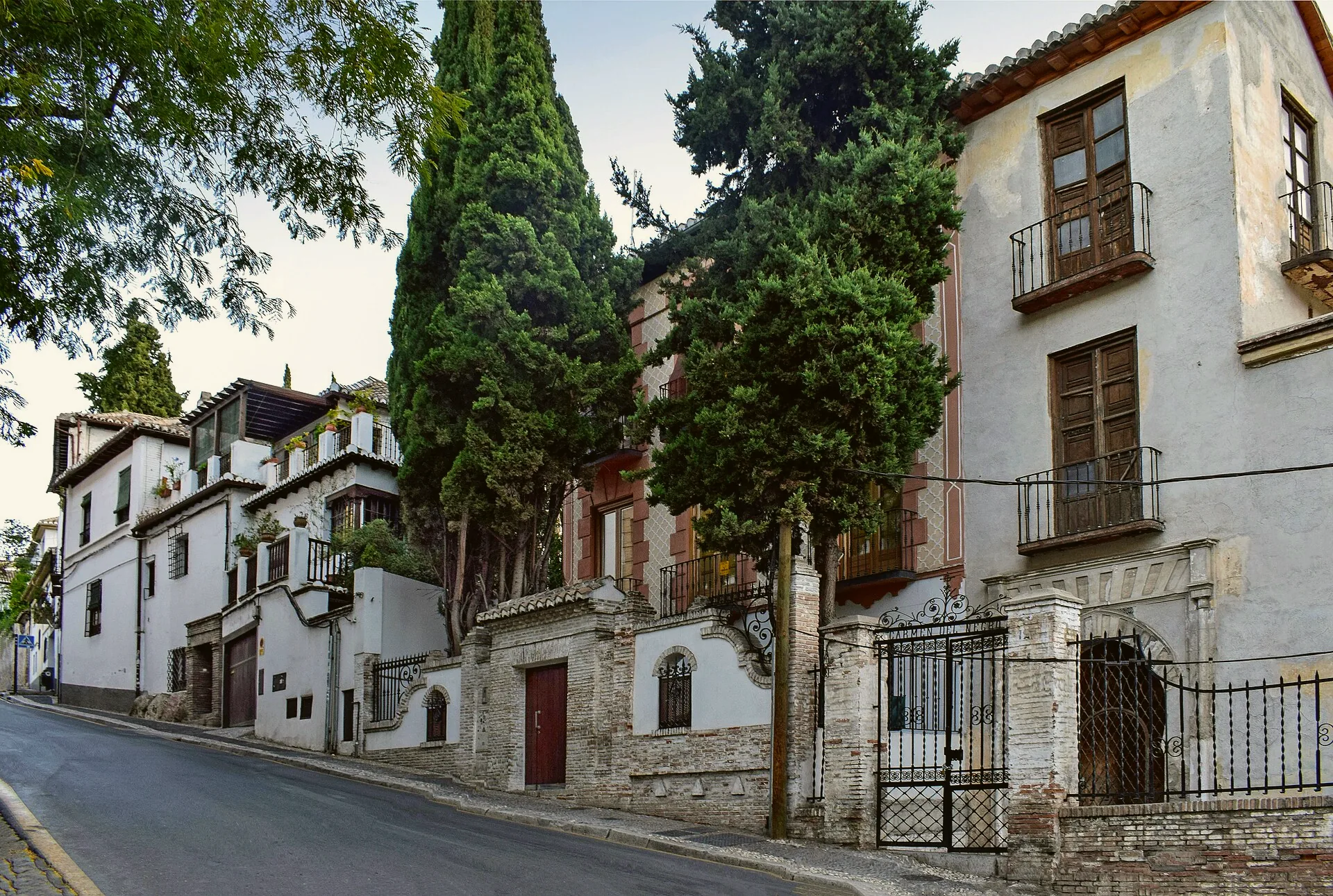
Jocelyn Erskine-Kellie from London, UK · CC BY-SA 2.0 · Edited
Alhambra daytime and night visits
- Daytime Alhambra visits: 1 April–14 October, daily 08:30–20:00. August falls within this summer season.
- Nasrid Palaces night visits: 1 April–14 October, Tuesday–Saturday, 22:00–23:30.
- The Nasrid Palaces night visit includes the Access Pavilion, Palace of Charles V, Mexuar, Palace of Comares, Palace of the Lions, Lindaraja Corridor and Gate of Justice. It is not a substitute for the daytime gardens visit.
The Alhambra brings together palace courtyards, decorated interiors and gardens, so your choice of admission changes more than the hour you arrive. Choose daytime access if you want the wider palace-and-garden visit, or choose night access for a palace-focused outing. A late visit can complement a day spent elsewhere in Granada, but it does not move the whole daytime experience into cooler hours.
The standard daytime visit includes the Partal gardens and promenades and the Alcazaba’s Garden of the Adarves. The Generalife adds its palace and gardens, including the Court of the Main Canal, Sultana’s Court and Water Stairway. These outdoor spaces deserve time of their own rather than being treated as the distance between interiors. Give them a place in your day that avoids prolonged midday exposure where your admission allows.
That fixed appointment limits how freely you can rearrange the visit around the heat. Build the rest of your Alhambra outing around palace entry, rather than assuming you can pause elsewhere and enter whenever you return. Allow room to reach the entrance without a rushed climb, and avoid committing to another demanding outing immediately beforehand.
Citywide visitor pressure and demand for a particular palace admission are different things. An apparently quieter street does not mean your preferred ticket will be available. Arrange August admission several weeks ahead, allowing 6–8 weeks for July–August visits if you want a particular date and time. Availability varies by date, so settle your palace visit before arranging the rest of the day.
August holidays and summer closures
The Assumption of the Virgin is a public holiday on 15 August every year. It sits within a broader summer-holiday period that can affect the everyday parts of a Granada stay as much as the landmark sightseeing.
Many shops and some restaurants take summer breaks in August, sometimes for part or all of the month. Keep meal plans flexible enough to use another restaurant, rather than making your midday break depend on one small business. Reduced choice matters especially if neighbourhood dining and shopping are central to your trip.
If you can move your dates, that is another reason to favour a milder visiting window. If August is fixed, keep the Alhambra as a firm appointment and let smaller outings and meals remain adaptable. A shorter walk followed by an unhurried break makes a better day than trying to replace every closed shop with another stop.
Sources & fact-checking
Checks against the sources below cover: services, key figures, and opening hours.
- Spain’s Ministry of Health (Ministerio de Sanidad) — service
- Agencia Estatal de Meteorología (AEMET) — key figures
- Patronato de la Alhambra y Generalife — opening hours
- Nasrid Palaces night visit
- F.A.Q. – Patronato de la Alhambra y Generalife
- Board of Trustees of the Alhambra and Generalife — service