
Choose Málaga after the Three Kings holiday period for a January break centred on sightseeing. Mild afternoons suit the Alcazaba’s courtyards and a pause beside the sea at La Malagueta, while the Picasso Museum gives you an indoor alternative when rain interrupts. Expect cool evenings rather than dependable beach warmth.
Early January has a different appeal: the Three Kings procession brings a festive reason to visit, but holiday museum restrictions matter. Choose between that occasion and the ordinary visiting schedule, and keep outdoor plans flexible whichever dates you favour.
Is January a good time to visit?
- Recommended January window
- After the Three Kings holiday period
- Hottest month
- August, by mean daily maximum and minimum air temperatures
- Coldest month
- January, by mean daily maximum and minimum air temperatures
- Wettest months
- November and December, by mean rainfall totals
- Accommodation-demand peak
- Summer; Málaga municipality overnight stays, 2016–2022 comparison
January suits a sightseeing-led stay better than a holiday dependent on sustained beach warmth. Give the open-air sights a dry spell and retain an indoor option rather than assigning every day to the waterfront.
Hotel overnight stays show particularly strong seasonality. Higher demand can put upward pressure on accommodation costs, so compare equivalent rooms and cancellation terms across your possible dates rather than assuming every winter stay is cheaper.
If warmer walks or beach days matter more, the best time to visit Málaga offers a year-round choice beyond this winter trade-off.
January weather
| Month | Mean daily maximum (°C) | Mean daily minimum (°C) | Rainfall (mm) | Rainfall days | Crowds | Weather verdict |
|---|---|---|---|---|---|---|
| January | 16.8 | 7.4 | 69 | 5.8 | — | Mixed: mild days, cool nights |
| February | 17.7 | 8.2 | 60 | 4.8 | — | Mixed: mild days, rain risk |
| March | 19.6 | 9.8 | 52 | 4.0 | — | Good for walks; cool evenings |
| April | 21.4 | 11.1 | 44 | 4.5 | — | Good for walks; some rain |
| May | 24.3 | 14.2 | 20 | 3.1 | — | Good: warm, relatively dry |
| June | 28.1 | 18.0 | 6 | 0.8 | — | Mixed: dry, hotter walks |
| July | 30.5 | 20.5 | 0 | 0.1 | — | Avoid if heat-sensitive |
| August | 30.8 | 21.1 | 6 | 0.5 | — | Avoid if heat-sensitive |
| September | 28.2 | 18.8 | 20 | 2.1 | — | Mixed: warm, possible rain |
| October | 24.1 | 15.0 | 57 | 4.4 | — | Good for walks; rain risk |
| November | 20.1 | 11.3 | 100 | 5.6 | — | Mixed: mild, wetter |
| December | 17.5 | 8.9 | 100 | 6.6 | — | Mixed: cool nights, wetter |
January’s daytime mildness does not carry through to the night. Outdoor sightseeing is more comfortable during the day than after dark. Exposed time at La Malagueta feels different from an inland courtyard, because wind can make a waterfront pause less comfortable even on a dry day.
Rainfall days are not necessarily wholly wet days: the rainfall-day count includes days with a brief shower as well as longer wet spells. Rain can interrupt an outdoor visit without ruling out the whole day. Leave room to change the order of your sightseeing rather than making each day’s outdoor plans inflexible.
Daylight increases by about 35 minutes across January. Put outdoor sights earlier in the day, when you can enjoy them without depending on the final light. Save an after-dark outing for somewhere that does not rely on views.
December and February sit close to January in daytime temperatures, so moving your trip slightly does not turn it into summer. Málaga in February helps you weigh the next month’s date choices. For warmer walks, spring and autumn offer a clearer change, while midsummer brings heat and drier conditions.
New Year and Three Kings
Choose 5 January for Málaga’s annual Three Kings procession, held on the eve of Epiphany. It gives an early-January stay a particular purpose: make the celebration part of the day rather than trying to fit it around an unchanged sightseeing plan.
New Year’s Day, on 1 January, and Epiphany, on 6 January, are public holidays. This festive stretch calls for a different balance between outdoor wandering and museum time. The Picasso Museum’s holiday restrictions change whether it can be your rainy-day alternative.
For a trip built around the ordinary museum schedule, arrive after the holiday period. You keep the winter weather trade-off, but can move an indoor visit between days more freely instead of arranging the stay around the celebrations.
The Alcazaba, Picasso Museum and seafront
The Alcazaba rewards a dry-weather visit with open-air courtyards, gardens and upper terraces overlooking Málaga. Look for the Patio de los Surtidores, the courtyard of fountains, and the Patio de los Naranjos, the courtyard of orange trees. These spaces give you a reason to linger outdoors rather than simply climb to a viewpoint.
An ordinary Alcazaba visit involves slopes and stairways, including large steps and narrow passages. The wall-walk also rises, falls and narrows. Wear shoes with grip, and choose a drier part of the day when footing is easier. An alternative lift entrance and exit is available via Calle Guillén Sotelo, though the terrain within the complex still matters when deciding whether the visit suits you.

Diego Delso · CC BY-SA 4.0 · Edited
The Picasso Museum, locally Museo Picasso Málaga, offers a different kind of attention: its permanent indoor collection spans Pablo Picasso’s career. Paintings and sculpture sit alongside drawings, ceramics and graphic works, letting you explore more than a single medium. Use the museum as your indoor choice for rain, leaving the Alcazaba flexible rather than forcing an outdoor visit through an unsettled spell.
La Malagueta is the option for a pause beside the sea. Take a waterfront walk or sit by the beach when the weather is comfortable, and shorten exposed time if wind or rain arrives. Treat it as a welcome addition to the city break, not a promise of swimming or a full day on the sand.
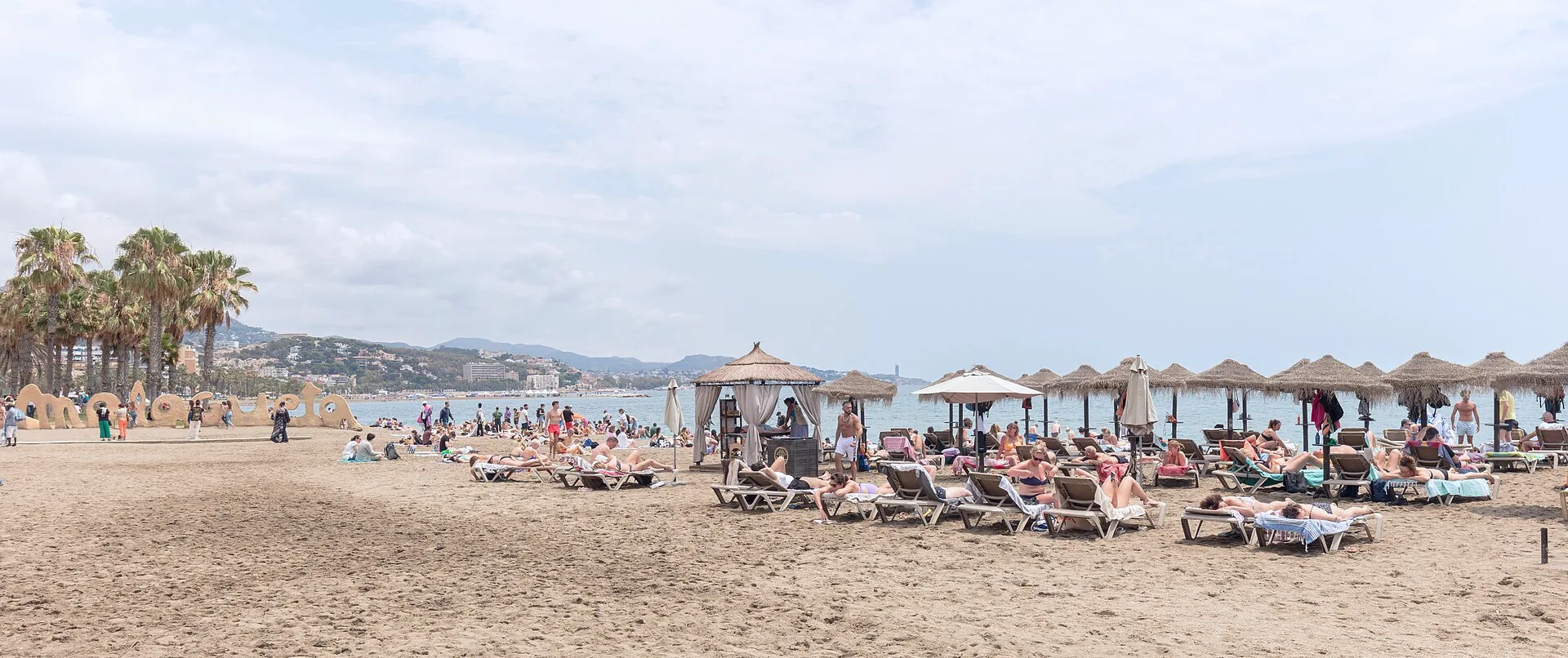
Diego Delso · CC BY-SA 4.0 · Edited
Winter hours and holiday closures
- Arrange the Alcazaba visit earlier in the day: its winter schedule runs from 1 November to 31 March, 09:00–18:00.
- Keep the Picasso Museum movable between suitable days: its ordinary November–February schedule is daily, 10:00–18:00.
Put the open-air visit first when the weather allows. That leaves room to enjoy the Alcazaba’s courtyards without pushing the visit towards the end of its day. The museum can follow, but its indoor setting does not mean it stays open into the evening.
If your stay includes the procession period, place the collection visit on a day when its opening window gives you room to look properly. A later-January stay makes that choice simpler without removing the need to leave time for the visit itself.
Sources & fact-checking
Checks against the sources below cover: opening hours and key figures.


