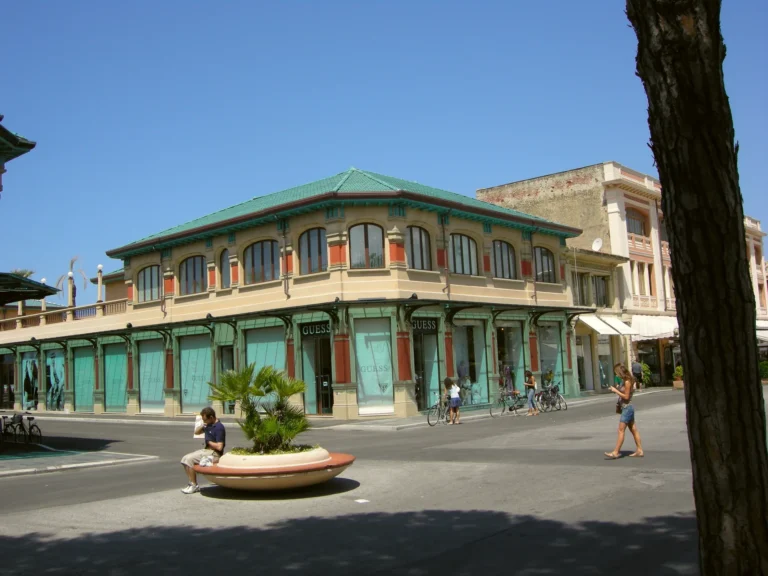
Pisa puts the Leaning Tower and a remarkable group of monuments at the centre of a short visit, while Lucca gives you a walled old town that rewards a day of wandering. Choose Pisa if the landmark and an easy airport connection lead your plans, or choose Lucca if you want the stay itself to unfold on foot. You can also visit both from one base, but the kind of evening you want may decide where you sleep.
Pisa and Lucca at a glance
| Criterion | Pisa | Lucca |
|---|---|---|
| Estimated double room per night | €90–150 per room | €100–160 per room |
| Arrival from Pisa Airport | Shuttle to Pisa CentraleBest | Shuttle, then train from Pisa Centrale |
| Characteristic sights | Tower and Cathedral Square | Walls and old-town squares |
| Walking day | Monuments, then streets beyond the square | Walls and old centre at an easy pace |
| Evening setting | City streets beyond the monument precinct | Dinner and strolling within the walls |
Pisa International Airport (Galileo Galilei Airport, PSA) has scheduled direct flights from the UK, including London, Manchester and Birmingham. If you arrive with limited time, Pisa makes it simpler to see the monumental square before an onward journey. Lucca involves an additional rail leg, but its enclosed historic centre makes more sense if you want to spend the next day without a fixed sightseeing finish line.
At either end of these comparable room estimates, Pisa is €10 less per night, but the ranges overlap substantially. Compare actual rooms of the same standard and dates rather than assuming Pisa will always cost less. Event dates, a room right by a major sight and a higher standard can push either city beyond the estimate. A first visit built around one famous sight favours Pisa, while a full day of meandering and an evening in the old town favours Lucca.
Pisa: the monumental square and the city beyond
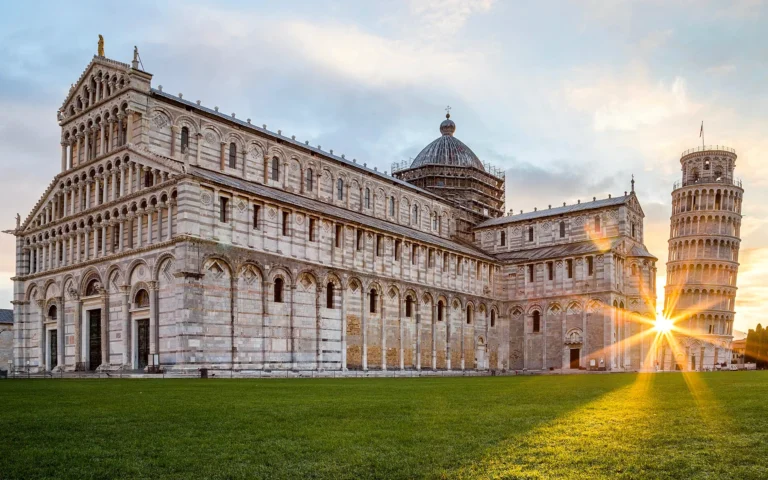
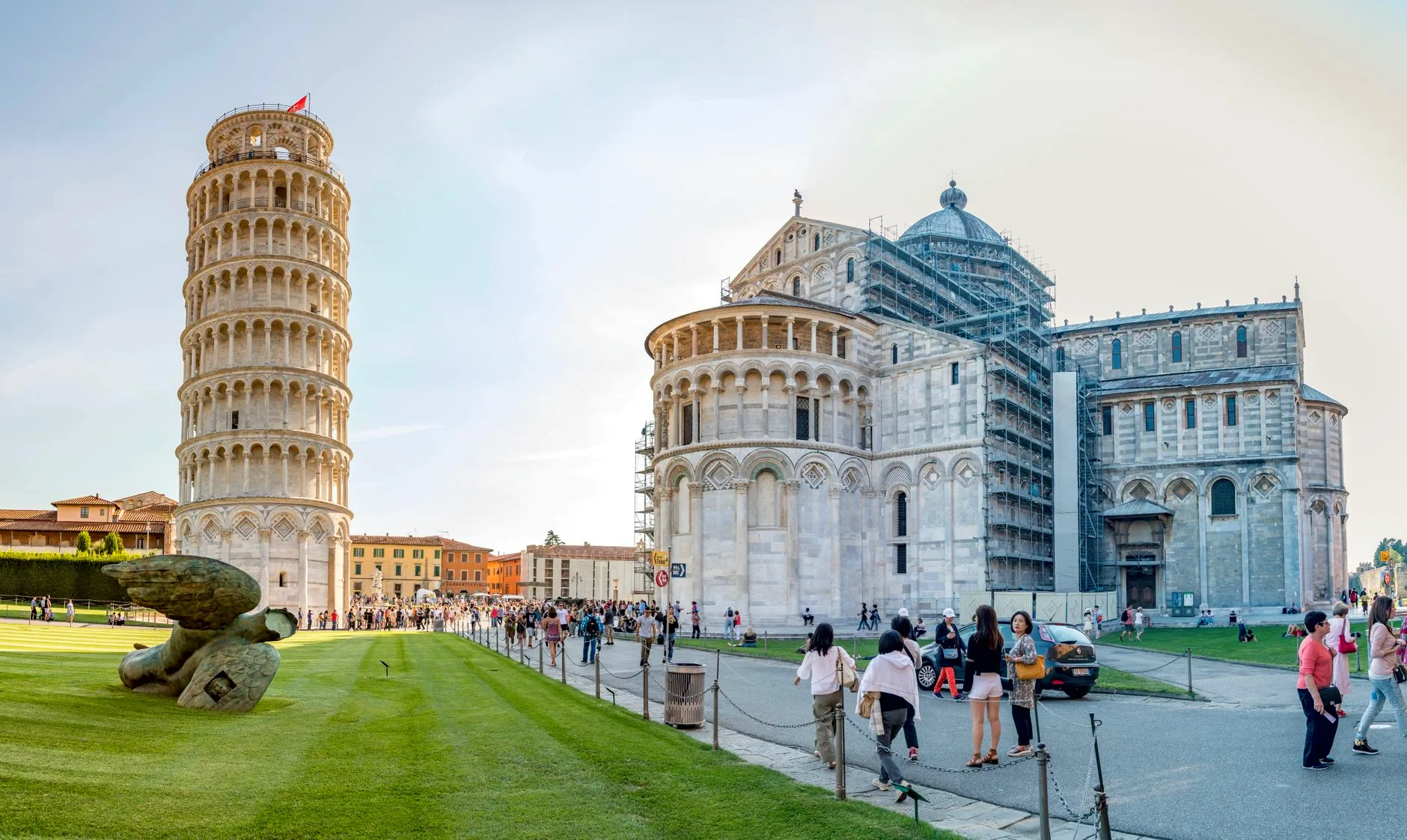
Pisa is worth visiting for more than a photograph of the Leaning Tower. Piazza del Duomo holds the Cathedral, whose marble façades and interior merit time in their own right, the round Baptistery and the Camposanto, a monumental cemetery enclosed by long galleries. Looking at the buildings together gives the tower its setting as the cathedral’s bell tower rather than treating it as an isolated curiosity.
Petr Ganaj · Pexels License · Edited
For a Tower climb, choose a timed entry in advance if the climb matters to you: capacity is limited and advance booking is recommended, though same-day tickets can be available. Children who have not turned eight by the end of the calendar year cannot enter, and under-18s must have a ticket and an accompanying adult. The 251-step climb is not recommended for people with cardiovascular or mobility disorders. Leave bags at the cloakroom. Free admission for an eligible disabled visitor with a responsible adult helper requires suitable certification and contact at least five days ahead for designated slots.
- Name
- Leaning Tower of Pisa
- Location
- Piazza del Duomo, Pisa Maps
- Site
- opapisa.it
- Hours
- 09:00–20:00
- Typical visit
- 45 minutes
- Essential fact
- The bell tower of Pisa Cathedral, climbed by stairs.
- Price
- €20
- Free disabled visitor with one responsible adult helper · required certification
Away from the square, Tuttomondo is Keith Haring’s large mural near Pisa Centrale, a change of scale and subject from the medieval monuments. Borgo Stretto, with its arcades and shops, takes you into the streets of the working centre rather than another viewpoint of the Tower. Keep time for both if you want Pisa to feel like a city rather than a single stop. For a simple snack, cecina is a chickpea-flour flatbread, usually baked and served in slices.
Lucca: the walls and the old centre
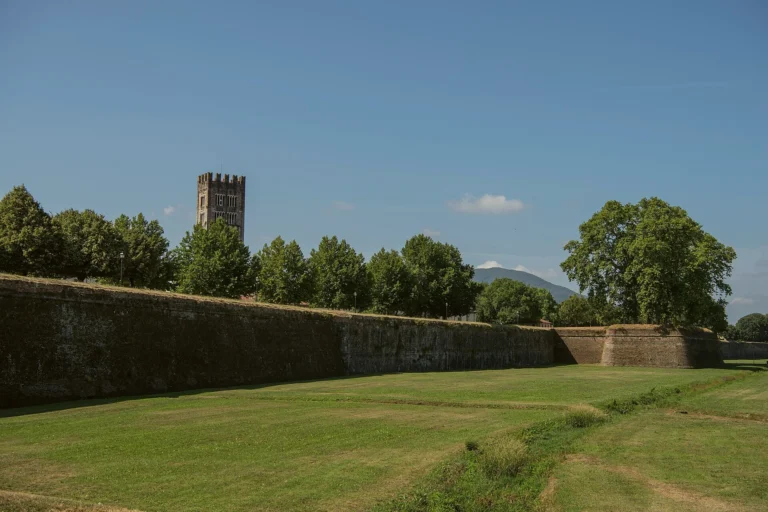
Lucca is worth the trip if you want the walk to be the main event. Its broad Renaissance walls form an elevated route around the historic centre, with ways down into the streets inside. Rather than completing a circuit and leaving, drop into Piazza Anfiteatro: its oval plan follows the footprint of the Roman amphitheatre, now framed by buildings and entrances cut through them. The square makes much more sense from ground level than as a mark on a map.

Alex2015Genova · CC BY-SA 4.0 · Edited
Continue towards the Basilica of San Frediano, recognised by its mosaic façade. This is a distinct stop from the commercial bustle around Piazza Anfiteatro, and the streets between them give you room to pause rather than race between viewpoints. Leave time inside the walls, not just on top of them: the attraction of Lucca is the connection between its open wall-top paths, small streets and squares.
Guinigi Tower offers a view over those streets beneath its roof-top trees, but it is an optional climb rather than a prerequisite for enjoying the city. Reaching the top means 230 steps across 28 flights, ending in a narrow metal staircase, so if you cannot climb stairs, enjoy the walls and the centre instead. The tower is not physically accessible without the stair climb.
- Name
- Guinigi Tower
- Location
- Lucca historic centre Maps
- Site
- cultura.comune.lucca.it
- Hours
- 10:00–18:30
- Typical visit
- 45 minutes
- Essential fact
- A medieval tower with trees on its roof terrace.
Food is another reason to linger: Lucca’s tordelli and traditional ragù make a substantial sit-down meal. Tordelli are meat-filled pasta usually served with ragù, a meat sauce. Buccellato is a sweet bread with raisins and anise, suited to a snack on a slower afternoon. Both give you a reason to pause between the sights rather than rush through the centre.
Where to stay in Pisa or Lucca
Stay in Pisa if your flight or onward train shapes the stay, or choose Lucca if you want evenings inside the walls. In Pisa, a room near Pisa Centrale eases onward travel, while one near Piazza del Duomo puts the monuments close. A Cathedral Square address is not the same convenience as being beside the station with luggage.
In Lucca, staying inside the walls lets you step out for dinner and walk back through the old centre. A room near Lucca station can be easier with bags, especially if you plan rail outings, though you will walk into the walled centre for much of your visit. For specific dinner ideas, restaurants for a Lucca evening meal help you judge whether that setting is worth choosing as a base. Neither city guarantees a quiet room merely because a street looks pleasant on a map.
The mid-range nightly estimates overlap. An event, a prime address or a different standard can change the price more than the city name. Compare rooms for your own dates and the distance you want to carry luggage. Pisa’s evening can continue in streets away from the Tower, while Lucca makes the old town the setting for dinner and a walk afterwards.
Pisa as an overnight base
Pros
- A station-area room makes an early onward train easier to manage.
- A Cathedral Square room allows a monument-led visit without commuting back to the sights.
Cons
- Choosing a station-area room leaves a separate walk to the monumental square.
- Choosing a room beside the square can be inconvenient for a luggage-heavy rail departure.
Lucca as an overnight base
Pros
- A room within the walls makes it easy to break up a walking day with a return to your room.
- A station-area room gives rail travellers a practical luggage drop before entering the old town.
Cons
- Cobblestones and the walk into the walls can be tiring with heavy bags.
- An inside-the-walls address may complicate arriving by car because vehicle access is restricted.
Arriving by air and visiting both
From Pisa International Airport, the Pisamover shuttle departs at the Airport station outside the terminal next to Gate B, City Gate, and goes to Pisa Centrale via San Giusto/Aurelia. A one-way adult ride costs €6.50. It runs daily from 06:00 to midnight, but from 1 June to 30 September it runs until 01:00. If your arrival falls outside that window, plan another way to reach your accommodation rather than assuming the shuttle will be running.
From Pisa Centrale, direct regional trains reach Lucca station. The rail leg is about 23 km and about 29 minutes, with no change on this connection. From Lucca station, the walk to Piazza Anfiteatro is about 1.1 km and about 16 minutes, passing into the walled centre. Allow separately for the airport shuttle and any train connection, because those rail and walking figures start at Pisa Centrale, not at the airport.
If you want both cities without moving hotel, see Pisa’s Cathedral Square first, then give Lucca’s walls and inner streets the longer wandering stretch. Starting at Pisa’s landmark makes a brief stop there worthwhile, and continuing to Lucca leaves room for the oval Piazza Anfiteatro and a meal inside the walls. A day trip in the opposite direction is possible from a Lucca base, but it still needs the rail journey back. Squeezing both into a very short visit means trading away either the other Pisa streets or time to wander through Lucca, so stay with one city if you cannot spare the day.
Crowds, weather and driving limits
Pisa’s Piazza del Duomo tends to be busiest from late morning through mid-afternoon, particularly in July and August. For more space around the monuments, aim for early or later in the day. Spring and autumn generally bring lighter crowds than peak summer, not an empty square. A timed Tower climb still requires you to arrive for your slot.
On a hot day, Lucca’s wall-top walk leaves you exposed, and in rain, the broad path is less appealing than a visit inside the centre. Pisa’s Cathedral and other monuments offer an indoor alternative to remaining in the square, while Lucca’s streets and basilica let you break up the outdoor walk. If you cannot manage stairs, skip both tower climbs: Pisa’s is physically demanding and Guinigi Tower ends with a narrow staircase. If a fixed entry time would constrain your day, Pisa’s Tower also requires a timed ticket.
Which city should you choose?
- If this is a short first visit built around the Leaning Tower and Cathedral Square, choose Pisa and leave some time for the streets beyond the monuments.
- If you want a full, unhurried day of walking, squares and a dinner inside the walls, choose Lucca.
- If your UK flight arrives late or leaves early, favour Pisa when the airport connection runs at the time you need. Otherwise arrange your transfer before choosing a base.
- If room cost decides, compare central doubles of the same standard for your actual dates: the estimated ranges overlap, so neither city is always cheaper.
- If you can give both places meaningful time, stay in one base and visit Pisa’s monumental square before Lucca’s walls and centre rather than changing hotels.
Choose the city you want to spend time in after the main sight. Pisa leaves you close to your airport arrival and its monumental square, while Lucca gives you more of the walled centre to enjoy between meals and walks.
Sources & fact-checking
Checks against the sources below cover: services, fares and charges, and opening hours.
- Toscana Aeroporti — service
- FAQ – How and Why to Visit Lucca
- PisaMo Srl — service
- Pisamover S.p.A. — service
- Pisamover — fares and charges
- Pisamover S.p.A. — opening hours
- Trenitalia — service
- Opera della Primaziale Pisana — fares and charges
- A few words of advice before you buy your ticket
- Accessibility
- LUCCA – Torre Guinigi