Choose Tenerife for a holiday led by volcanic landscapes and northern towns, or choose Gran Canaria for city-and-beach days based in Las Palmas. For a southern resort week, either can work: Costa Adeje and Maspalomas are more useful starting points for your decision than an island-wide verdict. Your base determines what you can walk to, how evenings unfold and how much effort inland outings take.
Tenerife and Gran Canaria at a glance
| Criterion | Tenerife | Gran Canaria |
|---|---|---|
| Beach settings | Costa Adeje resorts; wind-exposed El Médano | Maspalomas dunes; Las Canteras city beach |
| Town or city with beach access | Puerto de la Cruz: northern town base | Las Palmas: major city beside Las Canteras |
| Inland outings | Teide plateau, Anaga forest, La Orotava | Roque Nublo, Tejeda, Guayadeque |
| Without a car | Southern resorts and northern towns; restricted Teide bus days | Las Palmas and southern resorts; mountain interchanges |
| Estimated mid-range double room | €90–€160 per double room per night | €90–€160 per double room per night |
A beachfront position, room facilities and holiday demand matter more to your room budget than the island name. Compare actual bases before choosing accommodation.
Tenerife’s northern towns offer a different stay from its southern resorts, while Gran Canaria’s capital makes urban sightseeing part of a beach holiday. Neither island’s easy coastal bus connections make mountain touring equally straightforward.
Beaches, resorts and city bases
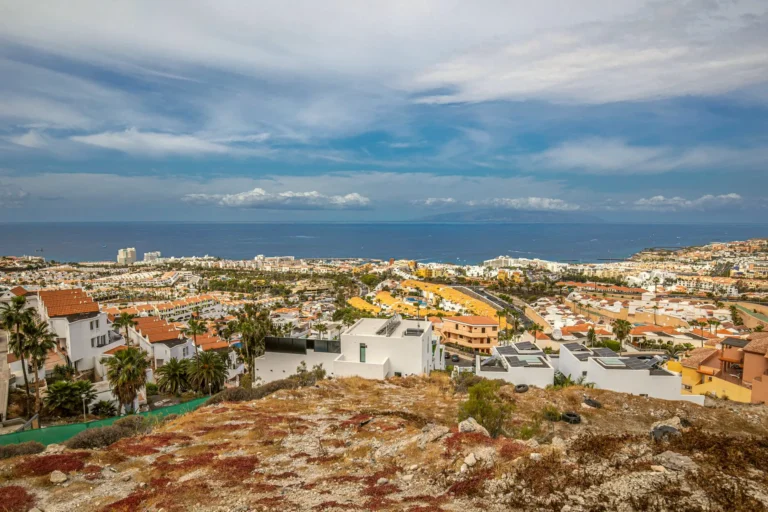
Costa Adeje and Los Cristianos suit a Tenerife stay built around beaches, restaurants and walkable resort surroundings. Costa Adeje has a broad choice of resort hotels; Los Cristianos combines a harbour setting with a busy seafront. Families can prioritise a short walk from accommodation to the beach, while couples should choose between lively restaurant areas and quieter hotel surroundings.
El Médano is a watersports coast rather than a sheltered sunbathing default. Its exposure to north-easterly trade winds brings breezy, sometimes gusty conditions: you may feel cooler and encounter blowing sand. Choose El Médano for windsurfing or kitesurfing, not for reliably calm beach lounging.
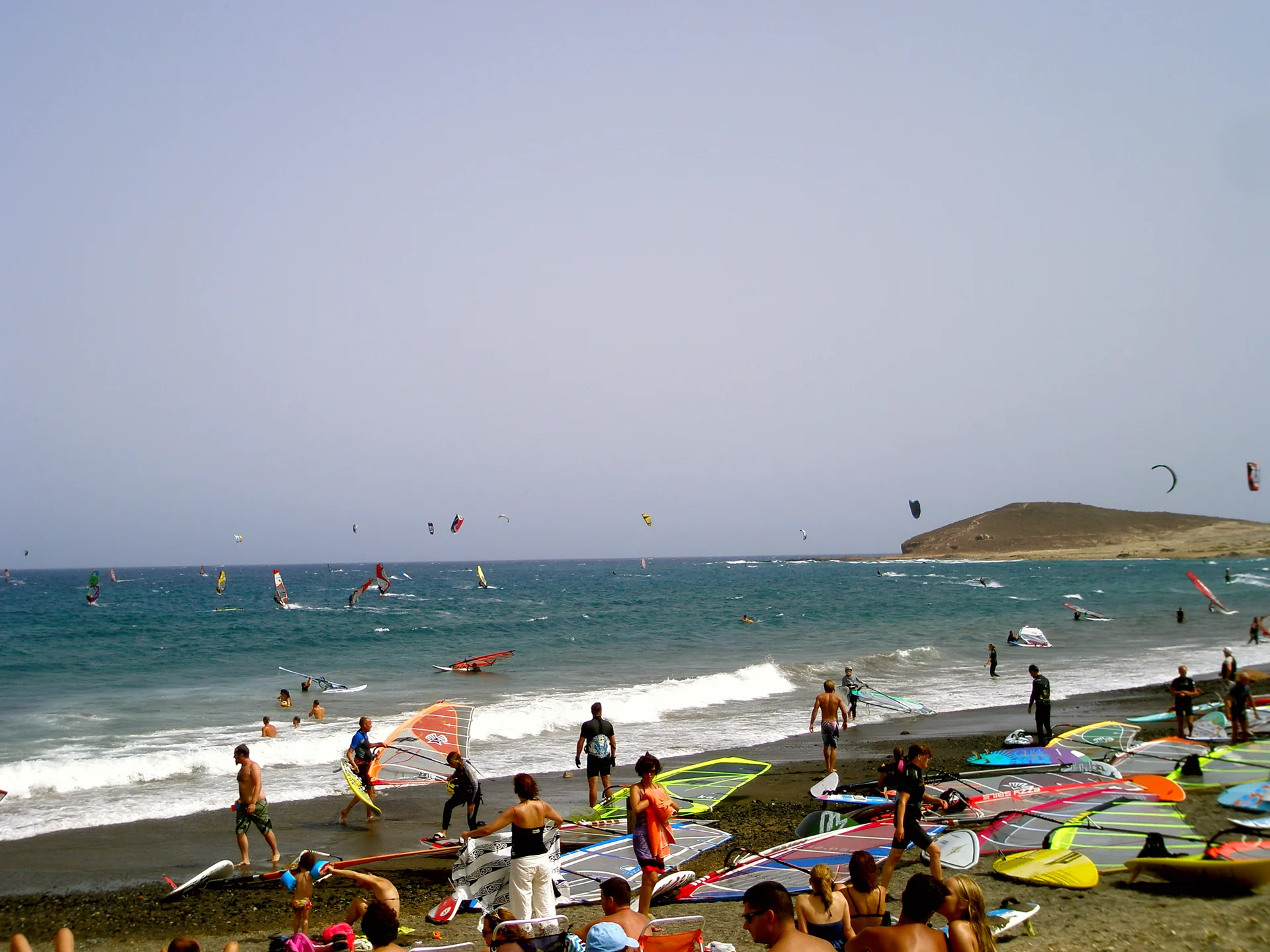
X3m · CC BY-SA 3.0 · Edited
Puerto de la Cruz offers a northern town base, with an older centre and coastal walks rather than a southern resort strip. It suits travellers who want town evenings and access to La Orotava alongside time by the sea.
On Gran Canaria, Maspalomas places dunes at the centre of the beach setting. The approach from the adjoining resort area crosses sand on foot, so allow for dune terrain when choosing accommodation for children or anyone who finds soft sand tiring. Playa del Inglés offers a busier resort strip, with shopping and nightlife closer to the holiday accommodation.

Marc Ryckaert ( MJJR ) · CC BY 3.0 · Edited
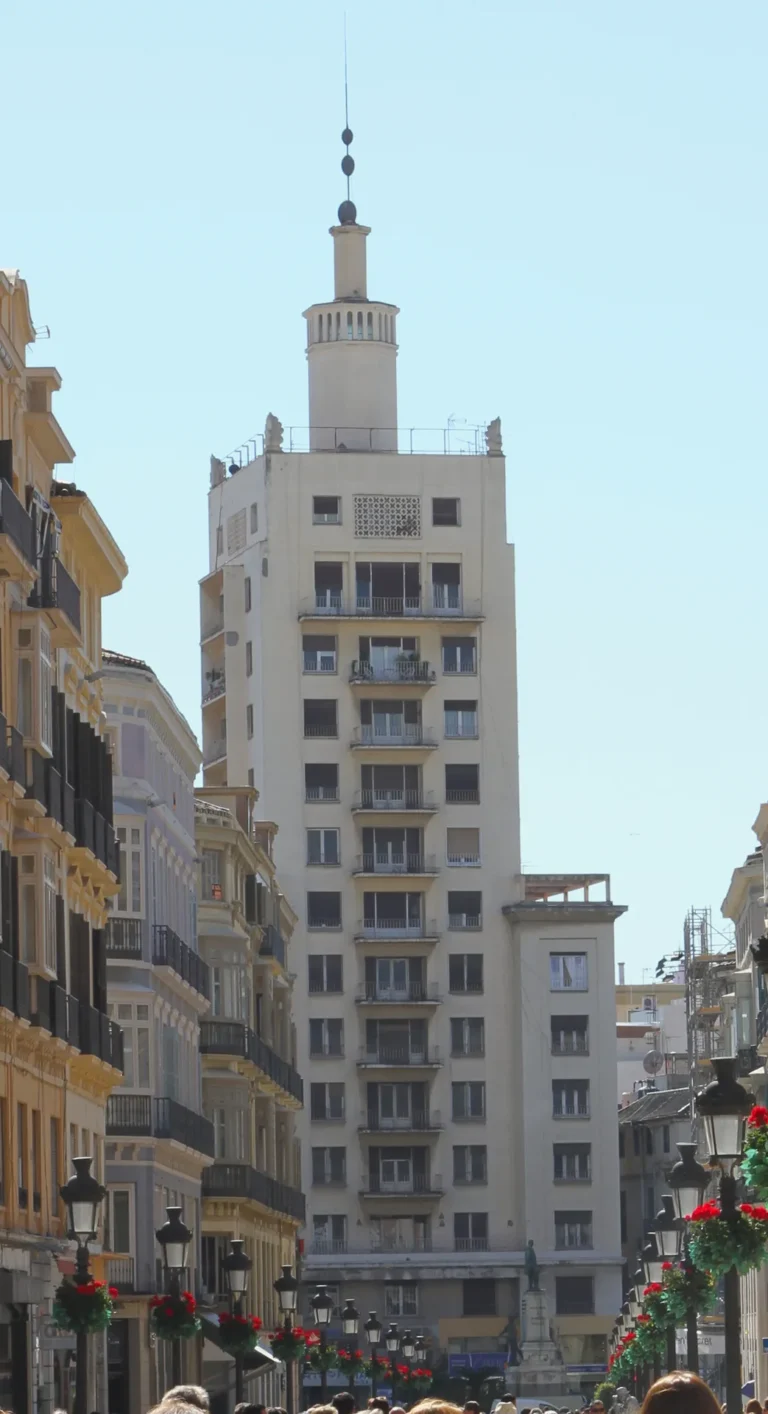
Puerto de Mogán has a smaller marina setting, making it a natural choice for couples who prefer harbour-side meals to a large resort’s evening bustle. Las Palmas offers something different again: Las Canteras has a continuous pedestrian promenade beside the main beach, while Vegueta provides historic-city sightseeing. Choose Las Palmas for beach walks and city evenings. Vegueta is a separate part of the city, not an extension of the beach promenade.
Volcanoes, mountain villages and historic towns
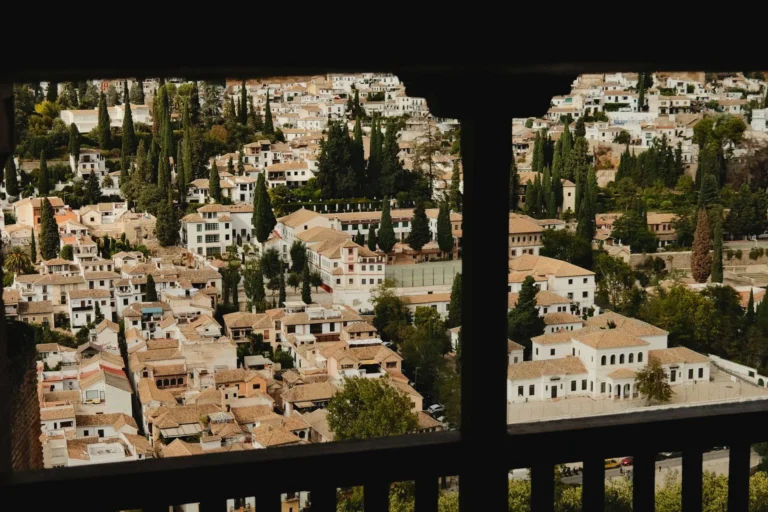
Tenerife’s Teide plateau and Anaga forest offer sharply contrasting days inland. Around Teide, lava formations and broad volcanic slopes make a scenic outing worthwhile without committing to a high-altitude walk. Anaga, in the north-east, brings laurel forest and steep ridges, and La Orotava adds historic streets, traditional balconies and courtyards to a northern stay.

Diego Delso · CC BY-SA 4.0 · Edited
Gran Canaria’s Roque Nublo is a prominent rock formation in the mountainous interior. Pair that landscape with Tejeda’s village setting, or explore Guayadeque’s ravine and cave dwellings. Vegueta, the historic district of Las Palmas, offers cathedral surroundings and older streets without leaving your city base. A southern coastal base makes inland days a commitment to winding mountain roads, rather than quick beach breaks.

Joergsam · CC BY-SA 4.0 · Edited
Tenerife
Pros
- Volcanic plateau, laurel forest and historic northern towns offer distinct kinds of exploring.
- A northern town stay can put traditional architecture alongside coastal days.
Cons
- A southern resort stay leaves the northern landscapes spread across the island.
Gran Canaria
Pros
- Vegueta’s cathedral surroundings and older streets bring cultural sightseeing into a Las Palmas stay.
- Mountain villages, rock formations and ravines give inland days different focal points.
Cons
- Coast-to-interior travel follows slow, winding roads.
- A southern resort base separates everyday beach life from the capital’s cultural sights.
Teide and Roque Nublo walking access
Seeing Teide’s plateau is a different undertaking from walking its high-altitude trails. Advance authorisation applies to specified sections of Montaña Blanca–La Rambleta (PNT 07), Teide–Pico Viejo (PNT 09) and Chafarí (PNT 28), and to Los Regatones Negros (PNT 23). Telesforo Bravo (PNT 10), the summit trail, also requires a permit through the National Parks reservation system. Choose the actual walk before arranging the rest of your mountain day.
Reach Roque Nublo’s trailhead using the shuttle from the designated park-and-ride areas at Tejeda or Cruz de los Llanos. From Cruz de los Llanos, walking along the trails is also permitted. Do not plan on driving straight to the trailhead. This managed approach matters even if you hire a car for the rest of the island.
Accommodation, meals and holiday costs
Neither island is consistently the more expensive choice for a comparable holiday. The room budget above works for both, so location and standard are stronger deciding factors. A seafront resort hotel with pools and extensive facilities is a different purchase from a simpler room in a town, even when both carry a similar star rating.
For a simple sit-down main course and a drink, allow roughly €15–€25 per person on either island. Neighbourhood restaurants tend towards the lower end, while tourist seafront locations and more elaborate meals push spending upwards.
Touring can change the total more than everyday meals. A walkable base such as Las Palmas or Los Cristianos reduces the need to pay for transport on beach days. Repeated inland outings may justify car hire or organised excursions. Include parking, fuel and the number of days you actually need the car. Choose your base around the days you want, then compare the whole stay, rather than selecting the cheapest room far from them.
Winter weather and busy periods
| Criterion | Tenerife South Airport | Gran Canaria Airport |
|---|---|---|
| December maximum | 22.8 °C | 22.2 °C |
| January maximum | 21.7 °C | 20.8 °C |
| February maximum | 22.0 °C | 21.2 °C |
| December rainfall | 30 mm | 31 mm |
| January rainfall | 17 mm | 25 mm |
| February rainfall | 20 mm | 24 mm |
Gran Canaria is not the warmer choice in these winter airport records. Tenerife South has slightly higher daytime maxima across the months compared. Gran Canaria Airport is on the east coast, not in Maspalomas. Local wind exposure, shelter and cloud cover affect the beach day you experience. Tenerife’s northern coast can be cloudier than its southern resorts, and mountain conditions differ greatly from the coast.
Tenerife’s main resorts have recurring demand peaks in December–February, at Easter and in July–August. Gran Canaria’s resorts are also busy in winter, especially Christmas and New Year, and at Easter. Summer school holidays bring another surge, particularly among Spanish visitors. Travelling outside these peaks gives you more flexibility over accommodation, rather than a guarantee of empty beaches.
Tourism pressure is a reason to consider how you visit, not to treat either island as off-limits. Stay on designated paths, respect residential neighbourhoods and use local businesses beyond the resort strip when exploring.
Airports and getting around without a car
| Airport | Destination | Bus | Departure window |
|---|---|---|---|
| Tenerife South | Costa Adeje | TITSA 40 | Daily 06:30–21:40 |
| Tenerife North | Puerto de la Cruz | TITSA 30 | Working days 07:30–23:20 |
| Tenerife North | Puerto de la Cruz | TITSA 30 | Weekends/public holidays 07:50–21:15 |
| Gran Canaria | Las Palmas | Global 60 | Daily 06:15–23:15 |
| Gran Canaria | Faro de Maspalomas | Global 66 | Daily 07:30–20:30; hourly |
Tenerife South is the main international gateway for southern resort stays, with routes across Europe and some North African destinations, alongside Spanish domestic links. Tenerife North mainly handles Spanish mainland and inter-island arrivals, with Madeira and Caracas connections too. It suits Puerto de la Cruz and northern-town stays. Gran Canaria Airport serves Spanish mainland and inter-island routes, Europe, and North and West Africa, with direct buses towards both the capital and southern resorts.
For Tenerife South arrivals outside the daytime service window, line 711 provides the alternative airport service. Coastal and city stays are realistic without a car, but luggage and the walk from the final bus stop still matter when choosing a hotel.
Line 342 leaves Costa Adeje bus station at 09:25 and takes about 2 hours 15 minutes to the Teide area, serving the Parador, cable-car stop and El Portillo. Listed returns leave El Portillo at 15:15 and the cable-car stop at 15:40. Use this as a limited-window sightseeing outing, not an open-ended mountain day. Decide where you will finish before setting off on a walk.
From Las Palmas, the weekend connection towards Roque Nublo runs via Global line 30 to Faro de Maspalomas, then line 18 towards Roque Nublo and Tejeda. It is a Saturday-and-Sunday interchange journey, not a direct city-to-trail shuttle. An organised outing can be simpler if a mountain day is essential to your car-free holiday. Keep the managed trailhead approach distinct from the bus journey towards the mountains.
Combining the two islands
For a split stay, visit Tenerife first and finish in Las Palmas on Gran Canaria. Put volcanic landscapes and northern towns before city-and-beach days, so the second stay adds a genuinely different rhythm rather than another similar southern resort.
Baleària Canarias runs a direct passenger ferry from Santa Cruz de Tenerife to Las Palmas every day, with up to eight departures daily and a crossing of approximately 1 hour 40 minutes. The advertised passenger fare starts at €62 per person one way, but date, season, demand, availability and selected options change the price.
Reaching the port, boarding, collecting luggage and changing hotels take holiday time beyond the crossing. Split a week only if the contrast with Las Palmas matters more to you than uninterrupted days in one base. Otherwise, choose one island and give its coast and interior room in your stay.
Which island fits your holiday?
- Landscape-led exploring: Tenerife, for Teide’s volcanic plateau, Anaga and La Orotava; choose a base that suits your main outings.
- Car-free city and beach: Gran Canaria, staying in Las Palmas for Las Canteras and Vegueta.
- Southern resorts or families: either, choosing Costa Adeje or Los Cristianos for nearby facilities, or Maspalomas if dune terrain suits your beach days.
- Couples wanting a smaller coastal setting: Gran Canaria’s Puerto de Mogán; choose Puerto de la Cruz on Tenerife for northern-town evenings.
- Mountain walking: choose the landscape first, then arrange Teide authorisations or Roque Nublo’s reservation and managed approach.
- Cost-sensitive stays: either, comparing like-for-like rooms, meal choices and touring costs rather than island labels.
- Both islands: Tenerife first, Gran Canaria second, only if ending with Las Palmas justifies the transfer during your week.
Let the base settle a close choice: the beach, town or city you use each day matters more than the island label.
Sources & fact-checking
Checks against the sources below cover: key figures and services.
- State Meteorological Agency (AEMET), Spain — key figures
- Business data on Tenerife Norte Airport | Aena
- Destinations | Gran Canaria Airport | Aena
- Línea 40
- Línea 30 Puerto de la Cruz – Aeropuerto Norte
- Global (Guaguas Global) — service
- Línea 342
- Global — service
- Baleària Canarias — service
- Cabildo de Tenerife — service
- Cabildo de Gran Canaria — service
- Gran Canaria Tourist Board (official tourism website) — service