Berlin’s food culture stretches from bakery breakfasts to pork knuckle dinners. You can try a local preparation such as Berlin-style liver, or an adopted tradition such as Döner kebab, without making every meal a restaurant occasion.
Start with Currywurst for a quick taste of the city, or save Eisbein for a substantial sit-down meal. The eight dishes below give you options for breakfast, a sweet break, lunch and dinner, with useful German words for the choices you will meet at the counter.
Ordering, meal times and food costs
| Food | What it is | When to have it | Typical price |
|---|---|---|---|
| Splitterbrötchen | Sweet bakery roll | Breakfast | €1–3 |
| Pfannkuchen | Jam-filled doughnut | Sweet break | €2–4 |
| Currywurst | Sausage with curry sauce | Snack or lunch | €4–6; with chips €7–10 |
| Döner kebab | Meat and salad in bread | Lunch or late snack | €7–10 |
| Buletten | Fried meat patties | Snack or pub lunch | €3–6 snack; €10–16 meal |
| Eisbein | Cured pork knuckle | Lunch or dinner | €18–28 |
| Berlin-style liver | Liver, apples and onions | Lunch or dinner | €16–25 |
| Königsberger Klopse | Meatballs in caper sauce | Lunch or dinner | €15–23 |
Currywurst is Berlin’s signature dish, the snack usually meant by the city’s “national dish”. Pfannkuchen and Eisbein are other emblematic specialities. Local bakery and pub preparations sit alongside food brought by migrants, notably Döner and Königsberger Klopse.
For an everyday breakfast, order bread rolls with butter, jam, cheese or cold meats, or take a pastry and coffee at a bakery. Lunch is commonly around 12:00–14:00 and dinner around 18:00–21:00, while snack counters suit eating between meals.
At a snack counter, choose your portion and extras, order and usually pay before collecting it. Carry some cash for small shops. At a table-service restaurant, order from the server and ask for the bill when you finish. A separate cover charge is not customary, but drinks and extras are charged individually.
Bakery food and counter meals keep the bill lower than a restaurant dinner. Chips, extra meat and larger sizes can turn a snack into a meal. Allow roughly €2–4 for an extra side. A café breakfast with coffee often comes to around €7–13, with table service and a fuller plate towards the upper end.
Splitterbrötchen: sweet bakery rolls
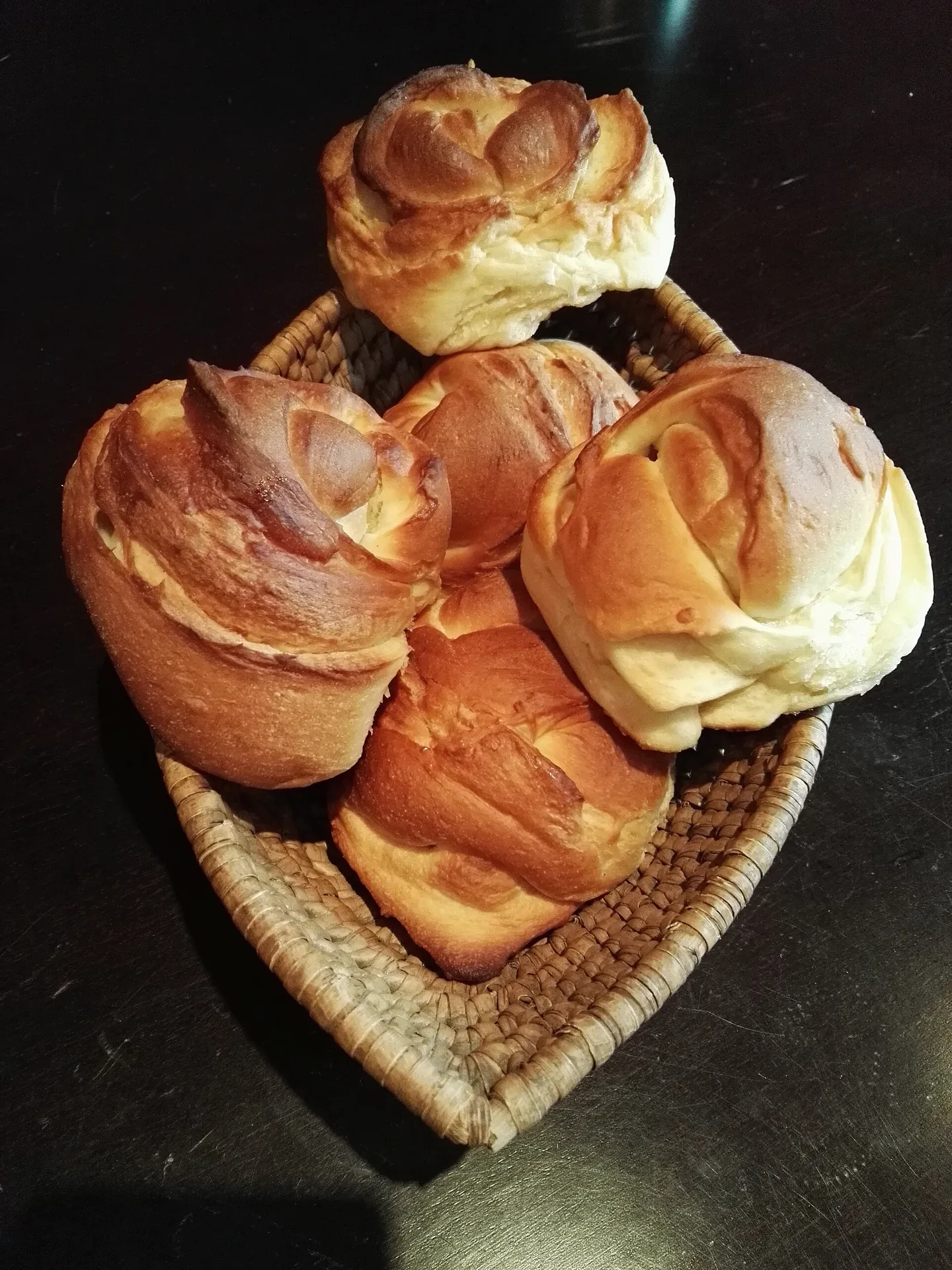
Splitterbrötchen are slightly sweet breakfast rolls with a crisp, crackled crust and a soft, layered centre. Made from wheat-flour yeast dough with milk, sugar, salt and butter or margarine, they sometimes contain egg. Their flaky exterior may suggest a croissant, but the shape and interior are more those of a bread roll than a crescent pastry.
They belong particularly to the bakery tradition of Berlin’s former eastern districts. Look for them at traditional bakeries that still bake on site, and use the visible cracked crust as your counter-side cue. Have one for breakfast, plain or with butter: its mild sweetness suits a bread-based start rather than a rich dessert.
Z thomas · CC BY-SA 3.0 · Edited
Pfannkuchen: jam-filled doughnuts
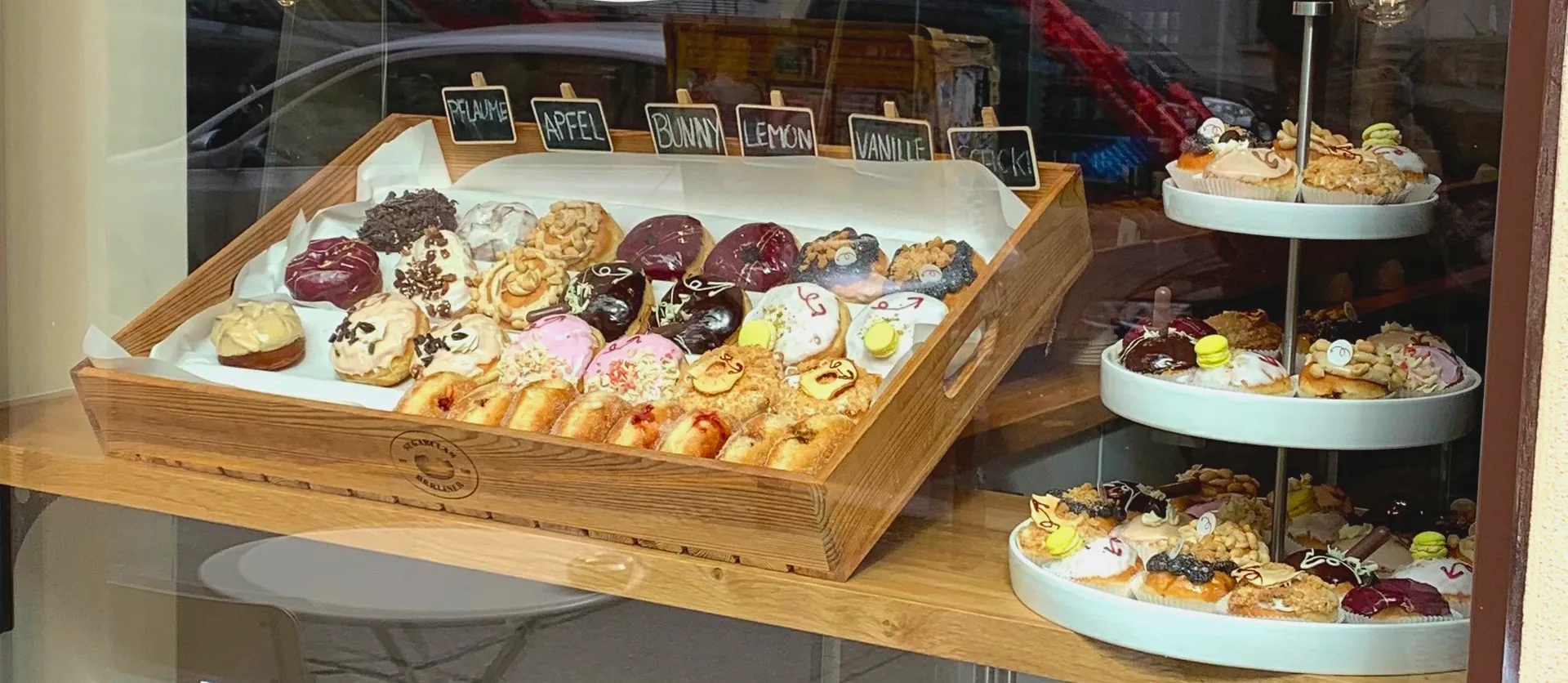
Pfannkuchen are light yeast doughnuts, deep-fried, dusted with sugar and filled with a soft jam centre. Ask for Pfannkuchen in a Berlin bakery, while elsewhere the same pastry is often called a Berliner. Have one as an everyday sweet break with coffee, or take it away from the bakery counter.
Plum, raspberry and rose-hip jam are traditional fillings. Where several are offered, choose the fruit you prefer rather than assuming every doughnut has the same centre. These pastries have a particular place at New Year’s Eve, New Year’s Day and Carnival, although you need not wait for a celebration to eat one.
They are usually fried in vegetable oil or another neutral frying fat, rather than routinely in animal fat. Recipes still vary, so ask about the whole recipe if you avoid animal ingredients: frying oil alone does not settle whether a doughnut suits your diet.
Lear 21 · CC BY-SA 4.0 · Edited
Currywurst: sausage with curry sauce
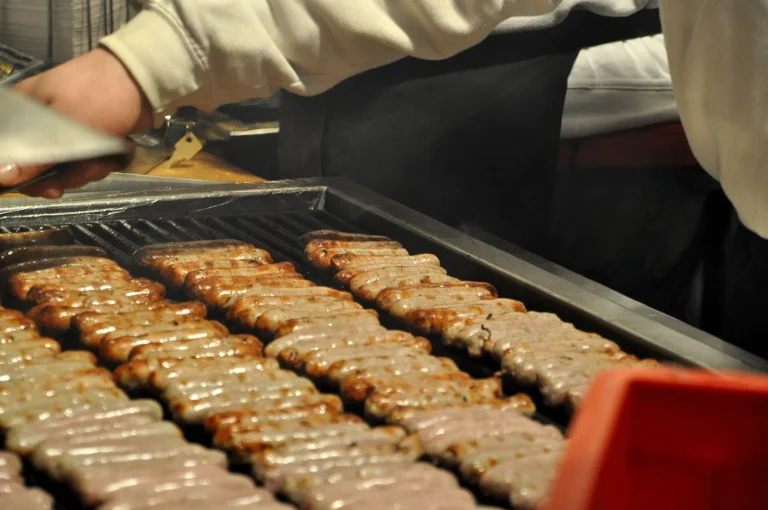
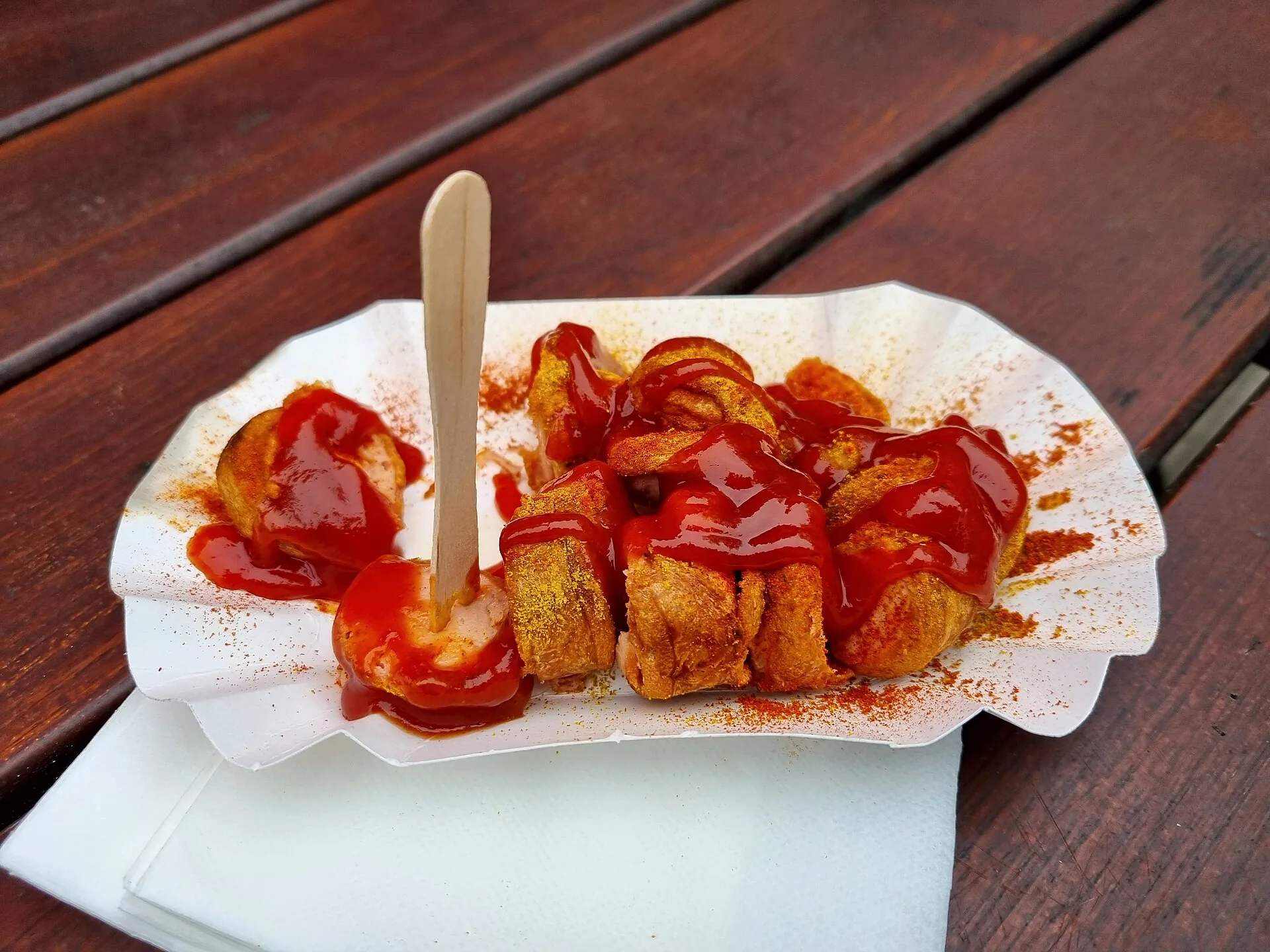
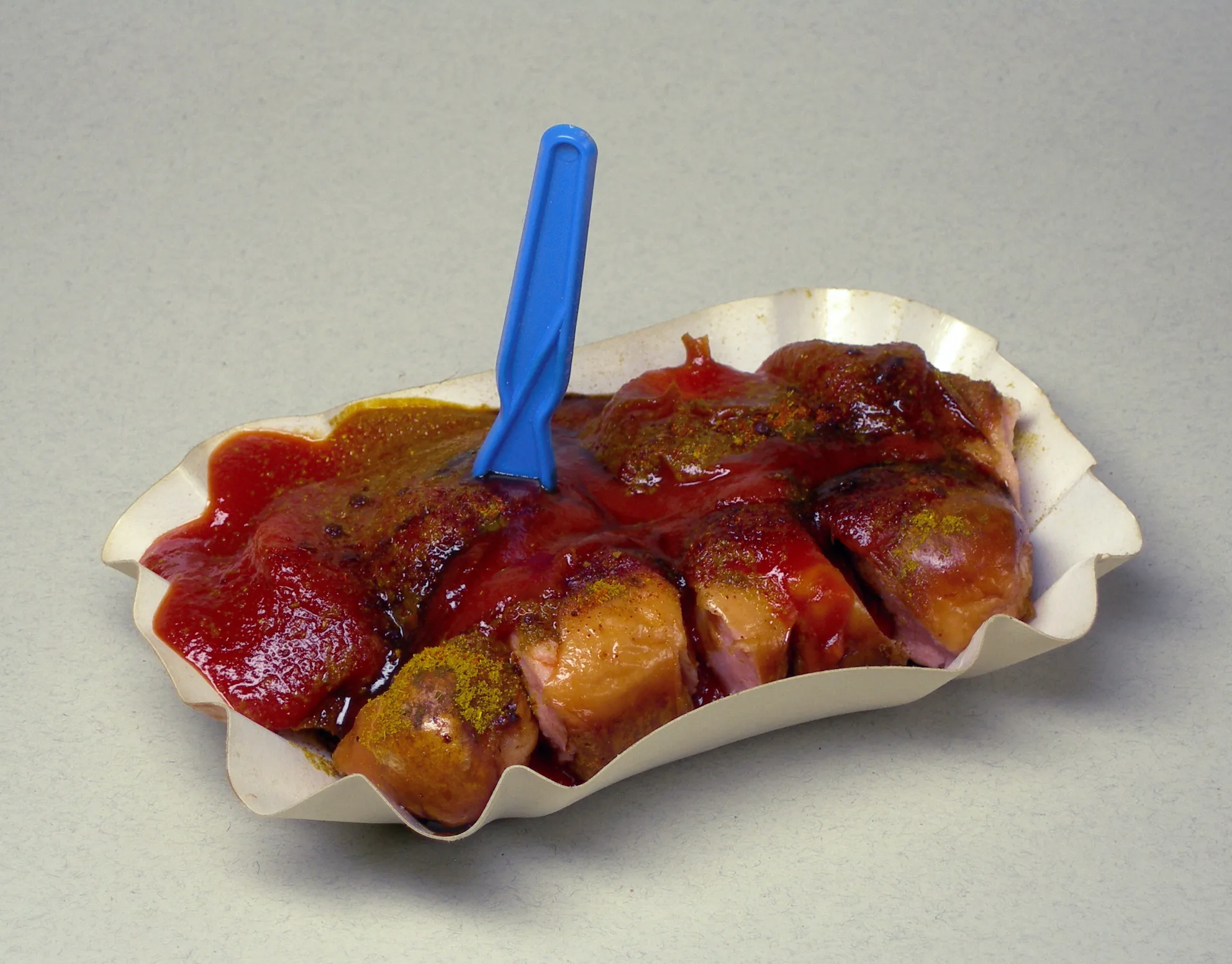
Currywurst comes as sliced pork sausage covered with a spiced tomato-based sauce and a dusting of curry powder. The sausage may be fried or steamed, and the sauce brings sweetness, tang and spice rather than the character of an Indian curry. Have it at an Imbiss, a snack stand, for a quick lunch or a savoury break.
Choose mit Darm for sausage with casing, or ohne Darm for sausage without it. You may also see mit Pelle and ohne Pelle, meaning the same choices. The casing gives a firmer bite, while the skinless version has a softer exterior. Where both are offered, this is the useful choice to make before ordering.
Herta Heuwer is generally credited with creating Currywurst in post-war Berlin in 1949, although its origins have competing claims. It remains an easy counter meal: a bread roll lets you mop up the sauce, while chips make the serving more substantial. Order the accompaniment explicitly rather than assuming it is included.
Rainer Z · CC BY-SA 3.0 · Edited
Döner kebab: meat in bread
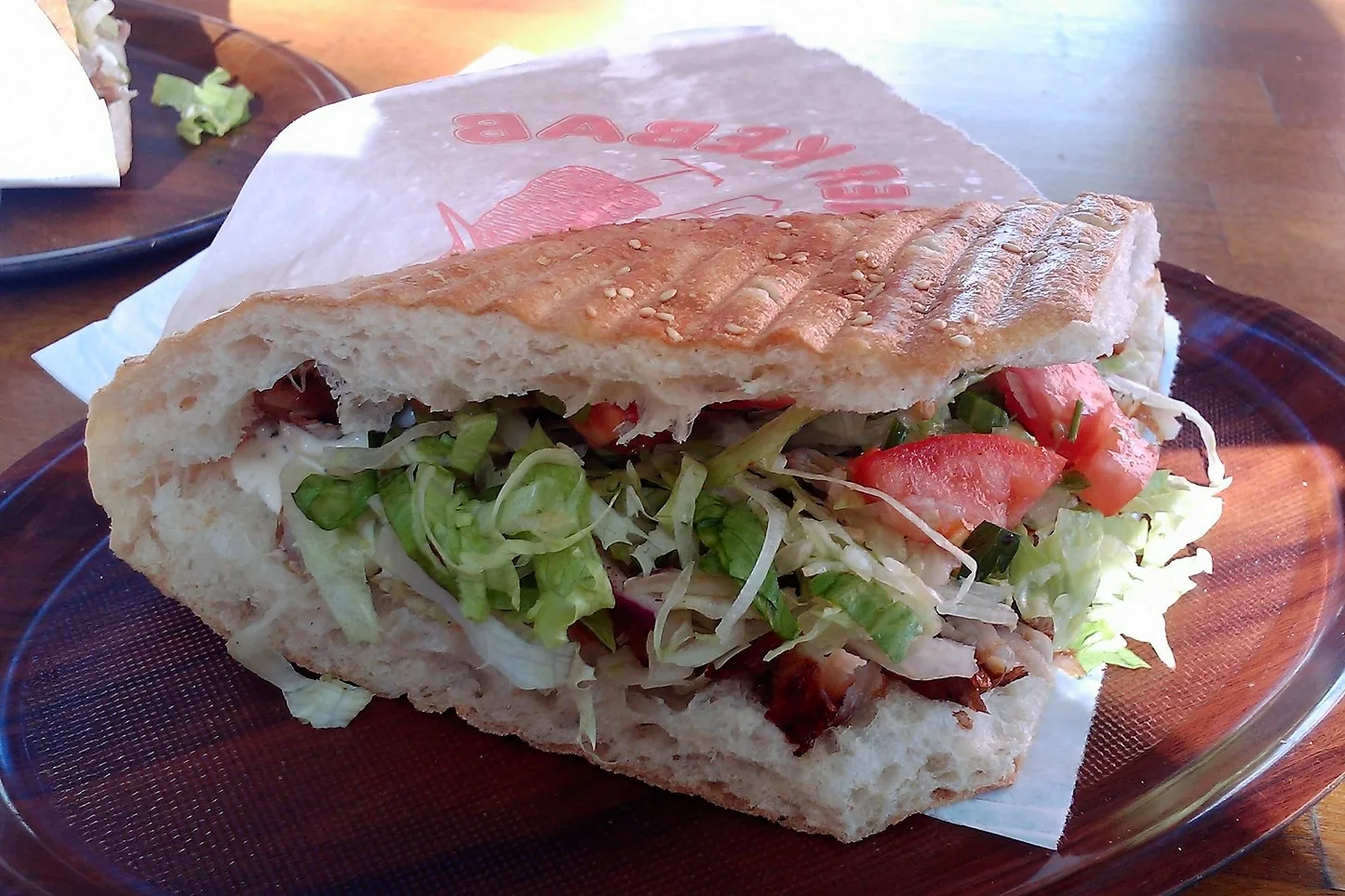
Döner kebab combines spit-roasted meat with salad, vegetables and sauce in bread. Lettuce, tomato, cucumber, onion and cabbage commonly give the filling crunch alongside the seasoned meat. Turkish workers and entrepreneurs helped establish this bread-based meal in Berlin in the 1970s, making it part of the city’s German-Turkish everyday food culture.
Döner im Brot or Döner im Fladenbrot means the bread sandwich, while Dürüm Döner means a thin-flatbread wrap. These distinguish a handheld order from a plated kebab. At a kebab shop, either handheld form suits a substantial lunch or a later snack.
The meat depends on the shop: chicken, veal, beef, lamb and mixed-meat versions are common possibilities, not a choice every counter offers. Read the meat labels before ordering. Garlic, herb and spicy sauces are usual options, with cocktail sauce at some shops. Choose among those offered when the person preparing your order asks.
A larger size or extra meat raises the bill as well as the portion. If you want a straightforward lunch, start with the regular serving rather than adding extras automatically: bread, meat and vegetables already make a filling meal.
AleGranholm · CC BY 2.0 · Edited
Buletten: fried meat patties
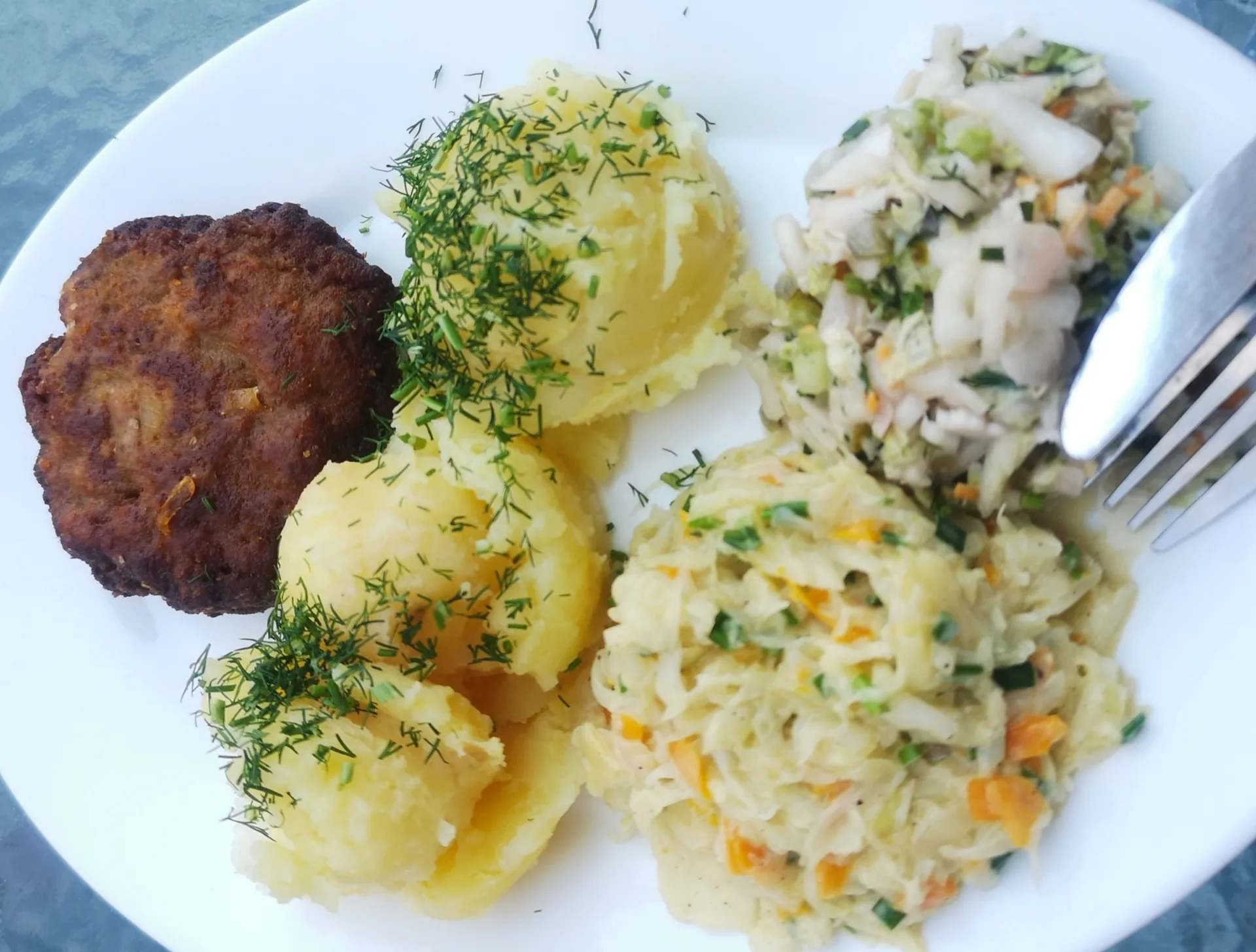
Buletten are pan-fried minced-meat patties with a browned exterior and a texture somewhere between a meatball and a burger. The usual mixture combines beef and pork with soaked bread or breadcrumbs, onion, egg, mustard, salt and pepper. They are firmly at home in Berlin’s snack-counter and neighbourhood-pub cooking.
Menus may spell the name Bouletten. You can eat them warm or cold, plain with mustard or tucked into a roll for a snack or quick lunch. Schrippe means a crusty white bread roll, a useful word when choosing how to have your patty at the counter.
In a pub, Buletten with potato salad make a sit-down meal. A single patty to take away is a lighter option than a plate with accompaniments. Choose the roll or plain serving when both are available at the counter, according to how hungry you are.
Silar · CC BY-SA 4.0 · Edited
Eisbein: pork knuckle with peas
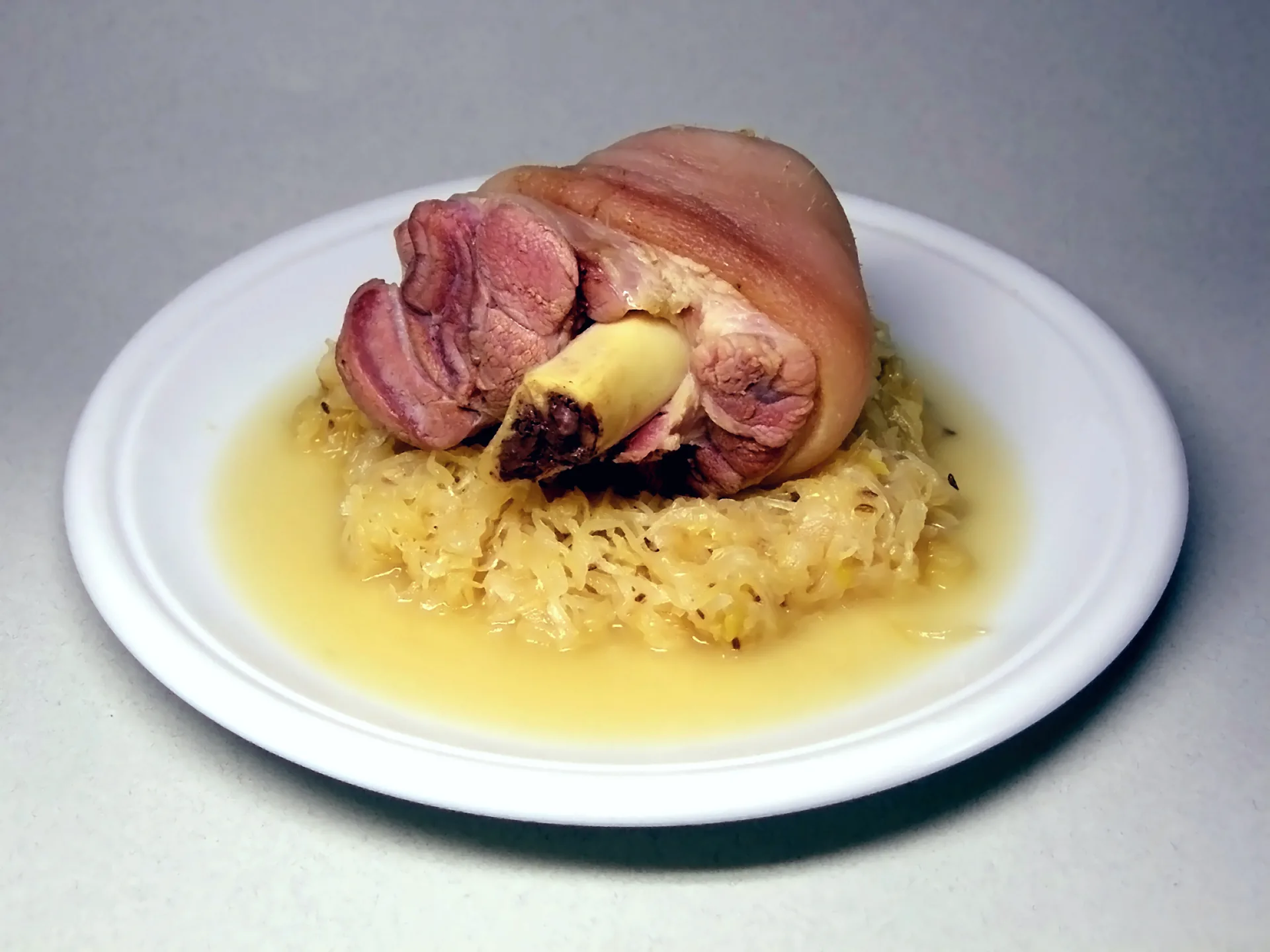
Eisbein is cured or brined pork knuckle, slowly cooked in water or broth until the meat becomes tender. Berlin-style Eisbein has soft, gelatinous skin, not crisp roasted crackling. The fatty richness is central to the dish, so it suits you if you enjoy slow-cooked pork and do not mind a substantial layer of soft rind.
Sauerkraut brings acidity beside the meat, while pea purée gives the plate a soft, earthy accompaniment, and boiled potatoes often complete it. The purée may appear as Erbspüree on the menu. These accompaniments are part of what makes the Berlin preparation recognisable, rather than simply a large piece of pork.
Eisbein remains a hallmark of traditional German restaurant cooking in the city. Save it for a proper lunch or dinner when you have an appetite and time to sit down. The knuckle arrives with a bone, and eating it is a different occasion from picking up a sausage at a snack stand.
Rainer Zenz · CC BY-SA 3.0 · Edited
Berlin-style liver with apples and onions
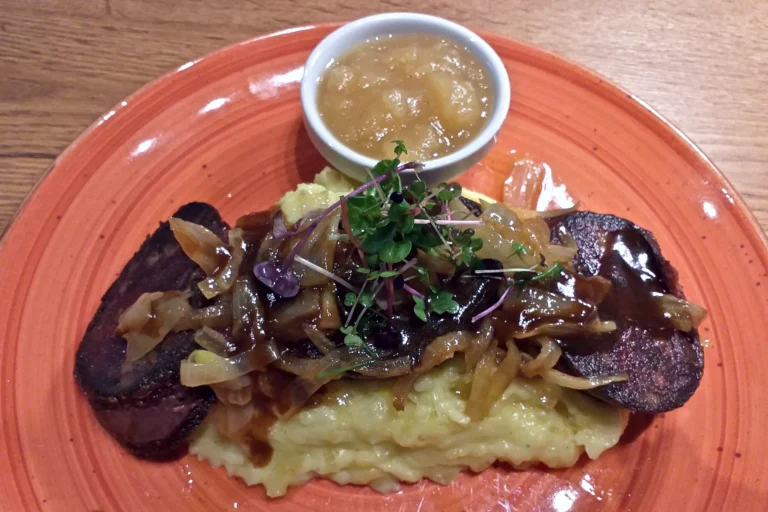
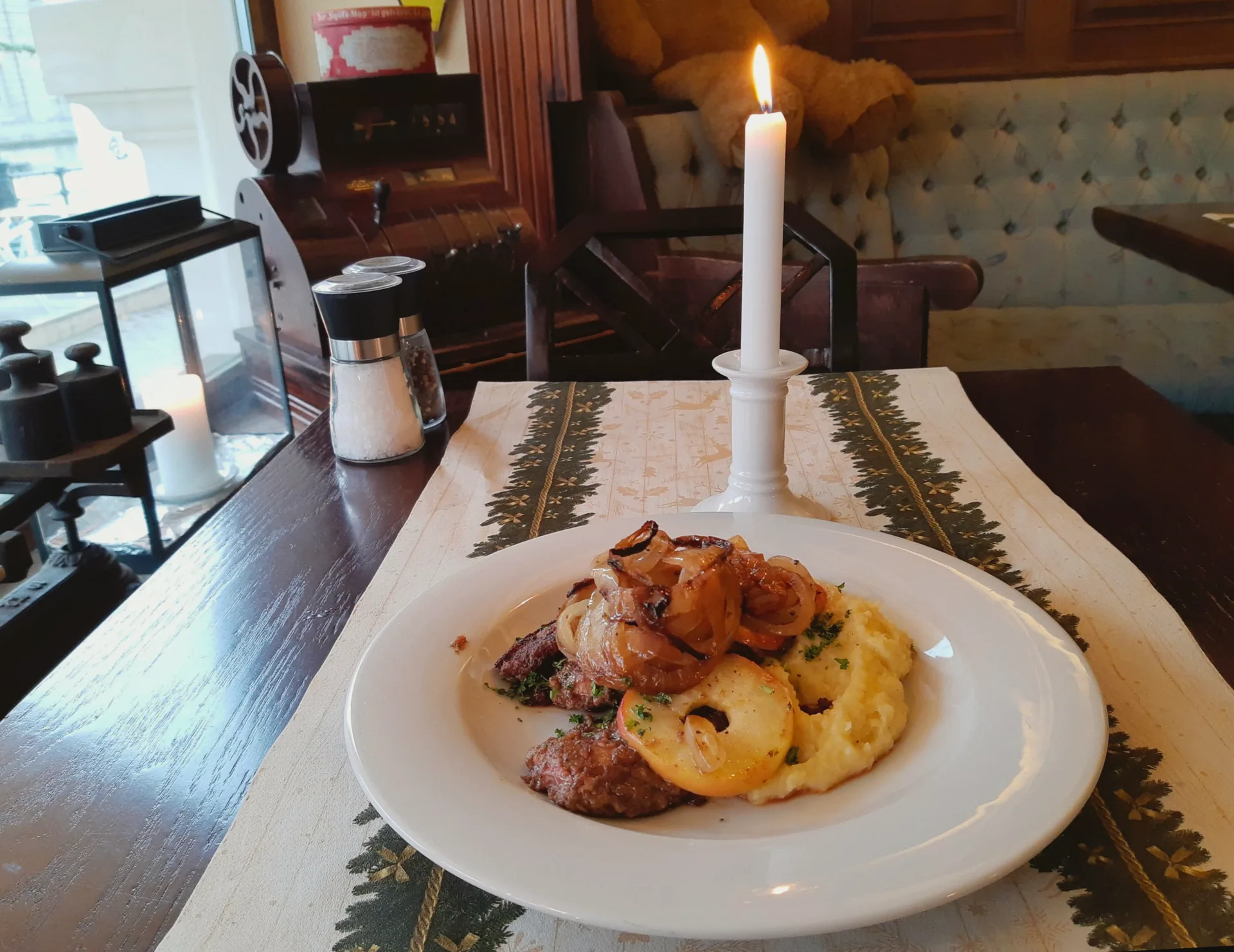
Berlin-style liver pairs quickly sautéed calf’s liver with fried apple slices and onions, usually over or beside mashed potatoes. The apple’s sweetness balances the savoury offal flavour, while the onions add another sweet, browned element. The combination, rather than a sauce, is what distinguishes this local preparation.
Look for Berliner Leber or Leber Berliner Art on the menu, both identifying Berlin-style liver. It is a cooked lunch or dinner to order in a restaurant serving traditional local food, rather than a snack-counter dish. The mashed potatoes make it a complete plate.
Choose it if you already enjoy liver, or want to try offal as a full restaurant meal. Your taste for liver matters most when deciding whether to order it.
Gerda Arendt · CC BY-SA 4.0 · Edited
Königsberger Klopse: meatballs in caper sauce
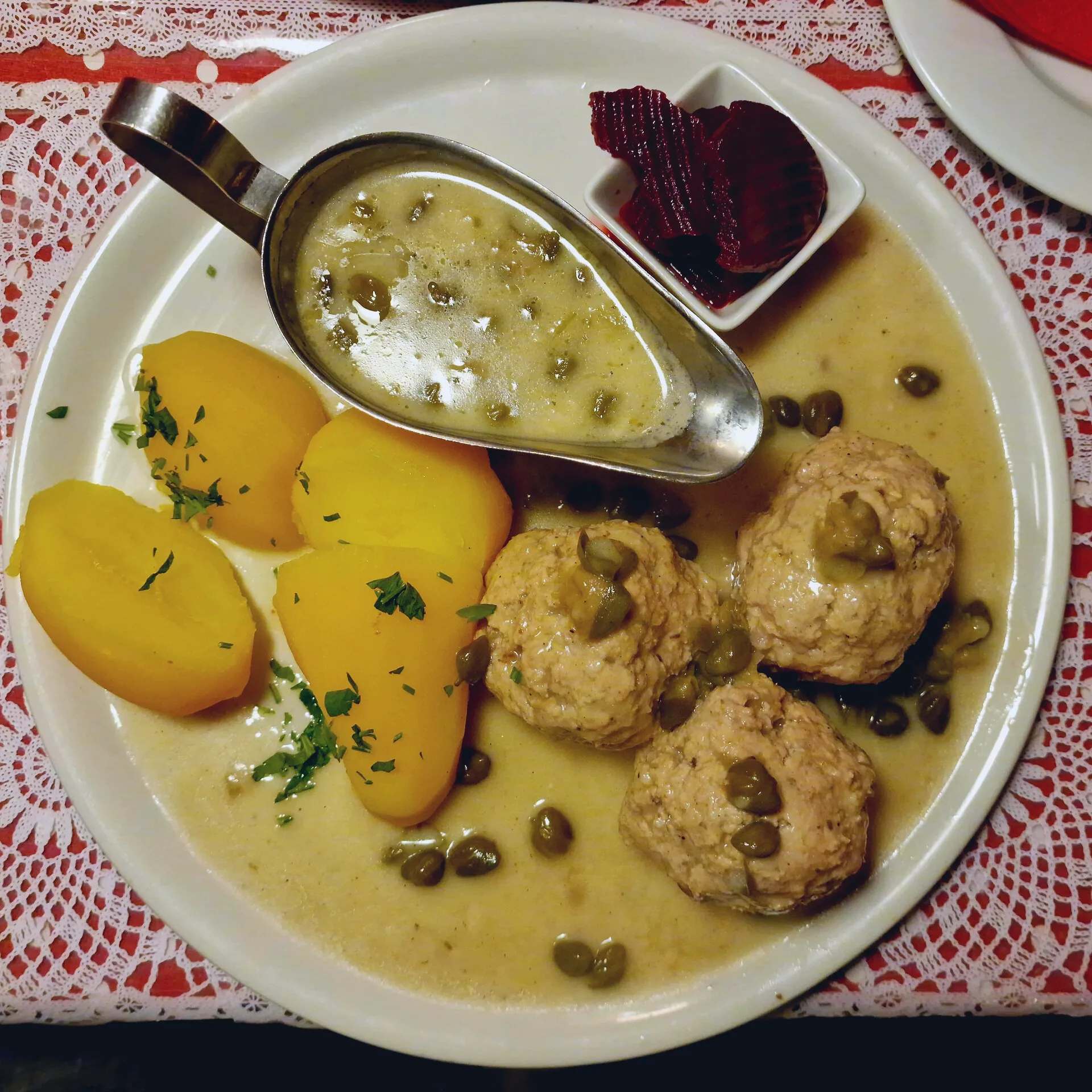
Königsberger Klopse are poached meatballs in a pale, creamy caper sauce. The usual meat mixture combines veal and pork with onion, egg and breadcrumbs. Traditional Klopse usually contain anchovies or anchovy paste, so the name does not reveal every ingredient that matters if you avoid fish.
Butter, flour and meat broth form the sauce base, enriched with cream and egg yolk. Lemon juice and capers give it a salty-tangy edge against the mild meatballs. Potatoes are the usual accompaniment, useful for taking up the sauce, and the dish suits lunch or dinner in a traditional restaurant.
The name refers to Königsberg in East Prussia, now Kaliningrad. Refugees and displaced people from the former eastern German territories brought the dish to Berlin after the Second World War. It is an adopted city tradition: a gentler-textured restaurant meal than a fried patty, with its character concentrated in the caper sauce.
Anagoria · CC BY 3.0 · Edited
Sources & fact-checking
Checks against the sources below cover: key figures.