Choose Venice if canals, water transport and an unusual urban atmosphere are the reason for the trip. Choose Florence if concentrated Renaissance art, easier walking and a more structured short stay matter more. Neither is the universal winner: Venice asks you to accept bridges, crowds and less predictable movement for a setting unlike an ordinary city, while Florence makes cultural depth easier to organise but feels more like a conventional historic centre. The better choice depends on whether atmosphere or efficient access to art is your main constraint.
The short answer: choose by trip priorities
For a first choice between Venice and Florence, start with the experience you want to repeat each day. Venice is strongest when the setting itself is the attraction; Florence is stronger when you want to move efficiently between major art and architecture. The table gives the short answer, while the later sections explain the effort and cost behind each judgement.
| Criterion | Venice | Florence |
|---|---|---|
| Atmosphere | Canals, bridges and waterborne movement | Compact streets, piazzas and Renaissance architecture |
| Signature sights | Civic grandeur, churches and a water-shaped historic landscape | Painting, sculpture, architecture and concentrated museums |
| Walking | Less predictable; bridges, steps and detours | Generally direct between central sights |
| Local transport | Vaporetti can be useful or crowded | Often unnecessary in the historic centre |
| Cost pressure | Central rooms and peak dates can be especially expensive | Central rooms and major museum visits still need budgeting |
| Short-stay fit | Best when atmosphere matters more than efficiency | Best when a structured art-led day matters |
| Traveller profile | Visual explorers comfortable with stairs and route changes | Art-focused visitors who value legible walking routes |
The feel of the city changes the whole trip
The choice changes how you spend the gaps between headline sights. In Venice, the route is part of the experience, but bridges, water crossings and bottlenecks can turn a simple transfer into physical work. In Florence, the historic centre is easier to read on foot, so you can build a predictable day around museums, churches and squares. That difference matters most when you carry luggage, have limited mobility, travel in poor weather or have only one full day.
Venice suits a waterborne, atmosphere-led break
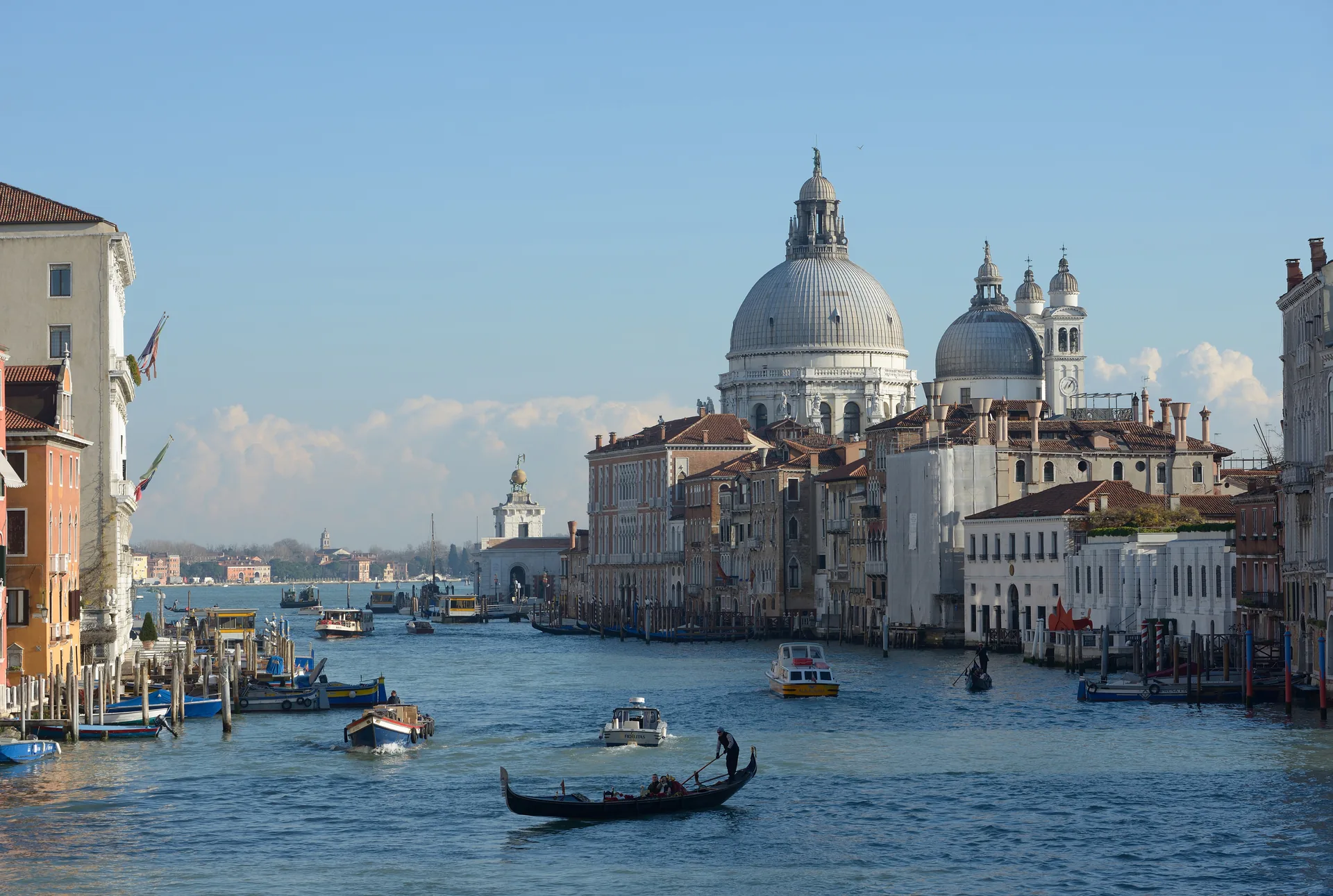
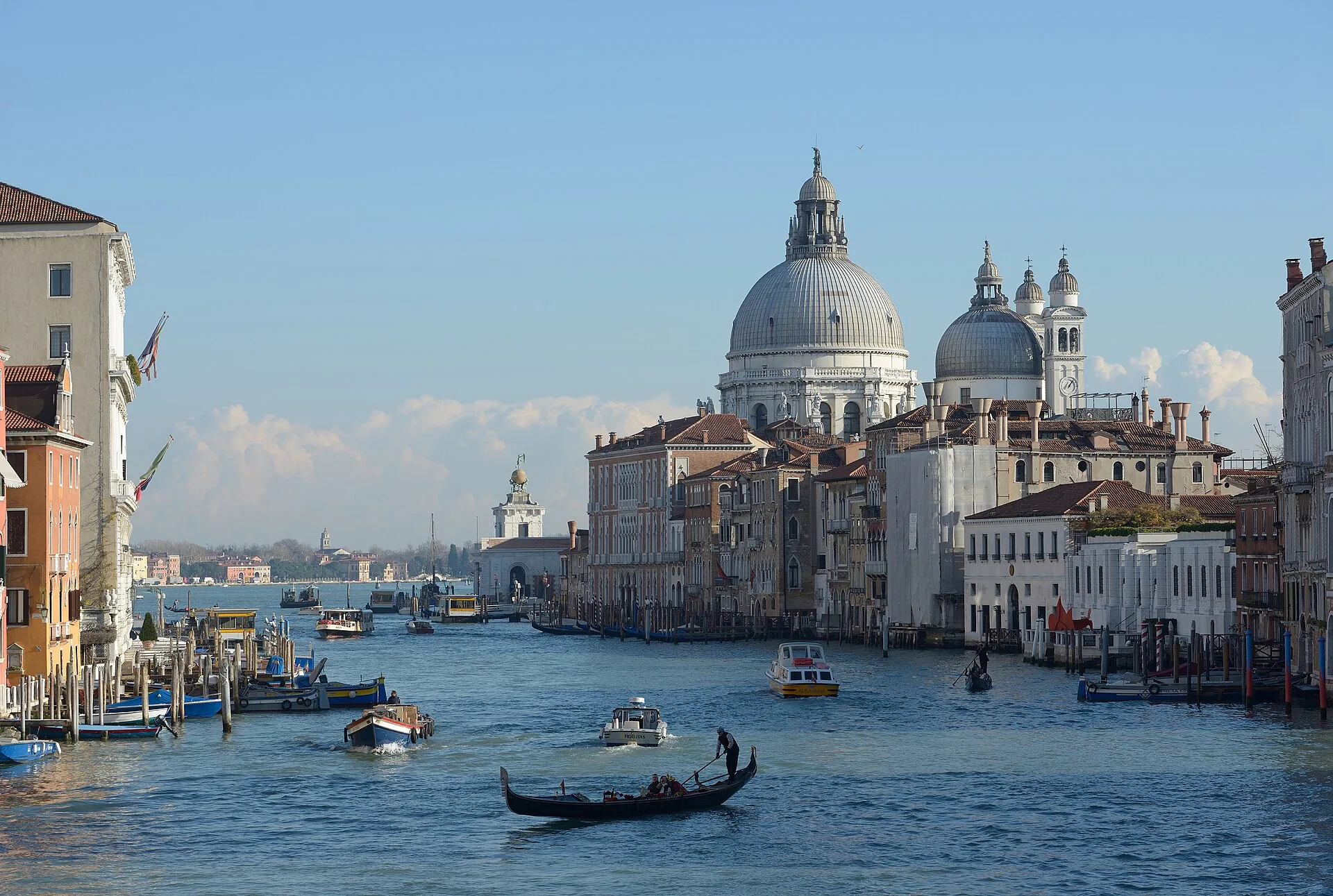
Venice makes the city itself the main reason to go. Canals replace ordinary streets, and bridges repeatedly change your line of sight. Squares and narrow lanes create a sequence of small discoveries rather than a simple corridor between attractions. Choose it when you want a place that feels unlike an ordinary city and are happy for navigation to be part of the day. The Grand Canal makes water transport part of that visual experience.
This Photo was taken by Wolfgang Moroder. Feel free to use my photos, but please mention me as the author and send me a message. This image is not in the public domain. Please respect the copyright protection. It may only be used according to the rules mentioned here. This specifically excludes use in social media, if applicable terms of the licenses listed here not appropriate. Please do not upload an updated image here without consultation with the Author. The author would like to make corrections only at his own source. This ensures that the changes are preserved.Please if you think that any changes should be required, please inform the author.Otherwise you can upload a new image with a new name. Please use one of the templates derivative or extract. · CC BY-SA 3.0
The trade-off is effort. Expect frequent bridges with steps, uneven paving, narrow lanes and crowded pinch points. Wheeled luggage is awkward over bridges, while vaporetti are useful but may be busy and require the correct landing stage and direction. Canal crossings also make map distances misleading. Step-free routes exist but are not continuous, so visitors with mobility needs should plan each crossing rather than assume that a nearby route is accessible.
Venice suits travellers who value atmosphere, photography and outdoor movement above a tightly timed list. It is less forgiving if you need predictable door-to-door access, dislike stairs or want to cover many sights without route changes. Rain, high water and crowded landings can make the same itinerary feel very different from one day to the next. That unpredictability is part of Venice’s trade-off.
- Name
- Venice
- Location
- Venice, Italy Maps
Florence suits a compact, art-led break
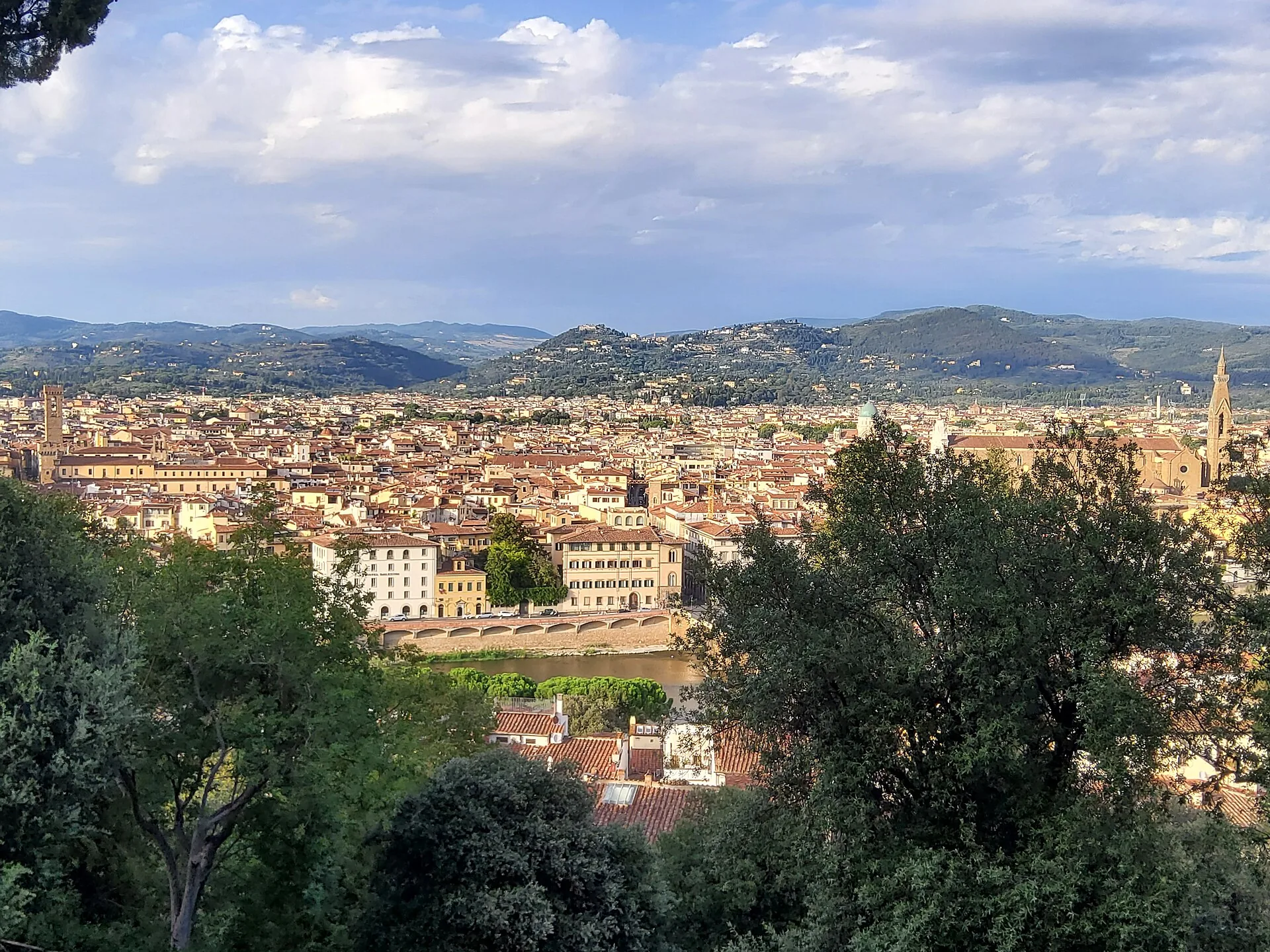
Florence suits a short break built around art, architecture and a legible daily rhythm. The Duomo, Piazza della Signoria, Santa Croce and Santa Maria Novella sit within a walkable central pattern, so the day can run from one cultural stop to the next without depending on boats. That concentration is valuable when your time is limited or when you want to protect a fixed museum booking from transport uncertainty. Florence’s historic centre is the compact setting that makes this plan workable.
Benoit Soubeyran · CC BY-SA 4.0
Walking is easier to plan, not necessarily effortless. Narrow pavements, uneven stone and heavy pedestrian congestion are common around the Duomo, Ponte Vecchio, Piazza della Signoria and the Uffizi. Standing and hard surfaces can make a full day tiring, and step-free access varies in older buildings and across bridges. Comfortable shoes and a little slack around timed visits matter more than local transport for most central sightseeing.
Florence is the better fit if you want a structured art day with a clear rhythm: reserve a museum, walk to the next district, then choose a meal or viewpoint. Its compromise is that the experience is less water-defined and more dependent on indoor cultural visits. If your ideal day is mostly outdoor wandering with visual drama at every turn, Venice offers the stronger setting. Florence’s trade-off is a less water-defined experience in exchange for a structured cultural day.
- Name
- Florence
- Location
- Florence, Italy Maps
The signature sights answer different travel questions
Venice and Florence answer different cultural questions. Venice rewards you for moving through a historic landscape of water, civic space and dramatic interiors; Florence rewards sustained attention to painting, sculpture and architecture in a concentrated museum-and-monument programme. Choose Venice for a day that can remain mostly outdoors, with major churches and palaces placed within a visually unusual setting. Choose Florence for a day whose payoff depends on seeing specific works and buildings rather than on the route between them.
In Venice, St Mark’s Basilica and the Doge’s Palace are useful examples of the planning burden. Book a dated or timed visit once your itinerary is fixed, particularly for summer, weekends and holidays. The Basilica is more sensitive to queue pressure and worship, with Sunday mornings especially constrained; its general queue can be long. The Palace benefits from advance booking too, although timed entry does not remove security screening. Travel light: bulky bags are not admitted to the Basilica, and the Palace does not accept suitcases, trolleys or oversized luggage.
Florence is stronger for a focused art day, but the best-known visits are also capacity-led. The Uffizi is worth booking about a month ahead and the Accademia roughly two months ahead when you want a good time, especially in the busier part of the year. The Accademia is particularly crowd-sensitive, while the larger Uffizi galleries spread visitors more effectively. The Brunelleschi Dome climb adds a stricter constraint: it has a fixed, capacity-limited entry, late arrival is barely tolerated, identification is checked and larger bags must go to the designated storage.
For a first-time visitor, Venice gives the stronger sense of discovering a whole urban environment, while Florence gives the clearer return on a tightly planned cultural list. Repeat visitors may prefer Venice for unstructured wandering or Florence for a deeper museum programme. In either city, advance planning changes the choice: choose Venice if you can accept queues and flexible pacing, or Florence if a missed timed visit would undermine the purpose of the trip.
The practical choice joins movement, prices and trip shape
The practical choice is not simply whether one city is cheaper. Venice combines higher movement costs and awkward luggage routes with a sharp premium for central rooms, while Florence often lets you walk between sights and control spending through a wider choice of bases. Hotel and restaurant prices vary; transport fares and attraction admissions are fixed charges. The table keeps those categories separate so you can see whether your own trip is being shaped by a fixed charge, a location choice or a busy travel period.
| Practical criterion | Venice | Florence |
|---|---|---|
| Accommodation | €40-70 budget; €100-200 mid-range; €250-450 central | €35-55 hostel bed; €80-150 mid-range; €150-250 central peak summer |
| Food | €15-35 simple; €30-50 mid-range dinner; €50-70 practical day | €7-14 quick meal; €20-35 trattoria; €50-80 practical day |
| Local transport | ACTV 75-minute €9.50; 24-hour pass €25 | Urban ticket €2 for 90 minutes; driver purchase €3 |
| Representative attractions | St Mark’s Museums €35 standard; €30 online | Uffizi €25 day; €29 advance; Pitti + Boboli €22 day |
| Luggage movement | Bridges, steps and crowded landings add effort | Mostly walking; fewer route obstacles in the centre |
| Central base | Prime historic centre carries a strong premium | Centro Storico and Oltrarno cost more than outer districts |
| Tourist tax | Accommodation-dependent; separate from transport and entry | €3.50-€8 per person per night, up to 7 nights |
| Seasonal pressure | Carnival, Easter, summer and holidays intensify demand | June-August, Easter, festivals and trade dates intensify demand |
For movement, Florence is usually the simpler short-stay base because the central programme can be completed on foot and the urban ticket is inexpensive if you do need it. Venice asks you to decide when a vaporetto is worth the fare, then add the practical work of reaching a landing stage with bags. A central base saves route changes in both cities, but the premium is especially pronounced around Venice’s prime waterfront and San Marco locations. If you are comparing Florence accommodation areas, prioritise the walking route to your fixed booking rather than choosing only by nightly rate.
Stay length changes the arithmetic. On a very short visit, Florence’s concentrated sights reduce wasted movement, while Venice’s atmosphere can justify the extra transport and navigation effort even if you see fewer interiors. On a longer base, Venice’s passes become more useful and Florence’s museum programme can be spread across quieter periods. Seasonal demand is part of the choice: the best time to visit Florence is not automatically the cheapest, but quieter winter dates can make its fixed cultural schedule easier to manage.
For either city, keep variable spending distinct from the regulated charges in the table. A room near the sights may save time but cost more; a cheaper outer base may make a short trip less efficient. In Venice, luggage handling can be the hidden cost of an apparently central booking. In Florence, tourist tax and advance attraction pricing can change the total even when the city centre is manageable on foot. Choose the city whose unavoidable effort matches the way you prefer to spend your limited hours.
The trade-offs are real on both sides
Neither city removes planning; each moves the difficulty to a different part of the day. Venice makes navigation and physical access the price of an exceptional setting. Florence makes timed cultural visits and pedestrian congestion the price of a more legible programme. Weigh the advantages against the inconvenience you are most willing to absorb.
Venice
Pros
- Canal-led movement makes ordinary transfers part of the visual experience, but you trade direct routes for bridges and detours.
- The historic setting feels unlike a conventional city, but the strongest atmosphere comes with crowded lanes and busy landing stages.
- A mostly outdoor day can work without a dense attraction list, but weather and high water can disrupt the rhythm.
- The city suits repeat wandering and visual discovery, but luggage and limited mobility require more route planning.
Cons
- Bridges, steps and uneven paving make short distances physically demanding, so a central-looking route may take more effort than expected.
- Vaporetti widen your reach, but crowded boats, landing stages and extra fares add decisions to a short itinerary.
- Peak demand can make the most atmospheric areas feel congested, reducing the quiet exploration that attracts you there.
- A flexible day protects you from missed bookings, but it also means accepting that you may see fewer interiors.
Florence
Pros
- A concentrated historic centre makes an art-led day easier to sequence, but fixed museum times can dictate the rest of the schedule.
- Major cultural areas are close enough for walking, but narrow pavements and hard surfaces make long days tiring.
- Indoor collections provide a reliable cultural focus in mixed weather, but admission planning matters more than spontaneous wandering.
- A clear daily rhythm helps first-time visitors and short stays, but the experience is less defined by a singular urban setting.
Cons
- The most sought-after works depend on timed or capacity-limited entry, so a missed reservation can remove a central part of the day.
- Pedestrian congestion around the Duomo, Ponte Vecchio and Uffizi slows an otherwise compact route, especially from late morning onwards.
- Central accommodation reduces walking effort, but the most convenient districts carry a premium over outer bases.
- A full cultural programme can become overpacked, so adding every major museum may cost more enjoyment than it adds.
Choose by the constraint that matters most
Use the constraint that would most damage your trip if you ignored it. If time is tight, a realistic one-day Florence itinerary can turn a compact centre into a workable cultural day; if your priority is the feeling of being somewhere completely different, Venice may be worth the extra movement. The choices below turn that judgement into a profile rather than a ranking.
- Choose Venice if atmosphere is the non-negotiable: canals, bridges and waterborne movement matter more to you than direct routes or a high sightseeing count.
- Choose Florence if concentrated art is the priority: you are prepared to reserve capacity-limited visits and want major cultural areas within a walkable centre.
- Choose Florence for limited time: central sights commonly sit within roughly 10-25 minutes on foot, making a structured day easier to protect.
- Choose Florence if luggage or mobility makes repeated stepped crossings a serious concern: Venice has discontinuous step-free routes and more demanding bridges.
- Choose Florence if you are budget-sensitive about local movement: its centre can often be covered on foot, whereas Venice may make water transport part of the plan.
- Choose Venice as a repeat visit when you have already had a conventional art-and-architecture city break and want an outdoor, route-led experience instead.
- Choose Florence for a wider Italy trip when you want a predictable cultural base and the effort of the stay to come from selected visits rather than from navigation.
FAQ
Which city feels nicer for a first visit?
Venice feels nicer if canals, visual drama and an unusual setting are your definition of a memorable first visit. Florence feels nicer if you value easier walking and concentrated art. The subjective answer follows your priority; the practical answer is Venice for atmosphere and Florence for a structured cultural day.
What is Italy’s number-one city to visit?
Neither is objectively Italy’s number-one city. Choose Venice for a water-shaped urban experience and Florence for Renaissance art in a compact centre. Your best choice is the city whose defining experience matches the reason you are making the trip, not a universal ranking.
Can one city be called Italy’s most beautiful?
There is no measurable single most beautiful city. Venice offers water, bridges and shifting views; Florence offers art, architecture and civic spaces. Call Venice more beautiful if visual atmosphere leads, or Florence if crafted art and a walkable historic setting matter more.
Sources for the figures in this guide