Choose an ordinary January or February week for a Marseille city break built around museums and the Old Port. Hotel demand tends to be quieter then, but wind can make the waterfront less inviting and a trip to Château d’If uncertain. Christmas needs a different plan because major sights close. If swimming or an island boat trip is the main reason to go, choose a warmer season.
Is a winter break worth it?
- Best winter sightseeing window
- Ordinary post-holiday weeks in January or February
- Coldest month by average daily high
- January, 11.9°C at Marseille-Marignane (1991–2020)
- Hottest month by average daily high
- July, 30.5°C at Marseille-Marignane (1991–2020)
- Strongest hotel-occupancy months
- August, June and September in Marseille’s 2024 report
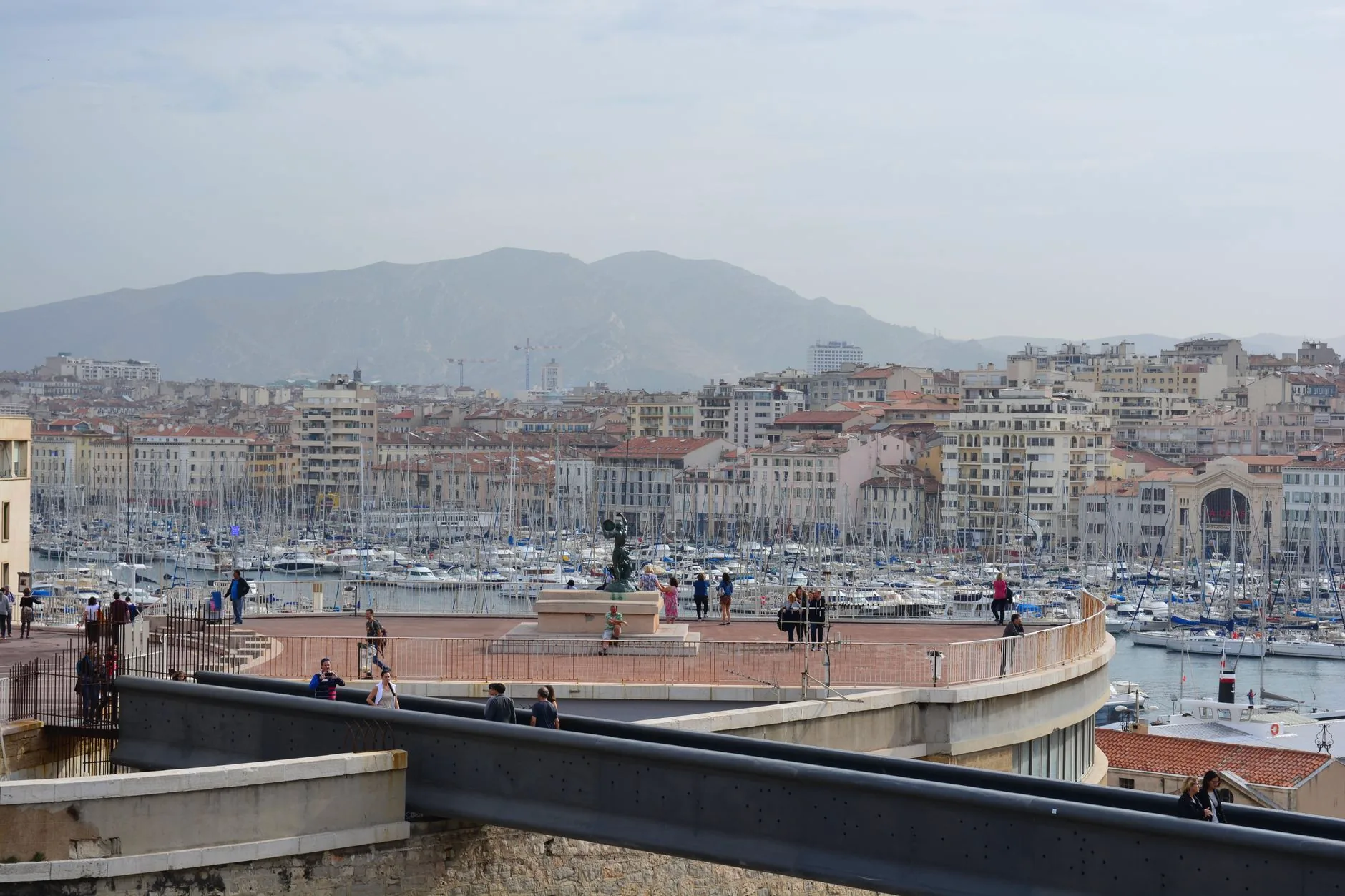
Winter is worth it if the harbour and indoor sights are your priorities, not a beach holiday. You can spend a cool day between the Old Port and Mucem without depending on a swim, but a strong mistral may make a long coastal walk unpleasant. Château d’If adds an island fort to the visit only when the boat runs and the fort opens, so do not make it the sole purpose of a short break.
A standard double is generally less costly outside the busiest summer months, though weekends, holidays and a room overlooking the Old Port can change the price. The saving is most useful when you keep outdoor plans flexible.
Winter weather and the mistral
| Month | Average high | Crowds | City-break verdict |
|---|---|---|---|
| January | 11.9°C | Low | Good: quieter, cool |
| February | 13.0°C | Low | Good: quieter, windy |
| March | 16.1°C | Moderate | Mixed: spring wind |
| April | 18.6°C | Moderate | Good: milder walks |
| May | 23.0°C | Moderate | Good: warm walks |
| June | 27.4°C | High | Mixed: strong demand |
| July | 30.5°C | High | Mixed: hottest days |
| August | 30.0°C | High | Mixed: peak demand |
| September | 25.7°C | High | Good: warm, busy |
| October | 20.8°C | Moderate | Good: milder days |
| November | 15.5°C | Low | Mixed: cooler days |
| December | 12.4°C | Low | Mixed: short afternoons |
Marseille is warmer than Paris on winter afternoons on average, but it is not reliably calm. For December, January and February, the 1991–2020 mean daily highs at Paris-Montsouris are 8.0°C, 7.6°C and 8.8°C respectively, below the matching Marseille-Marignane figures in the table. These are station averages; along Marseille’s waterfront, exposure to wind can matter more to your choice of coat than the difference between two winter months.
The mistral is a northwesterly wind that Météo-France describes as often stronger in winter and spring. It can blow at an average of 50 km/h, with gusts of 80–100 km/h or more, and sometimes persists for several days. On a windy day, swap an exposed stretch of the Corniche Kennedy for an exhibition, but on a calmer one, its coastal views justify making time for the walk. Put outdoor sightseeing earlier in the day, rather than leaving the waterfront for a short winter afternoon.
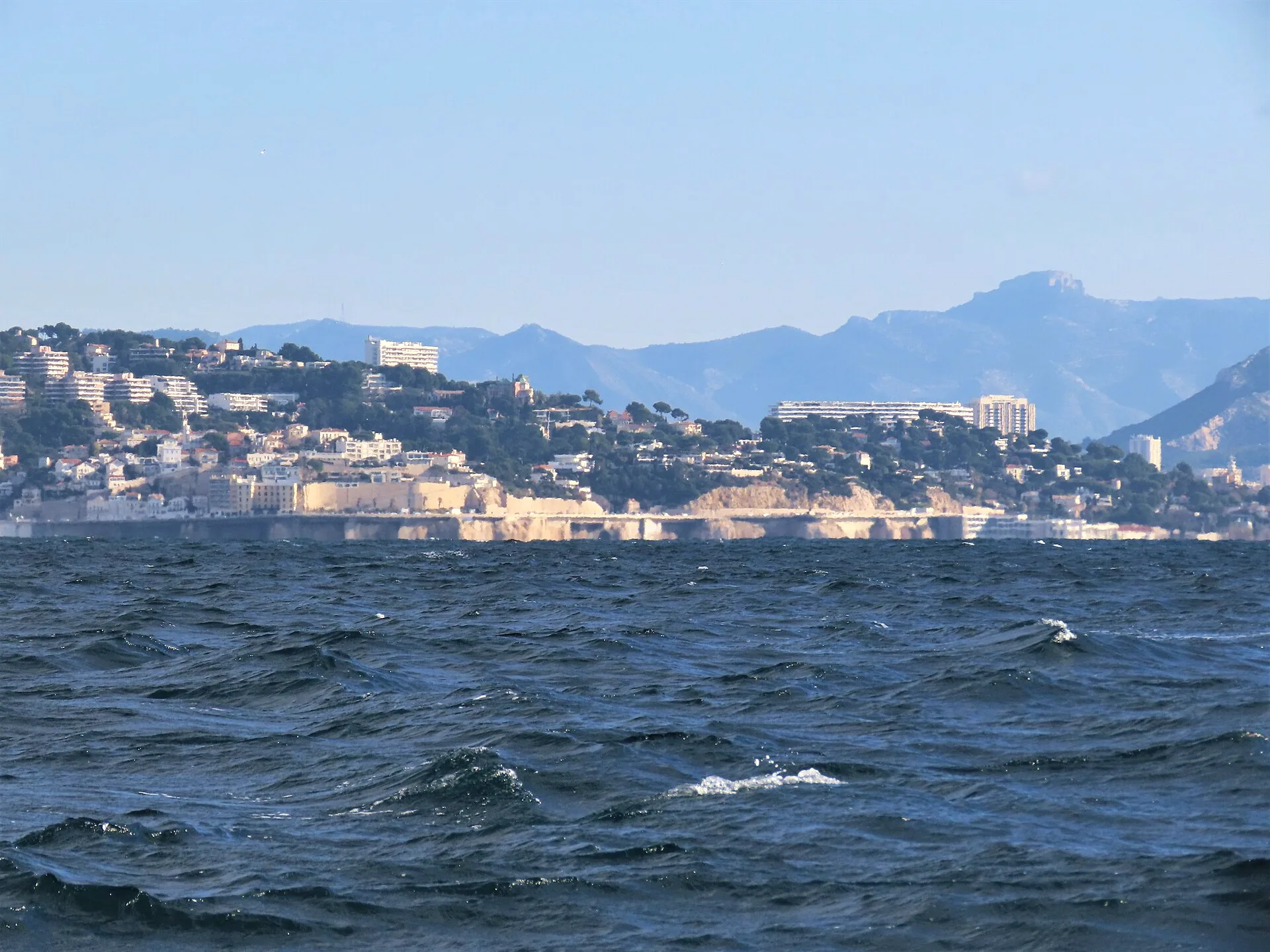
Rémih · CC BY-SA 4.0 · Edited
June, August and September had the strongest hotel occupancy in the 2024 report, while a quieter winter week gives you more room to switch between a waterfront walk and an exhibition when the wind changes. July has the highest average daily maximum at Marseille-Marignane. Heat and hotel demand are different reasons to choose your dates.
Crowds and room prices
Allow roughly £75–£130 a night for a centrally located standard double in an ordinary winter week, against around £95–£160 in spring or autumn and £125–£210 in summer. These are indicative planning ranges, not fixed tariffs: weekends, holidays and an Old Port view can push a room above them. Compare like-for-like dates and cancellation terms before choosing between a central room and a cheaper base farther out.
Marseille’s Local Tourism Observatory reported hotel and residence occupancy month by month in 2019 and 2023–2024. Its 2024 panel covered 74 establishments and 7,386 rooms: August, June and September were strongest, while winter was quieter. A quieter hotel market does not guarantee a short museum queue, especially for a popular exhibition. Panel coverage varies, and 2024 was an exceptional Olympics year, so leave time for indoor sights even during a quieter week.
Island visits and indoor alternatives
- Château d’If: 28 September–31 March, 10:00–17:00; closed Mondays and in bad weather. The boat and fort must both be operating.
- Old Port boat to If: year-round service, but the published 2026 winter timetable covers 5 January–6 February, 9 March–3 April and 2 November–18 December. During the November–December period, take an earlier sailing for the fort, not the 17:10 departure after winter closing time.
- Mucem: November–April, 10:00–18:00; closed Tuesdays. Exhibition entry ends 45 minutes before closing.
Château d’If is an island fort worth visiting for its setting and its history as a prison. Keep the island outing conditional until both the crossing and the fort are operating. Boats leave the Old Port, but weather can affect departures and close the château. An indoor exhibition makes a useful alternative.
- Name
- Château d’If
- Location
- Île d’If, off Marseille’s Old Port Maps
- Site
- chateau-if.fr
- Hours
- 10:10–18:00
- Essential fact
- The island fort is reached by passenger boat from Marseille’s Old Port.
If the crossing fails, stay on the mainland: the Old Port is a starting point for a harbour walk, while Le Panier’s sloping lanes reveal a different side of the historic centre. For a longer mainland outing, day trips from Marseille offer rail and harbour-based alternatives. Corniche Kennedy, the coast road overlooking the bay, is optional on a calm, longer day. Drop it when wind or fading light makes an exposed walk unappealing.
Mucem, the Museum of European and Mediterranean Civilisations, offers an indoor exhibition beside Fort Saint-Jean’s waterfront architecture. It is a useful substitute for an exposed boat day, except on Tuesday. The footbridge from the J4 building to the fort closes 30 minutes before the site, so see that connection earlier in a late visit.
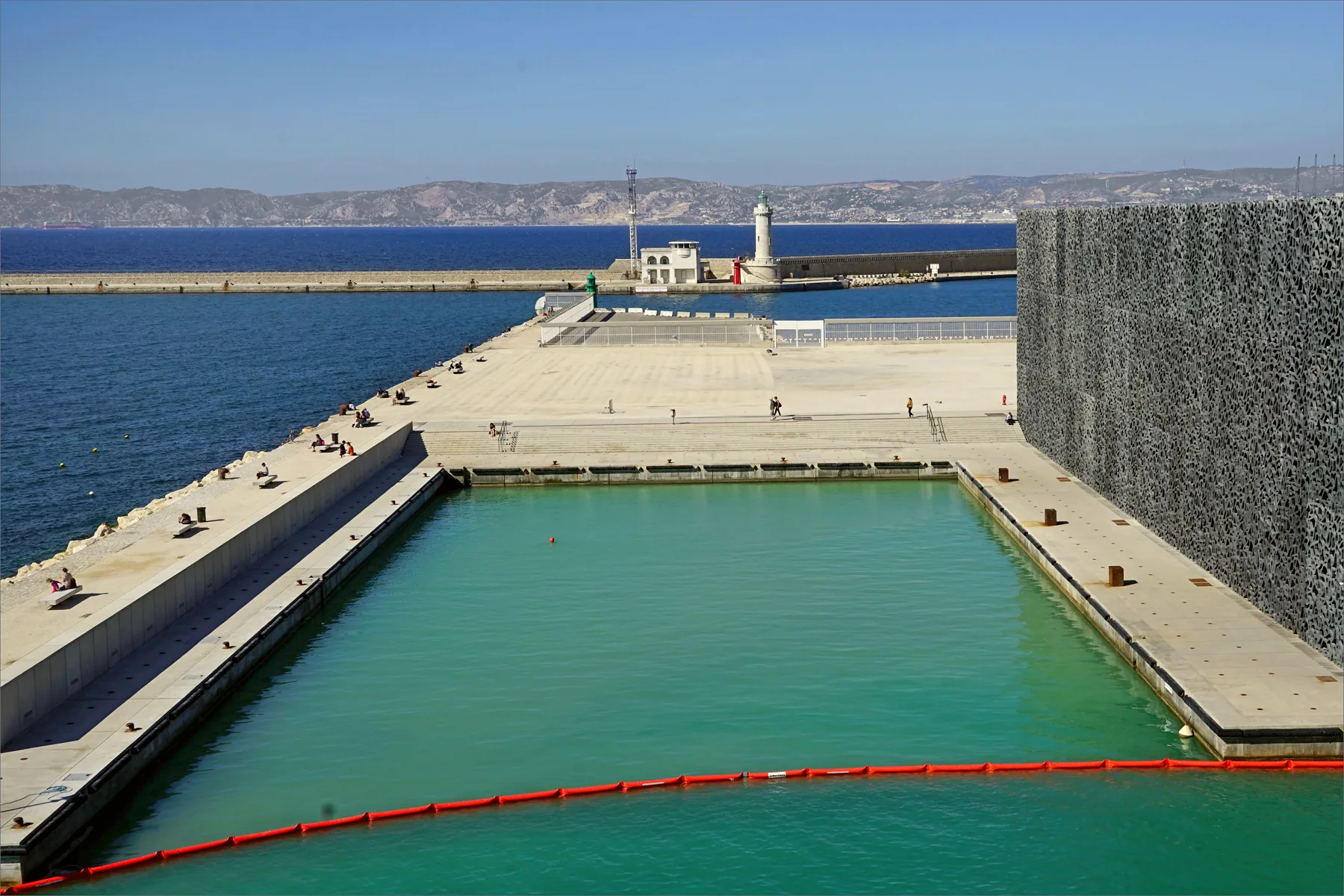
Jean-Pierre Dalbéra from Paris, France · CC BY 2.0 · Edited
Pack warm layers beneath a windproof, rain-resistant outer layer for the move from museum to exposed quayside. If the island is central to your break, leave more than one possible day for the crossing.
Christmas and New Year
Put your Mucem exhibition on another day of a Christmas break. Christmas Day is better planned around a flexible Old Port stroll than a museum or island-fort visit, with outdoor time dependent on the wind. The château also closes on 1 January, so it cannot anchor a New Year’s Day outing.
Mucem normally opens on New Year’s Day except when the date falls on Tuesday, its weekly closing day. That makes it a possible indoor start to the year rather than a guaranteed fallback for every calendar year. For a trip spanning both holidays, keep the harbour walk separate from visits with fixed entry days, and leave room to swap your museum and outdoor days if the weather changes.
Sources & fact-checking
Checks against the sources below cover: opening hours, services, and key figures.