Choose ordinary January weeks outside New Year for a quieter winter break in Nice. The Promenade des Anglais and the Old Town give you outdoor sightseeing, while the Marc Chagall National Museum offers a substantial indoor visit. The trade-off is cool weather and shorter daylight, not the loss of a city holiday.
February makes more sense if Nice Carnival is your reason to travel. For a stay based around the sea, distinguish walking beside it from a holiday built around staffed beaches: winter favours the former.
Winter dates at a glance
- Recommended winter window
- Ordinary January weeks outside the New Year holiday period
- Coldest month by mean daily maximum
- January
- Hottest month by mean daily maximum
- August
A Nice-based Riviera stay is worthwhile in winter if you want city sightseeing rather than summer beach facilities. Outside New Year, January generally brings less crowded streets and restaurants than summer, without turning Nice into a closed-down resort. You can spend time looking at buildings or pause for lunch without making every day an event-led outing.
Accommodation usually offers better relative value in ordinary winter weeks than during Carnival. Balance that saving against the amount of outdoor time you want: the season suits a seafront walk followed by an indoor visit, rather than a whole day dependent on warmth. If your dates are flexible, choose the quieter stay, but if you want the celebrations, accept the busier city that comes with them.
Daytime temperatures through the year
| Month | Mean daily maximum | Sightseeing verdict and cause |
|---|---|---|
| January | 13.3°C | Mixed: cool outdoor days |
| February | 13.5°C | Mixed: cool outdoor days |
| March | 15.4°C | Good fit: milder walks |
| April | 17.4°C | Good fit: moderate warmth |
| May | 21.0°C | Good fit: warm sightseeing |
| June | 24.7°C | Good fit: warmer outdoor time |
| July | 27.5°C | Mixed: heat limits exertion |
| August | 27.9°C | Mixed: heat limits exertion |
| September | 24.8°C | Good fit: warm outdoor time |
| October | 21.0°C | Good fit: warm sightseeing |
| November | 17.0°C | Good fit: moderate warmth |
| December | 14.1°C | Mixed: cool outdoor days |
A mean daily maximum is the average of each day’s highest temperature across the observation period. It is not an all-day temperature: mornings and evenings can be cooler. Use these historical averages to choose the kind of holiday, not to predict an individual day’s weather.
The winter months are close enough in daytime temperature that choosing February solely for extra warmth offers little advantage. January’s appeal is its quieter sightseeing setting, while February’s distinctive draw is Carnival. Cool daytime conditions suit walks interspersed with indoor time rather than a stay built around sustained warmth.
December, January and February
December works for fixed-date sightseeing, rather than as the first choice for quiet streets. If that is when you can travel, build the stay around the Old Town, the seafront and an indoor collection. The festive holiday period also makes the museum’s holiday closures relevant, particularly if you have only a short stay.
January outside New Year suits travellers whose main pleasure is exploring the city at an unhurried pace. For a central mid-range double room, allow roughly €90–€150 per night in ordinary winter weeks, including ordinary December and February dates. Location, room standard and weekend demand move you within or beyond that range. It is a planning estimate for the room, not a per-person budget.
Nice Carnival 2027 runs from 9 to 28 February 2027. Choose that window if attending the celebrations is the purpose of your trip. For the same central mid-range double-room basis, allow roughly €130–€220 per night during Carnival, with popular parade dates and weekends more likely to push prices upwards. Arrange accommodation earlier if a particular event date matters to you.
The event changes the city’s winter demand. During Carnival in 2026, central Nice visitor counts doubled during parades and hotel occupancy averaged 73%. That busier setting is part of the appeal if you want the celebrations, but makes ordinary winter weeks a better fit if quiet streets and relative room value matter more.
If you do not want Carnival, favour dates outside its announced window rather than assuming that all February stays offer the same relaxed sightseeing or room value. December remains useful when your calendar is fixed, while January offers the clearest match for the quieter city break.
The seafront, Old Town and museums
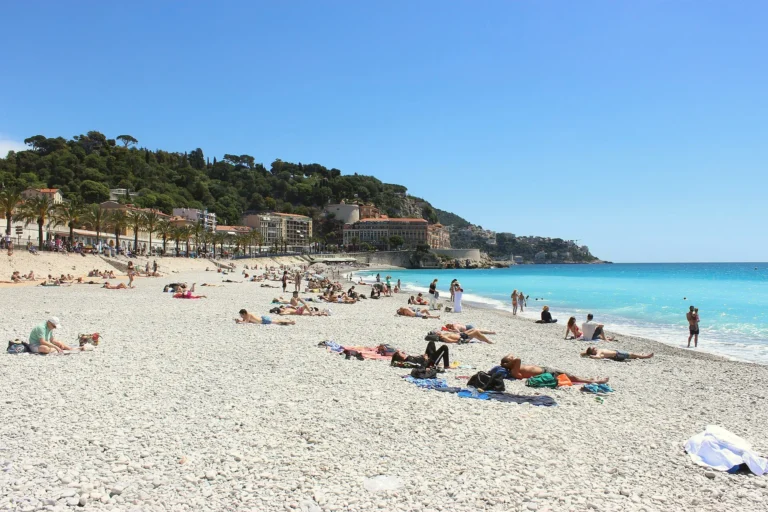
The Promenade des Anglais gives a winter stay its seafront focus: you can walk beside the Mediterranean without making beach facilities the purpose of the outing. The pedestrian seafront is open daily throughout 2026 and admission is free. Use it for an outdoor stretch when the weather suits, rather than treating it as a commitment to spend the whole day outside.
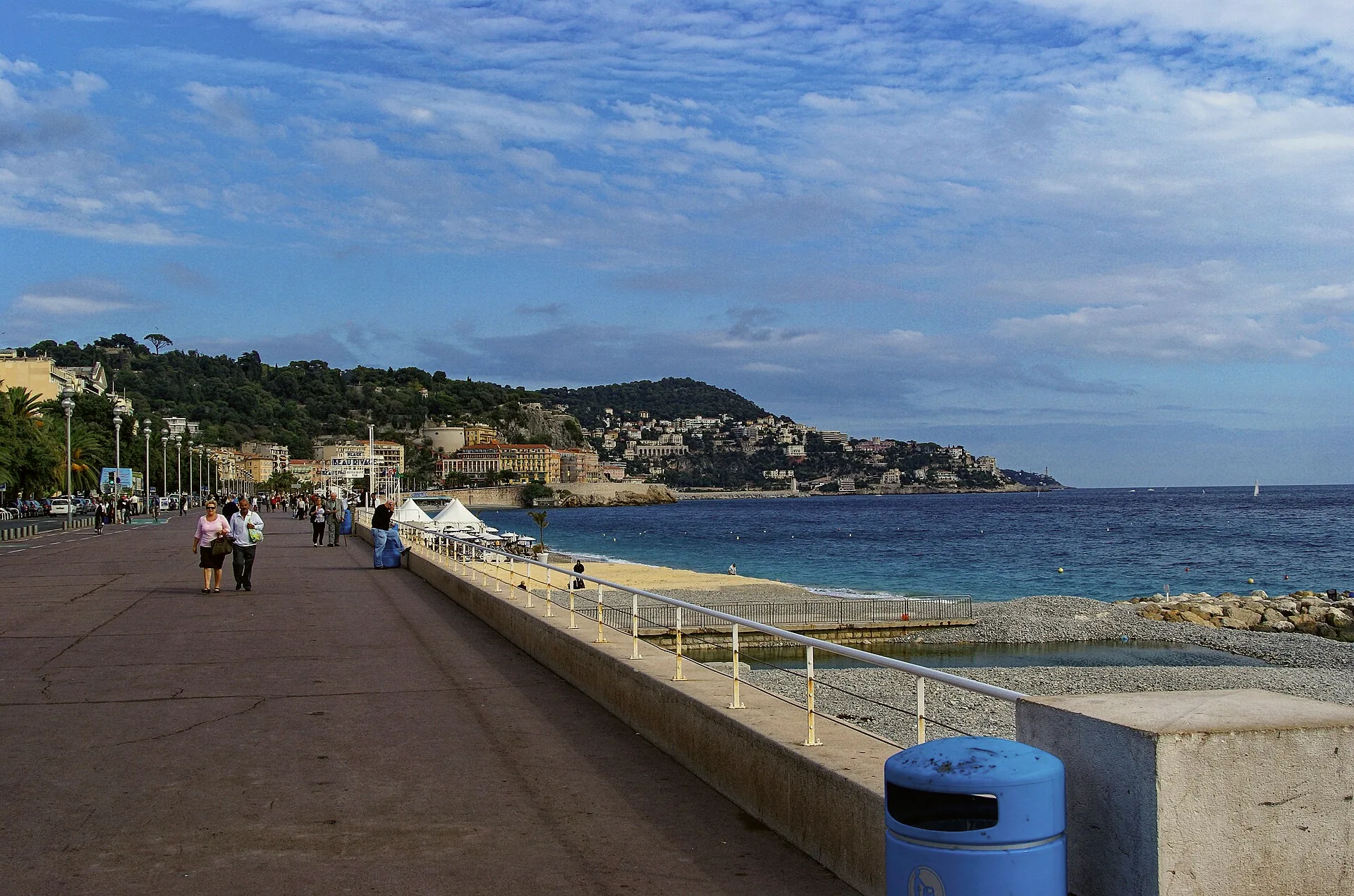
Txllxt TxllxT · CC BY-SA 4.0 · Edited
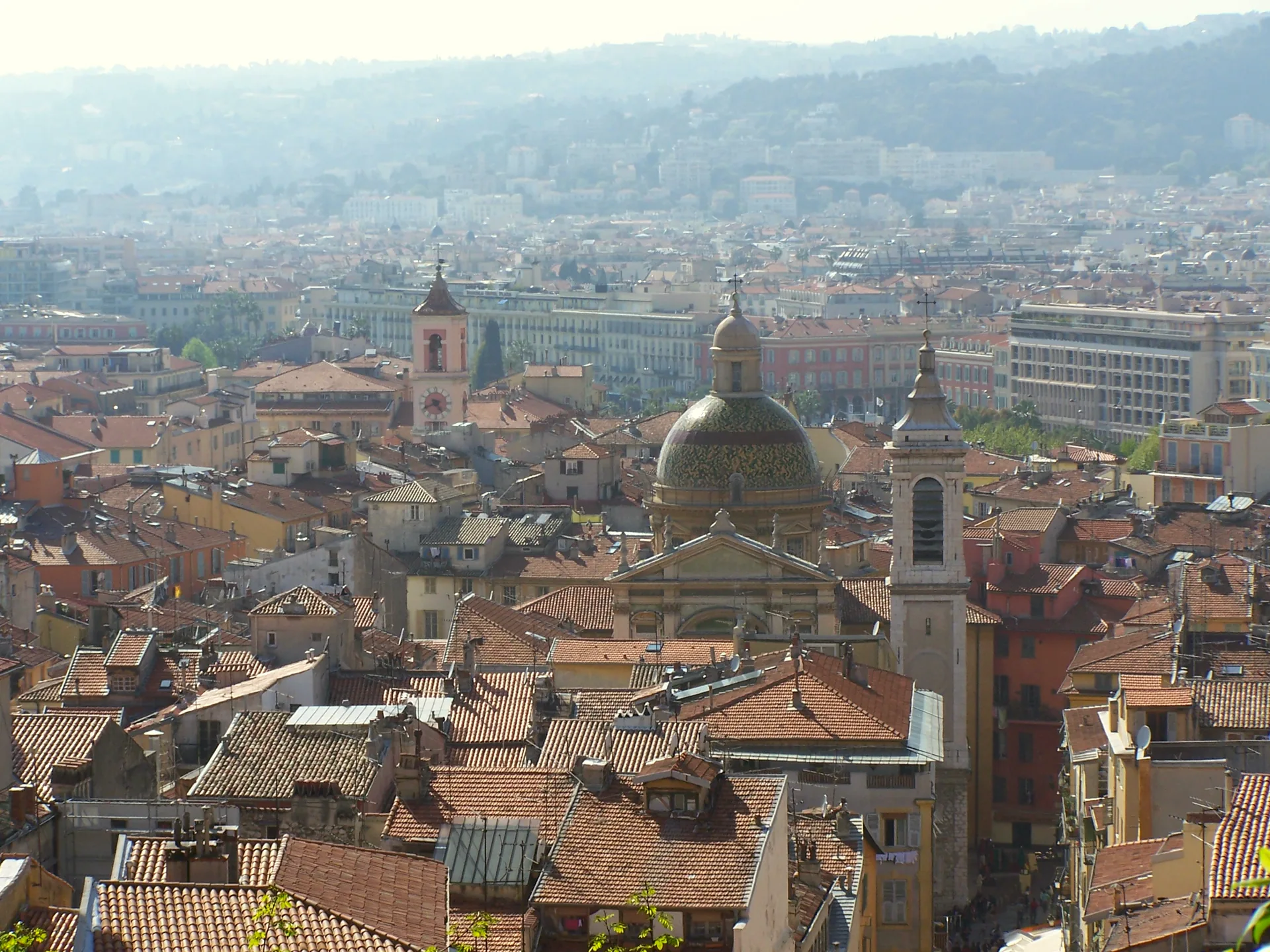
The Old Town, locally Vieux-Nice, offers a different kind of outdoor sightseeing. Its narrow public streets take you among historic buildings, including baroque churches and palaces. Looking at their façades and the streets around them gives the visit substance without depending on entry to every building. It is a useful contrast to the open seafront, not simply another place to walk.
The Marc Chagall National Museum is an indoor destination worth choosing for the art itself. Its permanent collection centres on the Biblical Message series, 17 large paintings illustrating scenes from Genesis and Exodus. Preparatory sketches help you look beyond the finished canvases, while stained glass, mosaics and works on paper broaden the encounter with Chagall’s work.
Use the shorter daylight for the seafront and Old Town, and put an indoor visit into a wet part of the day. Keep that switch flexible rather than reserving all outdoor sightseeing for late afternoon. A museum visit gives a cool or rainy day a clear purpose, but its split opening sessions and closure days still shape when you can make that change.
Beach facilities, Castle Hill and museum access
- Treat winter as outside the beach-concession season: the authorised annual period is 15 March–15 November, including installation and dismantling, not uninterrupted visitor service throughout that window.
- Plan a seafront visit without relying on summer bathing supervision. In 2026, supervision ran from 1 July to 13 September, with some beaches ending on 31 August and others continuing later. A few also had cover on 5–6 and 12–13 September.
- Use Castle Hill’s winter access season, 1 November–31 March, for an outdoor viewpoint, and leave room to descend before the park closes.
- The Marc Chagall National Museum admits visitors in December, January and February under its winter calendar, 1 November–30 April. Choose a day and session that avoids its closures.
Castle Hill (Colline du Château) is the outdoor choice for an elevated view over Nice and the coast. The Chagall museum offers an indoor alternative with a permanent collection, but neither is a place to turn up at any hour. Make the late-afternoon choice before you set off, especially when changing plans because of rain.
These arrangements favour a city break with a choice of outdoor sights and indoor art. They do not support the same expectations as a summer beach-service holiday: time beside the sea remains part of the stay, while staffed facilities should not be what makes the trip worthwhile.
Sources & fact-checking
Checks against the sources below cover: services, opening hours, and key figures.
- Nice Côte d’Azur Tourist Office — service
- Nice Côte d’Azur Tourist Office — service
- City of Nice — service
- Préfecture des Alpes-Maritimes — service
- Ville de Nice — service
- Musée national Marc Chagall — opening hours
- City of Nice — key figures
- Normales / Moyennes 1991–2020 — Nice (06)
- CLIMAT NICE – releves
- Office de Tourisme Nice Côte d’Azur — key figures