Choose May for walking around Marseille and September for a warmer city-and-coast trip. May makes long days on foot more appealing before the busiest beach months, while September keeps coastal time in the picture without making July or August heat the price of a city visit. If swimming is your main reason to come, June offers an early-summer alternative.
When should you go?
- Best for walking
- May
- Best for warmer coastal time
- September
- Hottest month by mean daytime high
- July
- Coldest month by mean daytime high
- January
- Most days with precipitation
- November
- Busiest beach period
- July–August
For a first trip that combines the Old Port, city streets and a day towards the Calanques, May is the clearest all-round choice: pleasant walking matters more than peak swimming weather. September suits you better if you want to divide your time between sightseeing and the sea. June moves the balance further towards beach days, though you give up some of the ease of walking in spring.
July and August are the weaker choice for a mixed city-and-coast holiday: hot exposed pavements and heavy beach demand pull against long daytime walks, while fire-risk decisions can close land routes into the Calanques. May and September have overlapping room budgets on the same standard-double basis, away from the July–August holiday peak. Winter can make a worthwhile city break but is a poor choice if swimming is essential.
Weather by month
| Month | Mean daytime high | Mean precipitation days | Crowds | Verdict |
|---|---|---|---|---|
| January | 11.8°C | 6.1 | Low | Mixed: cool for long walks |
| February | 12.8°C | 5.2 | Low | Mixed: cool city days |
| March | 16.4°C | 4.8 | Low | Mixed: spring still cool |
| April | 19.3°C | 6.1 | Moderate | Good fit: comfortable walks; showery days |
| May | 23.5°C | 4.6 | Moderate | Good fit: walking weather |
| June | 27.9°C | 2.8 | Rising | Good fit: beach and early walks |
| July | 30.7°C | 1.2 | High | Avoid for long exposed walks: heat and crowds |
| August | 30.5°C | 1.9 | High | Avoid for long exposed walks: heat and crowds |
| September | 25.9°C | 4.6 | Easing | Good fit: coast and city |
| October | 21.3°C | 6.7 | Moderate | Mixed: wetter outdoor plans |
| November | 15.7°C | 7.3 | Low | Mixed: cooler, wettest by days |
| December | 12.4°C | 5.3 | Low | Mixed: cool city days |
Marseille is not warm all year: winter calls for shorter outdoor stretches rather than a swimming holiday. July has the highest mean daytime high, so plan longer exposed city walks for a cooler month if you can.
April is a useful walking month if you can move an outdoor day around showers, while September gives warmer sightseeing conditions and a stronger case for time by the water. Neither is the same proposition as a swimming-led midsummer holiday. By October and November, more days with precipitation make a fixed Calanques outing a less comfortable centrepiece: keep an indoor city visit available instead. In July and August, the small precipitation-day averages look attractive on paper, but busy beaches and heat change the verdict for anyone planning long city walks.
Spring: March to May
March opens up city walks without promising beach weather. Around the Old Port and up towards Le Panier, a light layer makes a stop-start day more comfortable. April is noticeably better suited to an extended walk than March, but its precipitation-day average is higher: leave a second day available for an outdoor outing rather than treating a particular afternoon as assured sunshine.
May is the stronger spring choice for pairing city sights with a walk towards the Calanques. You can plan longer stretches outside than in early spring without building the whole visit around the hottest part of the day. A swim may be possible for some travellers, but spring water is a less dependable reason to choose dates than walking. A beach visit need not depend on going in.
For a standard double room, budget roughly €90–140 per night in spring, with central waterfront locations and event dates towards the higher end or beyond it. Pack light rain protection as well as that extra layer: the changeable days matter particularly if your one planned coast outing cannot be moved.
Summer: June to August
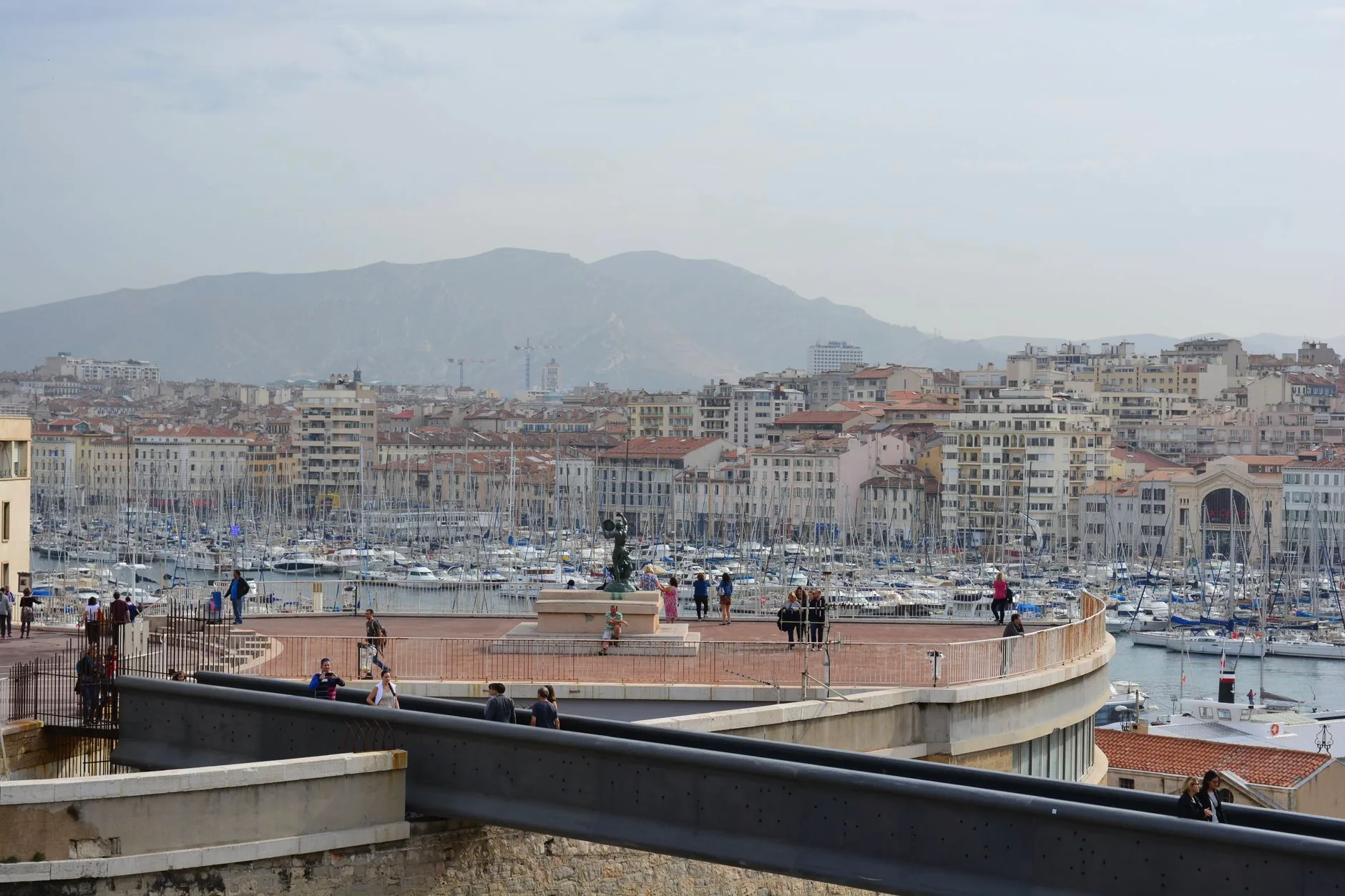
June is the gentler summer choice if you want both city sights and the beach. Start exposed walking early, then leave the hotter part of the day for a museum or another indoor visit and choose a beach break when you are ready to slow down. Plage des Catalans is an urban shore close to the centre, rather than a substitute for a Calanques walk. If swimming is the focus, Marseille beaches for swimming can help you choose a shore that suits the day.
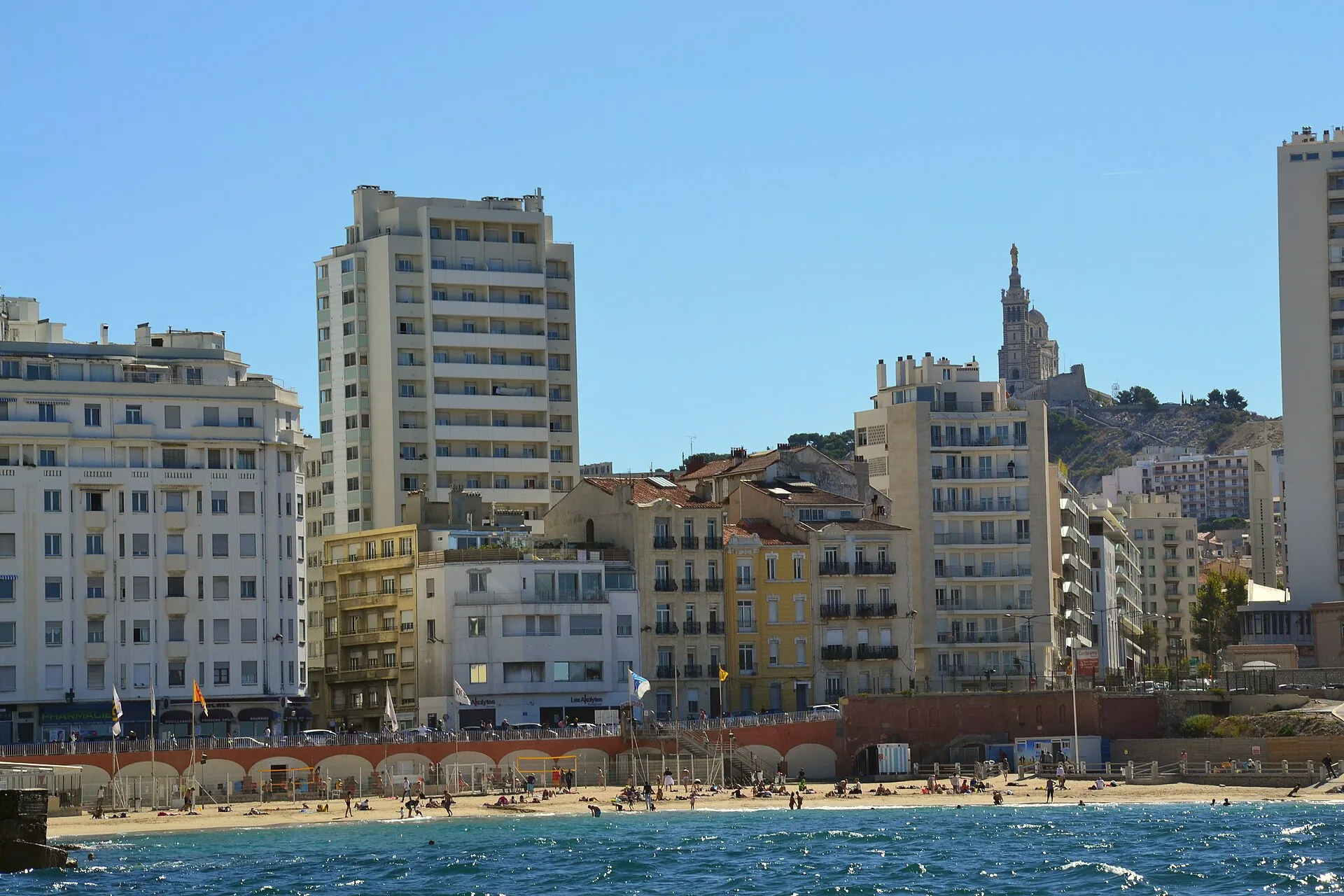
Jeanne Menjoulet from Paris, France · CC BY 2.0 · Edited
July and August are much busier around beaches and the Calanques, particularly on fine-weather weekends, and August can be busier still. Accommodation and popular outings commonly need booking well in advance in these two months, especially around school holidays and major events. Allow roughly €130–210 per night for a standard double in summer, but central locations and event dates may exceed that range.
Marseille Jazz des Cinq Continents has a July seasonal window, so a summer culture visit need not be organised solely around sand and sea. The festival also adds a reason to think about rooms early if your dates coincide with it. For a coast day, keep the land route and a boat trip as separate possibilities: fire-risk status can prevent walking or landing in the Calanques even when a sea excursion can run. Strong wind can affect a boat outing independently of the land-access decision.
Autumn: September to November
September still offers a credible mix of coast time and sightseeing. Its warmer days distinguish it from October without the same beach pressure as midsummer, so if swimming matters, choose September rather than making a late-autumn swim the centre of your trip. The Old Port and waterfront can still anchor a day that includes time by the sea, with a city visit to fall back on if conditions turn.
October is more comfortable for a walking-led stay than a beach-led one, but its increased number of precipitation days makes an inflexible outdoor itinerary less attractive. November is cooler and has the highest precipitation-day average in the series: the Old Port and indoor sights make more sense as the core of a short break than a coast excursion you cannot reschedule.
Budget roughly €90–150 per night for a standard double room in autumn, but waterfront addresses and event dates may cost more. If you can shift a walk by a day, September keeps more of the city-and-sea promise. Later in the season, plan the city first and treat a dry day on the coast as an opportunity, not the only reason for coming.
Winter: December to February
Winter suits a city break more than a swimming trip. Make the Old Port the starting point for shorter outdoor stretches, then spend time in a museum when the weather turns. The harbour remains a useful orientation point for the city even when a long exposed coast walk has little appeal. Pack layers for cool days rather than judging the whole trip by the mildest winter afternoon.
January has the lowest mean daytime high in the monthly series, so even a bright day need not feel like beach weather. Give yourself flexibility to swap a waterfront outing for an indoor sight on a wet day. A winter city break in Marseille offers a fuller way to build that indoor-and-harbour plan. A Calanques boat trip may operate outside summer, but wind can disrupt a sea outing whatever the month.
Allow roughly €75–120 a night for a standard double room in winter; central waterfront locations and holiday dates can be dearer. Lower expected room costs may make winter attractive if you are interested in Marseille itself, but they do not turn it into a dependable swimming season.
Calanques access in summer
- For a Calanques land walk in the regulated season, use the next-day massif-access decision to decide whether that walk remains possible.
- For a view from the water, boat excursions leave Marseille’s Old Port throughout the year, with more frequent departures in high season, but a boat outing does not confer permission to land.
- If the land route is restricted or wind upsets the boat plan, spend the day around the Old Port and Marseille’s indoor sights instead.
The Calanques National Park includes the rocky inlets and paths south of Marseille, and Calanque de Sormiou is one of its distinctive coves, seen from the ridge of Crête de Morgiou. Treat a hike and a boat view as different plans: one puts you on the paths, while the other may show you the coast without any stop ashore. Even outside an access restriction, wind can make a planned boat excursion impractical.
Boat tours from the Old Port have more rotations in high season, but wind can still change your plans. If your main reason for travelling is to enter a particular cove, leave room to change the order of your Marseille days. The Old Port provides a practical city-day starting point when the coast cannot take the role you had planned.
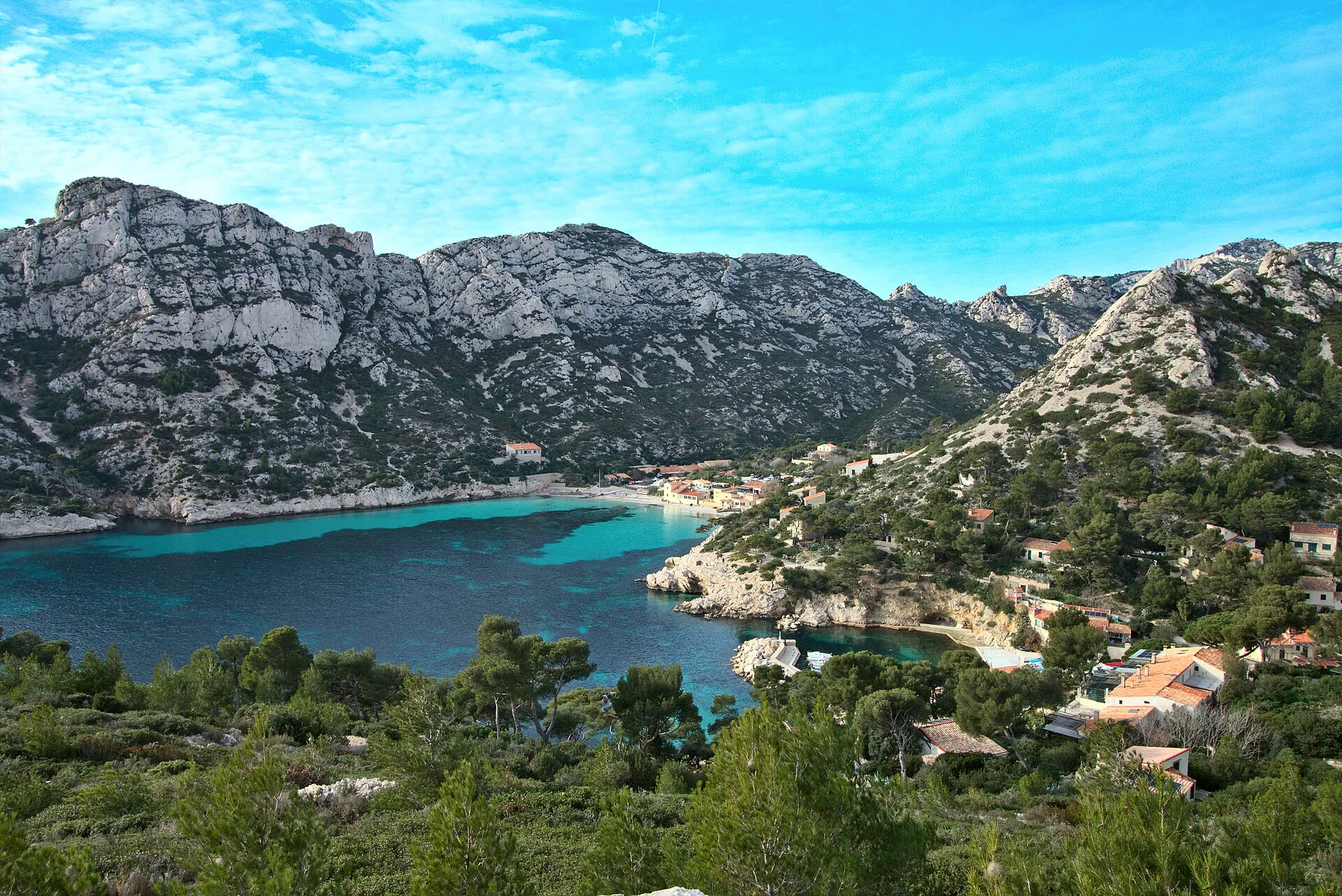
Benjamin Smith · CC BY-SA 4.0 · Edited
Sources & fact-checking
Checks against the sources below cover: key figures, closures, opening hours, and services.
- Marseille Jazz des cinq continents — key figures
- Normales et records climatologiques 1991-2020 à Marseille-Marignane (Marseille Provence)
- Climat Marignane — Météo-France
- Comptes Rendus. Géoscience — key figures
- Préfecture des Bouches-du-Rhône — closures
- Marseille Tourist Office — opening hours
- City of Marseille — service