Choose May for a walking-led visit to Nice, or choose September if you prefer warmer days and evenings. Both suit time in the Old Town and along the Promenade des Anglais better than continuous sightseeing in peak-summer heat. May holiday weekends can still be busy, while winter favours a lower-cost break built around museums rather than long, warm days outside.
May, September or winter?
- Walking-led choice
- May
- Warmer alternative
- September
- Hottest month
- August, by average daily highs and lows
- Coldest month
- January, by average daily highs and lows
- Most precipitation days
- November
- Strongest daytime crowds
- July and August
The milder sightseeing windows balance comfortable outdoor time against some rain interruptions. They also avoid the strongest summer visitor pressure, although neither promises empty streets. For the same central, mid-range double room, expect milder-season dates generally to cost less than peak summer, with holiday demand narrowing the difference.
July and August are a poorer fit if you want to walk outside throughout the day. Their relatively infrequent rain comes with hotter exposed streets and seafront stretches, busier daytime sights and a summer accommodation premium.
Winter is the value-led alternative if indoor visits are part of the attraction, not merely a fallback. Cooler evenings and more frequent rain make it less suitable for a trip dependent on sustained warmth. Keep the room comparison consistent: a central, mid-range double, rather than comparing a winter budget hotel with a summer seafront property.
Temperatures and rainy days by month
| Month | Daily high °C | Daily low °C | Precipitation days | Crowds | Sightseeing verdict |
|---|---|---|---|---|---|
| January | 13.3 | 5.8 | 8.4 | — | Mixed: cold evenings |
| February | 13.5 | 6.1 | 7.5 | Event-dependent | Mixed: cool days |
| March | 15.4 | 8.3 | 7.7 | — | Mixed: cool walks |
| April | 17.4 | 10.8 | 8.7 | — | Mixed: rain interruptions |
| May | 21.0 | 14.5 | 7.4 | Holiday-weekend peaks | Good: mild walking |
| June | 24.7 | 18.1 | 5.7 | — | Good: warmer, fewer wet days |
| July | 27.5 | 20.8 | 3.2 | Strongest daytime pressure | Avoid long walks: heat |
| August | 27.9 | 21.1 | 3.2 | Strongest daytime pressure | Avoid long walks: heat |
| September | 24.8 | 17.7 | 7.2 | Not reliably quiet | Good: warm sightseeing |
| October | 21.0 | 14.0 | 9.4 | — | Mixed: more wet days |
| November | 17.0 | 9.7 | 10.4 | — | Mixed: frequent wet days |
| December | 14.1 | 6.6 | 9.4 | — | Mixed: cool and wet |
Daily highs describe the average maximum temperature, while daily lows describe the average minimum, usually more relevant to early starts and evenings. These are long-term averages, not the weather promised for your stay. A warm afternoon does not mean the whole day will feel equally comfortable outside.
Precipitation-day counts describe frequency, not rainfall volume or how long each shower lasts. Use them to decide how much freedom you need to swap a walk with an indoor visit. A month with more wet days calls for movable outdoor plans, rather than assuming every affected day must be spent inside.
Spring walks and holiday weekends
The Old Town suits spring sightseeing when you want to explore its narrow streets without making every outing a short escape from the heat. Early spring still calls for a cooler-weather day, particularly once afternoon turns to evening. By May, spending longer outside and lingering after a walk becomes a more comfortable proposition.
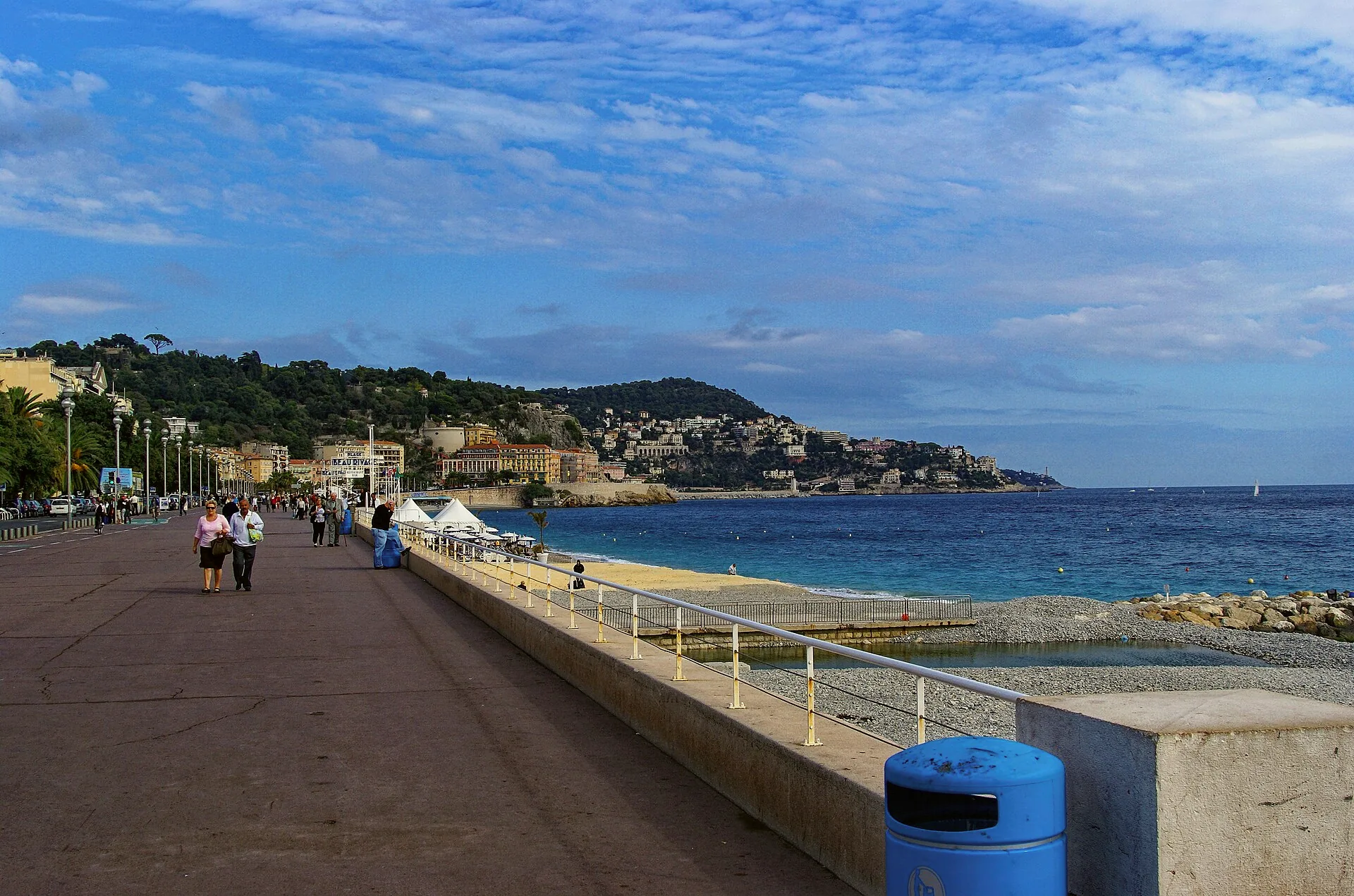
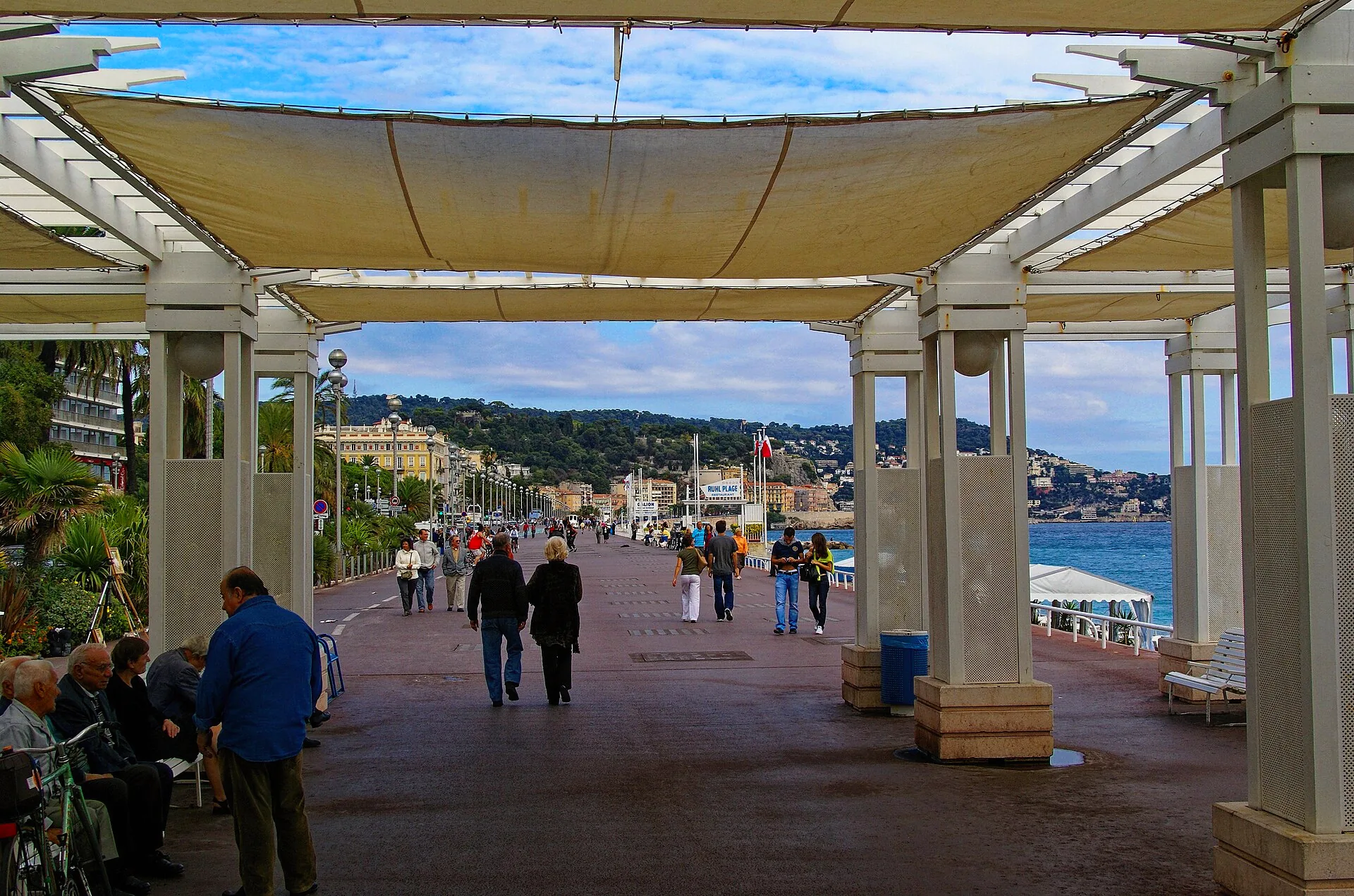
The Promenade des Anglais gives you a different kind of walk: an open route beside the shore, with space to pause rather than simply move between sights. Pair it with the Old Town instead of treating the seafront as a transfer.
Txllxt TxllxT · CC BY-SA 4.0 · Edited
Prefer ordinary May weeks to extended public-holiday weekends for a spring walking break. Holiday short breaks bring more visitors and busier hotels and tourist-facing businesses, without necessarily filling every attraction. On the central, mid-range double-room basis, spring usually sits below the summer premium, but holiday dates can erode that saving.
Carry light layers and rain protection, and keep an indoor visit movable. The Musée des Beaux-Arts, with its fine-art collection, makes a useful alternative when a seafront walk no longer appeals. Swap the order of the day rather than abandoning its outdoor part altogether.
Summer heat and beach outings
June offers a middle ground between spring walking and peak-summer heat: warmer days and evenings, with fewer rain interruptions than the milder sightseeing windows. As summer advances, the benefit of relatively dry weather becomes less persuasive if your main aim is to spend the whole day on foot.
Put exposed outdoor visits in the cooler part of the day, then take a substantial indoor or shaded pause. The Promenade des Anglais has limited natural shade along its main seafront stretch, and occasional palms and structures do not provide continuous shelter. A shorter outing followed by a museum visit is a better heat-sensitive choice than a long midday promenade walk.
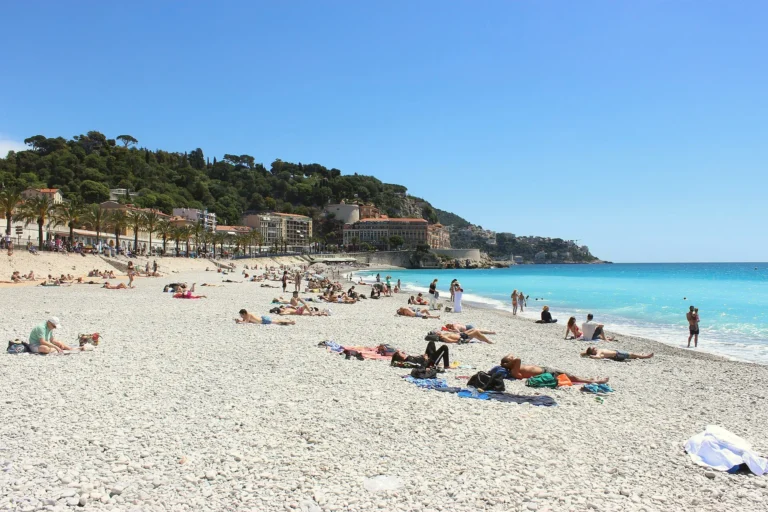
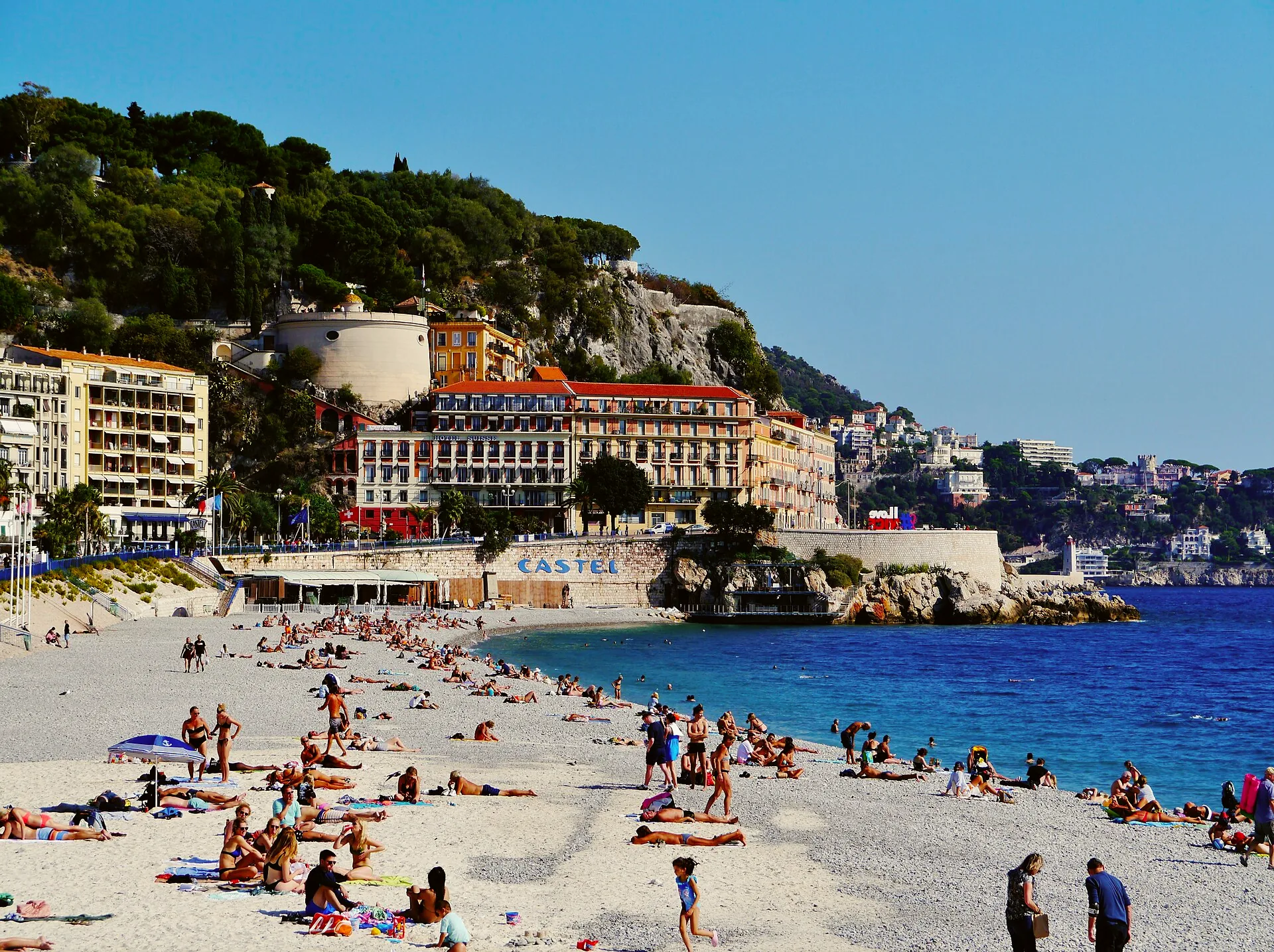
Les Ponchettes is a public pebble beach beside the Old Town, useful for a shore pause between visits. It has little to no natural shade, so moving from the promenade to the beach does not solve the exposure problem. Bring your own sun protection and treat time beside the water as a separate choice from entering it.
Zairon · CC BY-SA 4.0 · Edited
Carry a reusable bottle and plan drinking water and bottle refills before an exposed walk or beach outing. Summer works best if shore time matters more than uninterrupted sightseeing. For a central, mid-range double room, expect the strongest seasonal accommodation premium, so choosing this period means accepting both that cost pressure and shorter outdoor visits.
September and October sightseeing
September lets you keep more of the day outdoors without taking on the height of summer’s heat. It suits travellers who want a warmer sightseeing break, including evenings outside, rather than the milder walking conditions of spring. Choose it for warmth, not as a guarantee of quiet streets. Popular parts of the Old Town and central seafront can still be busy.
October changes that balance. Days and evenings cool, while precipitation becomes more frequent, so a plan built entirely around long walks has less flexibility. Give the Old Town and seafront the more favourable part of the day and leave an indoor visit ready to take their place. You can still enjoy outdoor sightseeing, but it should no longer determine every day’s order.
For the same central, mid-range double room, autumn generally eases away from the peak-summer premium. September’s appeal as a warm alternative can keep desirable dates expensive, while later autumn is more likely to reward a traveller comfortable with cooler, less settled conditions. Compare dates within the period rather than assuming that an autumn label alone means good value.
Winter city breaks and Carnival
November to February suits a city break in which indoor visits are part of what you came for. The Musée Masséna, housed in a seafront villa, gives a visit focused on Nice’s history a useful indoor centrepiece. Combine it with shorter walks rather than making a long day beside the sea the condition for enjoying your stay.
Cooler evenings make lingering outdoors less inviting, and rain takes a larger role in deciding the day’s order. On the same central, mid-range double-room basis, ordinary winter dates generally offer the lower-cost option. Choose winter for indoor-led sightseeing, not a swimming holiday or sustained outdoor warmth.
Nice Carnival brings an event-led reason to visit in winter: parades and spectacle become part of the city’s appeal rather than a backdrop to ordinary sightseeing. The forthcoming edition runs from 9 to 28 February 2027. Choose those dates if Carnival is a priority, but favour dates outside its window if you want a quieter, museum-led break. Event demand can interrupt winter’s usual accommodation advantage.
Quieter hours and coastal outings
- Trans Côte d’Azur coastal boat trip from Nice port: 18 February to 2 November 2026.
- No departures on Mondays.
- Departures at 11:00 and 15:00.
The coastal boat trip is an optional way to see the shoreline from the water rather than spend another outing on foot. Its annual operating season matters if it is a reason for choosing your dates: a winter city break and a coastal outing do not always offer the same choices.
Visit the Old Town early for a quieter walk. Visitor pressure builds from mid-morning and is greatest from late morning into the afternoon. Evening bustle is a separate pattern around restaurant and bar terraces, so moving a daytime visit to dinner time does not necessarily make the streets quieter.
On the central Promenade des Anglais, midday is generally the busiest part of the day, with summer weekends adding pressure. An early-morning walk is the quieter choice. If you want more room during busy periods, continue west beyond the central beach stretch: the western promenade is generally less crowded than the central seafront.
High demand reduces your choice of accommodation at a preferred price and makes a rigid day harder to enjoy. Compare ordinary weekdays with holiday dates before settling on a central room, and keep the order of outdoor visits flexible. You need not make a less crowded western walk a substitute for the Old Town. Give each a different part of the day.
Sources & fact-checking
Checks against the sources below cover: closures, services, and key figures.
- City of Nice — closures
- Profiter de l’été à Nice
- Se baigner en sécurité et prévenir la noyade
- Trans Côte d’Azur — service
- French government — service
- Fiche climatologique — NICE (06088001)
- Normales et records climatologiques 1991-2020 à Nice – Côte d’Azur
- CLIMAT NICE – extremes mensuels et annuels
- Nice Côte d’Azur Convention and Visitors Bureau (Office de Tourisme Nice Côte d’Azur) — key figures