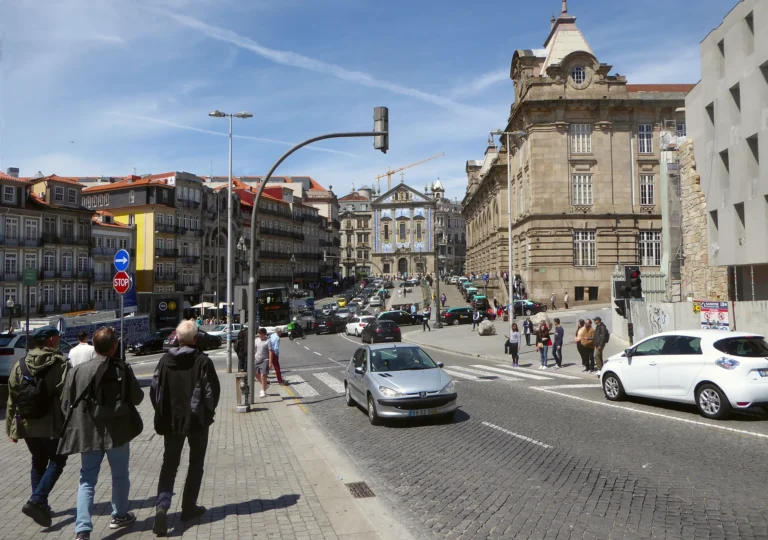
Choose June outside the main São João celebration for a walking-led Porto break. The balance is lower average rainfall and long daylight, rather than an empty city or the cheapest rooms. September is another useful outdoor window, but it can still be busy.
If your priority is art, food and wine-cellar visits, winter offers a different bargain: potentially better accommodation value, with shorter walks fitted around rain. Late autumn and midwinter are poorer choices when the trip depends on spending most of each day outdoors.
Months to choose
- Recommended walking window
- June, outside the main São João celebration
- Driest month
- July
- Wettest month
- November
- Warmest nights, mean daily minimum
- August
- Coldest nights, mean daily minimum
- January
The summer weather advantage comes with greater visitor pressure. For ordinary sightseeing, avoiding the festival gives you more freedom around the riverfront, while accepting that popular sights and central accommodation still attract demand.
September suits an outdoor break better than late autumn, without reliably offering a quiet city. Winter makes more sense if a museum or cellar visit is a reason to travel, not merely shelter while you wait for rain to stop.
The least suitable stretch for long outdoor days is late autumn through midwinter: rain and limited daylight work against lingering by the Douro or linking hill walks. You can still enjoy a city break then, but choose it for its indoor attractions.
Weather and daylight by month
| Month | Mean minimum °C | Rainfall mm | Precipitation days | Daylight h:min | Crowds | Verdict: cause |
|---|---|---|---|---|---|---|
| January | 6.4 | 151.0 | 16.0 | 9:24 | Lower | Poor: wet, short days |
| February | 6.8 | 97.8 | 14.4 | 10:27 | Lower | Mixed: frequent rain |
| March | 8.8 | 101.1 | 12.8 | 11:53 | Rising | Mixed: rain risk |
| April | 10.1 | 95.5 | 15.0 | 13:13 | Moderate | Mixed: shower risk |
| May | 12.3 | 85.6 | 14.0 | 14:28 | Rising | Mixed: lingering rain |
| June | 14.5 | 33.7 | 8.8 | 15:10 | High; festival peak | Good: long, drier days |
| July | 15.5 | 16.6 | 6.3 | 15:04 | High | Good: dry; busy |
| August | 15.7 | 29.3 | 6.0 | 13:42 | High | Good: dry; busy |
| September | 14.8 | 68.2 | 8.5 | 12:28 | High | Good: before wetter autumn |
| October | 12.9 | 148.9 | 14.4 | 11:08 | Easing later | Mixed: wetter, shorter days |
| November | 9.4 | 165.9 | 14.4 | 9:48 | Lower | Poor: heavy rainfall |
| December | 7.6 | 153.3 | 16.3 | 9:15 | Lower; holiday peaks | Poor: wet, short days |
Porto’s wetter season runs broadly from October to January. Rainfall totals describe water accumulated, not hours lost to rain. A precipitation day can include only a brief shower. It need not be wet throughout.
Pedras Rubras is near the airport, north of the historic centre, while Serra Pilar is across the Douro in Gaia. Neither station is in Porto’s historic centre, where you will do much of your sightseeing.
- Winter: roughly €70–€120 per night for a central, standard double room.
- Spring or later autumn: roughly €90–€160 per night for the same room.
- Summer or busy September: roughly €120–€200 per night for the same room.
Popular dates, weekends and shorter lead times push these room estimates towards the upper end or beyond. Winter’s value depends on avoiding holiday peaks.
Spring sightseeing
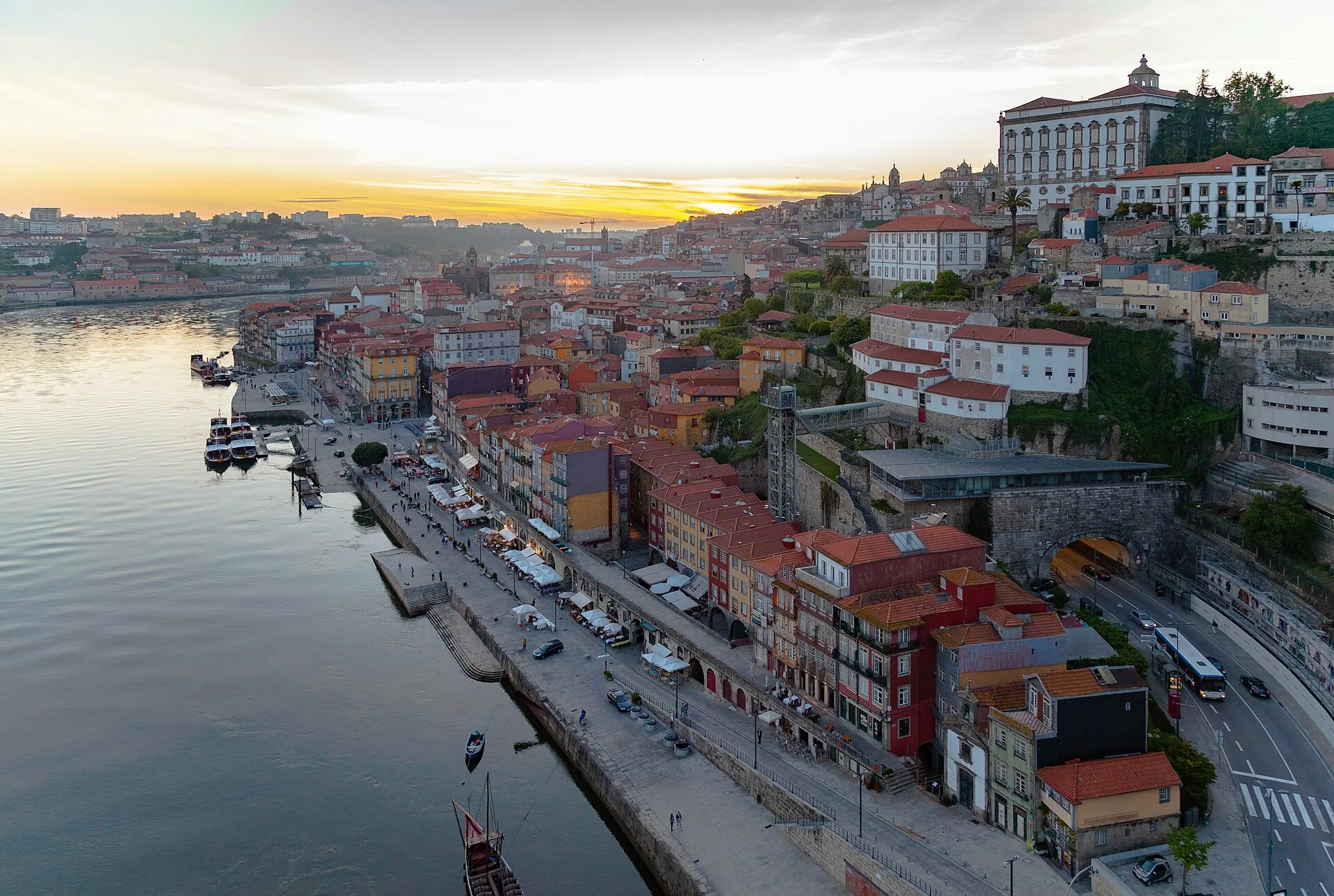
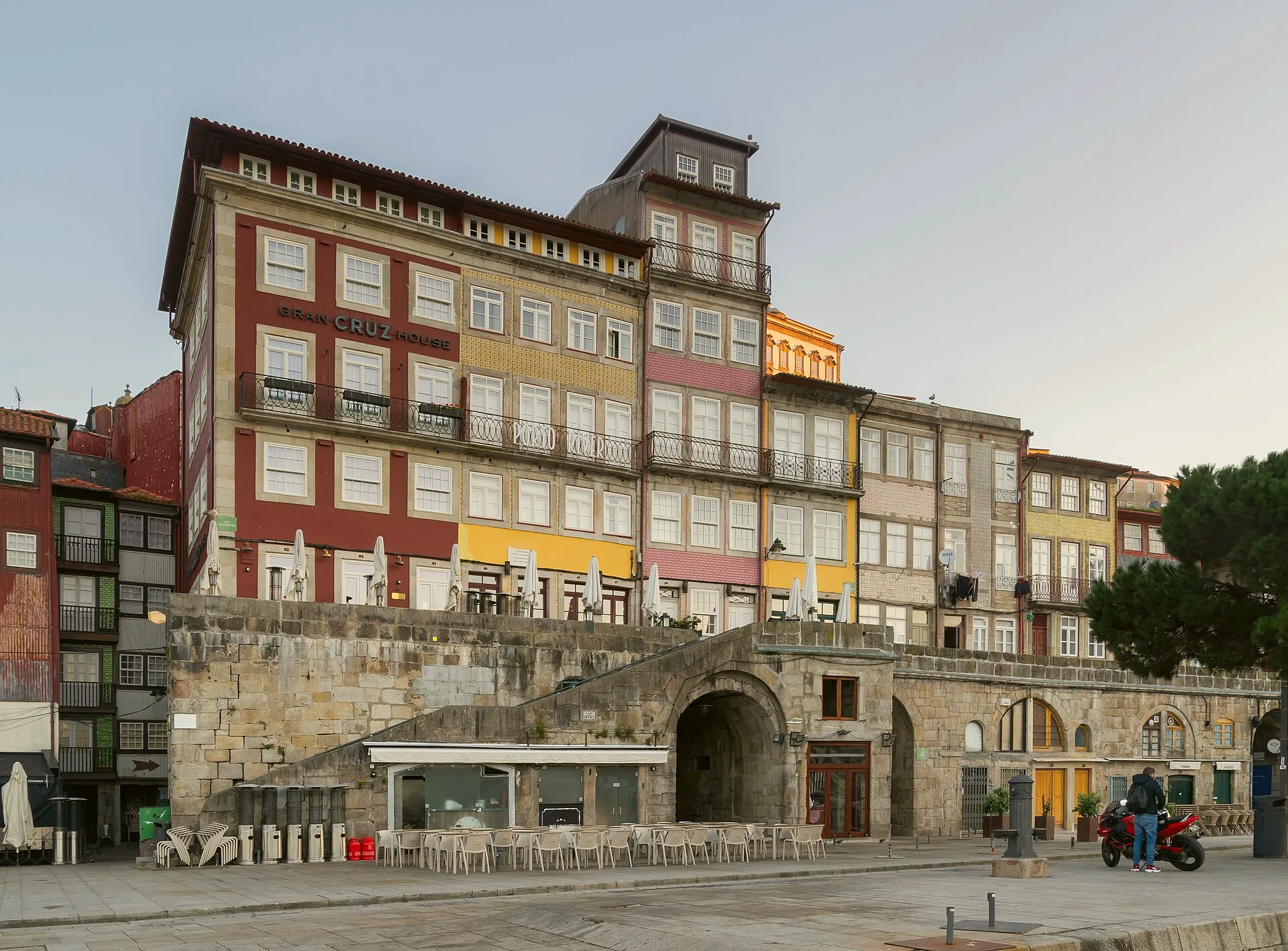
Cais da Ribeira gives spring sunshine a useful destination: the quayside lets you spend time beside the Douro rather than treating the riverfront as a quick photograph stop. Use a dry spell for the riverfront and hill walks, leaving room to change the order of your sightseeing.
Krzysztof Golik · CC BY-SA 4.0 · Edited
Early spring brings longer days than winter, but cooler nights and persistent rain risk still favour a flexible visit. As spring progresses, milder evenings make an outdoor break easier to keep in the day, especially after climbing between the centre and the river.
May is appealing if you want substantial daylight before summer, but it is not simply June with fewer visitors. The rainfall drop into the recommended window is pronounced, so a trip built around being outdoors has a stronger weather case for waiting. In either month, let the day’s weather decide when to linger outside rather than assigning every afternoon to a long walk.
Summer and São João
Summer offers the strongest weather case for long days outdoors in Porto, but July and August also bring high-season demand. Warmer nights make a riverside evening easier to include after daytime sightseeing. Lower average rainfall improves the odds of outdoor time, without guaranteeing a dry stay.
On a hot day, move exposed hill walks to the morning or later afternoon. Porto’s changes of level make a long walk more demanding than a glance at a compact centre suggests. Leave the middle of the day for a meal or an indoor visit rather than adding another climb.
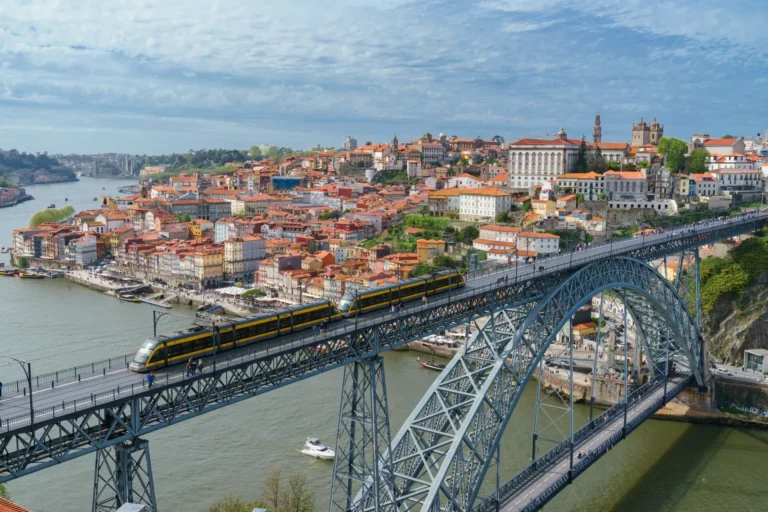
São João, Porto’s Saint John festival, has its recurring main celebration on the night of 23–24 June. Large crowds gather at Ribeira and the Dom Luís I Bridge for midnight fireworks over the Douro. This is a reason to choose the dates if you want the celebration, not a minor interruption to an ordinary sightseeing break.
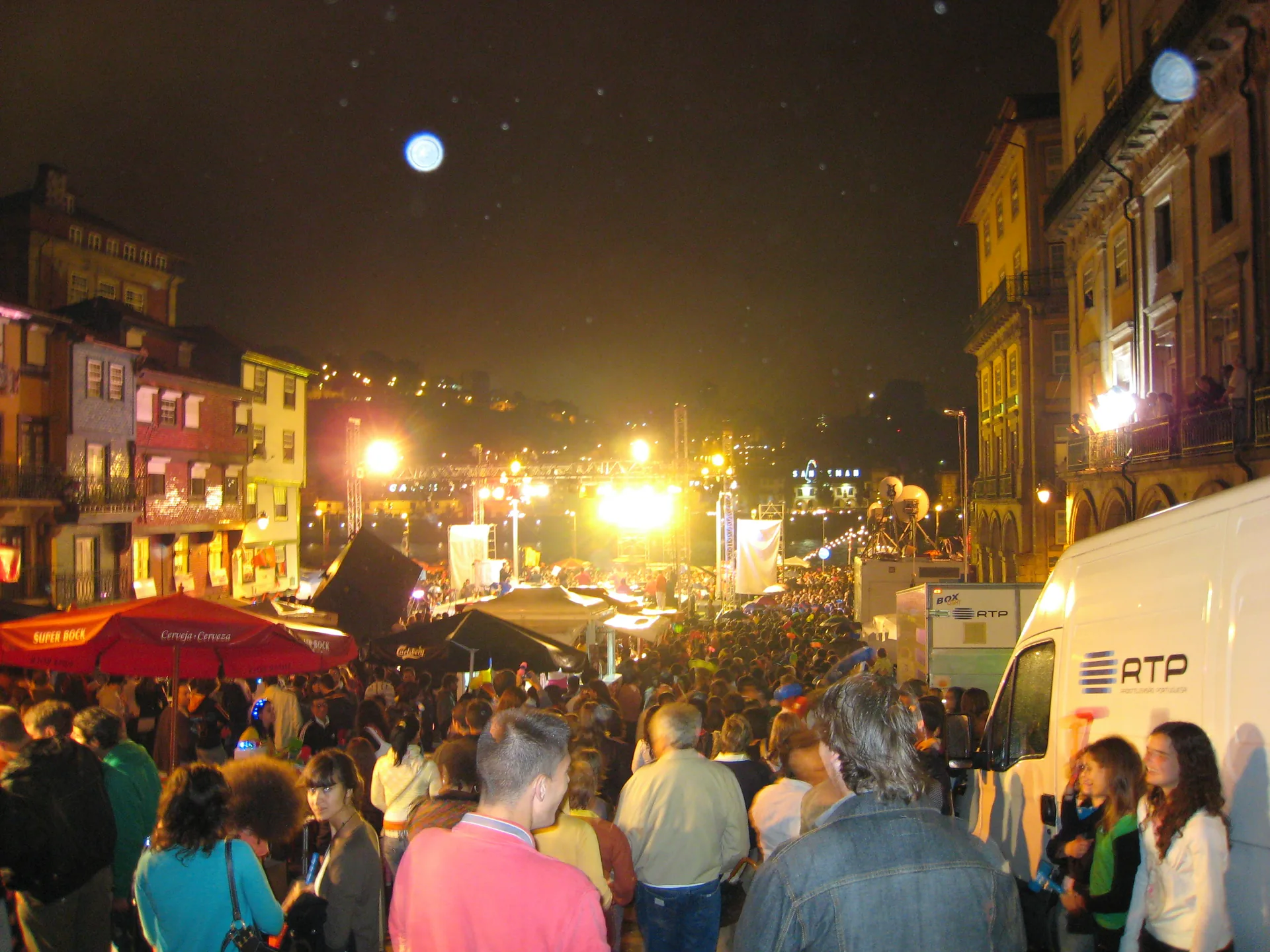
Hugo Cadavez from Portugal · CC BY 2.0 · Edited
For an ordinary walking break, choose other June dates. If you come for São João, allow the riverfront celebration to shape your evening and choose accommodation earlier rather than expecting quieter-season room choice.
Early and late autumn
September is an outdoor alternative, not a reliably quiet shoulder season. Porto can still be very busy, while the weather pattern remains more favourable for riverfront time than later in autumn. Choose it when you want walking to remain central to the trip and can accept queues at popular sights.
October marks a sharper change: rainfall rises and the daylight available for outdoor sightseeing contracts. November pushes the balance further towards indoor visits. Lower visitor pressure can make these months enjoyable, but it does not compensate for wet weather if your main aim is to spend long days outside.
A local Porto guide identifies the autumn lull most clearly after 15 October, when queues at Livraria Lello, the ornate bookshop, and other major sights generally ease compared with high summer. Lighter autumn crowds do not mean queue-free weekends or popular sights. Arrive early if Lello matters to your visit.
Later autumn therefore suits a museum-and-walking break: make an indoor visit part of the day you actually want, then use dry intervals for the hills and Douro. September makes the stronger choice if those outdoor stretches are the trip’s main attraction.
Winter city breaks
Choose winter for indoor interests with outdoor time alongside them, rather than for a full day of walking. Cooler nights, rain and short daylight make a long riverside afternoon a less dependable centrepiece. The potential room saving is worthwhile only if you enjoy what you will do instead.
For rain in any season, give an indoor visit time in its own right: the collections at Soares dos Reis National Museum, the interior of São Francisco Church or a port wine-cellar visit across the Douro in Gaia. These offer art, carved decoration and an introduction to the city’s wine trade respectively, not interchangeable waiting rooms.
Put daylight-dependent sightseeing first and keep riverfront walks flexible. A dry interval can then become an outdoor break without displacing the visit you came for. Porto in February develops that winter choice in more detail, with art, food and cellar visits taking priority over a fixed walking day.
Garden access and Easter
- Give the Crystal Palace Gardens time for river views. April–September opening is 08:00–21:00, while October–March opening starts at 08:00 but ends earlier, so place your visit before dinner.
- For a spring holiday break, Easter Sunday falls on 28 March 2027. Treat the holiday weekend separately from an ordinary spring weekend when choosing accommodation.
The Crystal Palace Gardens combine planted grounds with views over the Douro, making them a useful pause from the centre’s hill walks. Choose them when you want outdoor time without making another long walk the main activity.
- Name
- Crystal Palace Gardens
- Location
- R. de D Manuel II, 4050-346 Porto Maps
- Site
- ambiente.cm-porto.pt
- Hours
- 08:00–19:00
- Essential fact
- Public gardens west of Porto’s historic centre, known locally as Jardins do Palácio de Cristal.
Sources & fact-checking
Checks against the sources below cover: key figures.