Choose September for a walking-led visit to Salzburg, with comfortable daytime averages and less precipitation than late spring or summer. May is the spring alternative, while early October suits shorter, cooler days outdoors. If music or Christmas markets are your main reason to travel, choose their dates instead, accepting the different weather and demand they bring.
Sightseeing or a festive visit
- Walking-led sightseeing
- September
- Spring alternative
- May
- Cooler alternative
- Early October
- Festive choice
- Christmas-market season
- Hottest daytime averages
- July
- Coldest daytime averages
- January
- Highest precipitation total
- June
For sightseeing, favour a month that lets you spend time in the Old Town, gardens and along the Salzach without making every day an indoor retreat. The recommended windows balance daytime warmth with rainfall and access to seasonal outdoor attractions.
Early June is a weaker choice if reducing rainfall exposure matters. Longer days do not mean drier conditions. Midwinter is also a poor fit for sustained outdoor sightseeing: cold and limited daylight make shorter walks between indoor visits more appealing.
A festive visit has a different priority. The Easter Festival, Salzburg Festival and Christmas market each give you a reason to accept weather or visitor demand that would be less attractive for a walking-focused break.
For a standard double room in May, allow roughly €120–220 per night, with central locations and weekends pushing prices upwards.
Weather by month
| Month | Daytime maximum | Precipitation | Crowds | Sightseeing verdict |
|---|---|---|---|---|
| January | 3.9°C | 71.0 mm | — | Mixed: cold outdoor days |
| February | 6.3°C | 53.7 mm | — | Mixed: still cold |
| March | 11.3°C | 89.5 mm | — | Mixed: cool spring |
| April | 16.6°C | 86.5 mm | — | Good: milder walks |
| May | 20.7°C | 153.0 mm | — | Good: warmth, rain trade-off |
| June | 23.7°C | 186.3 mm | Summer tour groups | Mixed: high rainfall |
| July | 25.6°C | 169.0 mm | Summer tour groups | Mixed: warmth and groups |
| August | 25.2°C | 178.8 mm | Summer tour groups | Mixed: warmth and groups |
| September | 20.2°C | 136.4 mm | — | Good: warmth, less rain |
| October | 15.3°C | 94.9 mm | — | Good early: cooler days |
| November | 9.0°C | 73.2 mm | — | Mixed: short, cold days |
| December | 4.6°C | 72.5 mm | — | Mixed: cold, market appeal |
The mean daily maximum describes the average of each day’s highest temperature, not the temperature throughout your walk. Mornings and evenings can be considerably cooler.
Precipitation totals describe volume, not how often or how long it rains. The summer rise makes a rain-sensitive walking holiday less appealing. For a walking-led trip, favour the milder shoulder-season months and keep indoor sights in your day. For a winter visit, give interiors more time and make outdoor stretches shorter.
Spring and the Easter period
May suits a spring trip with substantial time outdoors, while early spring suits shorter walks between interiors. The warmer late-spring daytime pattern comes with a clear increase in precipitation, so the choice is not simply between cold and dry or warm and dry.
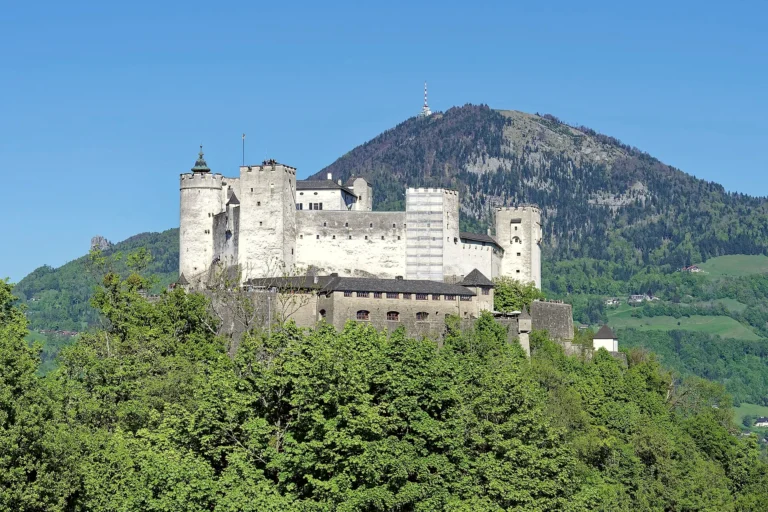
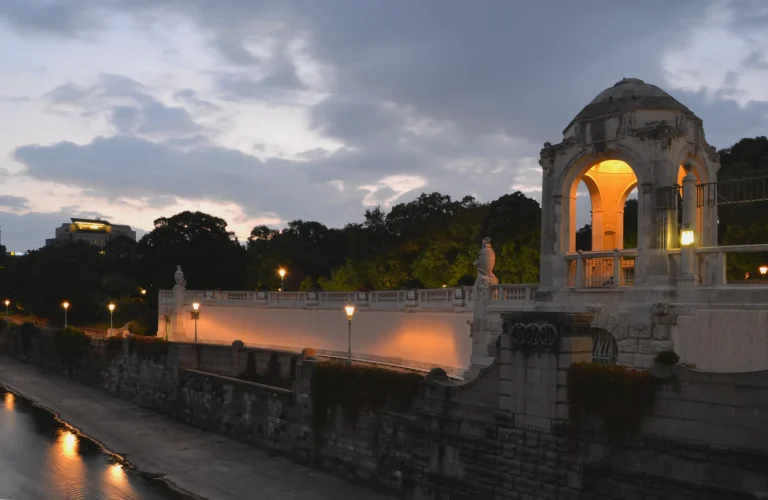
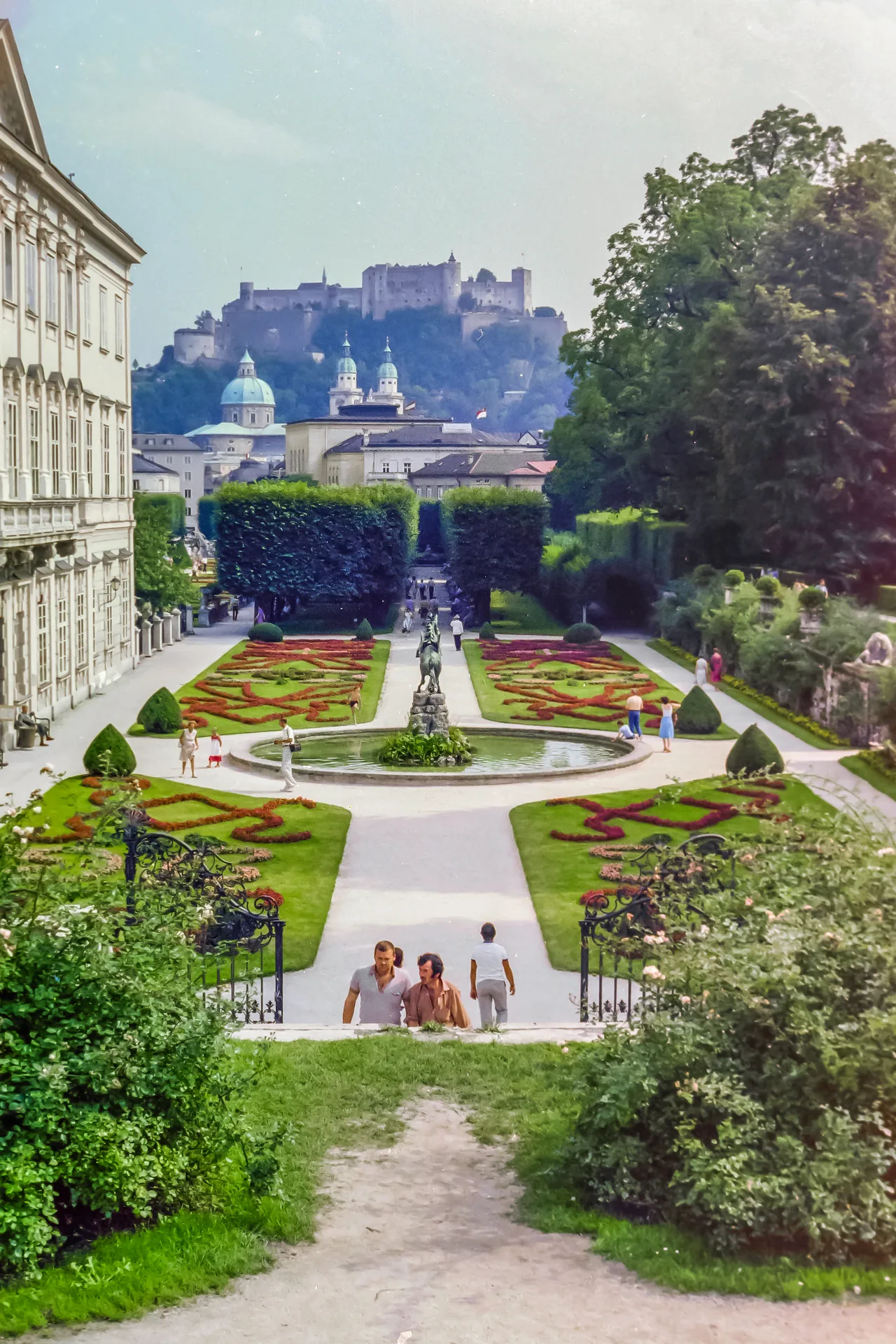
Mirabell Gardens give later spring a particular appeal: follow the formal paths and planted areas around the Pegasus Fountain, with views towards the fortress. Allow time to enjoy the garden rather than treating it only as a crossing between the river and the city.
Raimond Spekking · CC BY-SA 4.0 · Edited
The Salzburg Easter Festival runs from Palm Sunday through Easter Monday, during Holy Week. Choose the Easter period for the music, rather than as a fixed spring-weather window: Easter moves through the calendar, so the outdoor conditions can differ between visits.
For wet weather in any season, alternate outdoor stretches with substantial indoor sightseeing. Salzburg Cathedral and the Salzburg Museum offer different reasons to pause indoors, religious architecture and the city’s history respectively. Keep their order flexible so a garden or river walk can take the brighter part of the day.
Summer and the Salzburg Festival
Summer gives Salzburg longer days and its warmest daytime conditions, but also a wetter climate pattern and concentrated visitor traffic. Choose summer for music and long outdoor evenings, not as a dependable dry-weather alternative. The start of the season is particularly unhelpful if rainfall exposure is your deciding concern.
The Salzburg Festival’s summer edition runs from 16 July to 29 August 2027. For a music-led visit, those dates take precedence over the sightseeing-weather verdict: plan your stay around the performances you want to attend, leaving space between them for the city.
For ordinary sightseeing, the trade-off is less favourable. Summer tour groups make the Old Town’s busiest part of the day more crowded, while warmth can make a long walk less comfortable. Put sustained walking into a cooler part of the day and allow indoor breaks rather than scheduling continuous outdoor sightseeing.
Accommodation demand also changes the cost of this choice. As a rough planning allowance, a standard double room might cost €150–250 per night in summer, rising to around €200–350 around sought-after Festival dates, and central locations and weekends tend towards the upper end.
September and October
September keeps much of May’s daytime warmth while bringing a lower monthly precipitation total. That balance favours garden paths, Old Town walks and time beside the Salzach without the warmer summer conditions. Choose early autumn if walking is the main pleasure of your trip, rather than an activity squeezed between indoor visits.
Early October is a cooler alternative. Bring a layer for the river and use the middle of the day for your longest outdoor stretch. Mirabell Gardens still give you a reason to linger, while Hellbrunn’s trick fountains add an outdoor attraction within their published season.
Later autumn changes the balance: shorter daylight and colder conditions make a day centred on interiors more attractive. It is a mixed choice if you picture long garden afternoons, but can suit a city break built around architecture, museums and shorter walks.
Do not equate autumn automatically with a bargain. For a standard double room, allow roughly €120–220 per night in September or early October, with central locations and popular weekends at the upper end, while later autumn outside market dates may be nearer €90–160.
Christmas markets and winter sightseeing
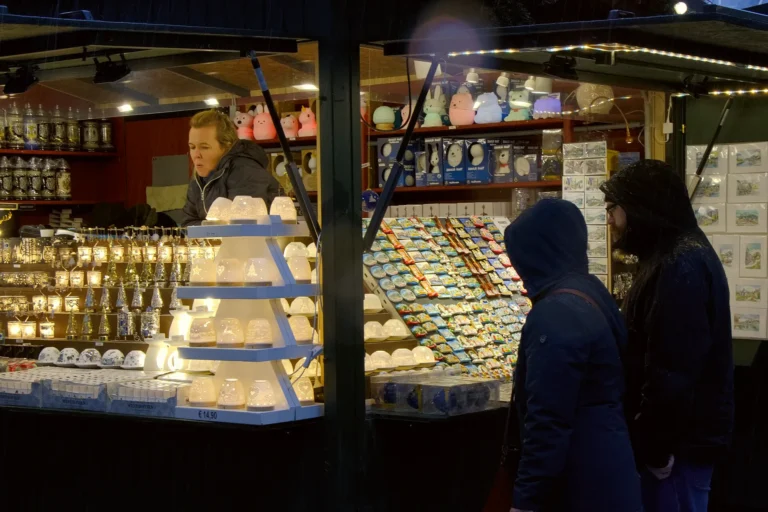
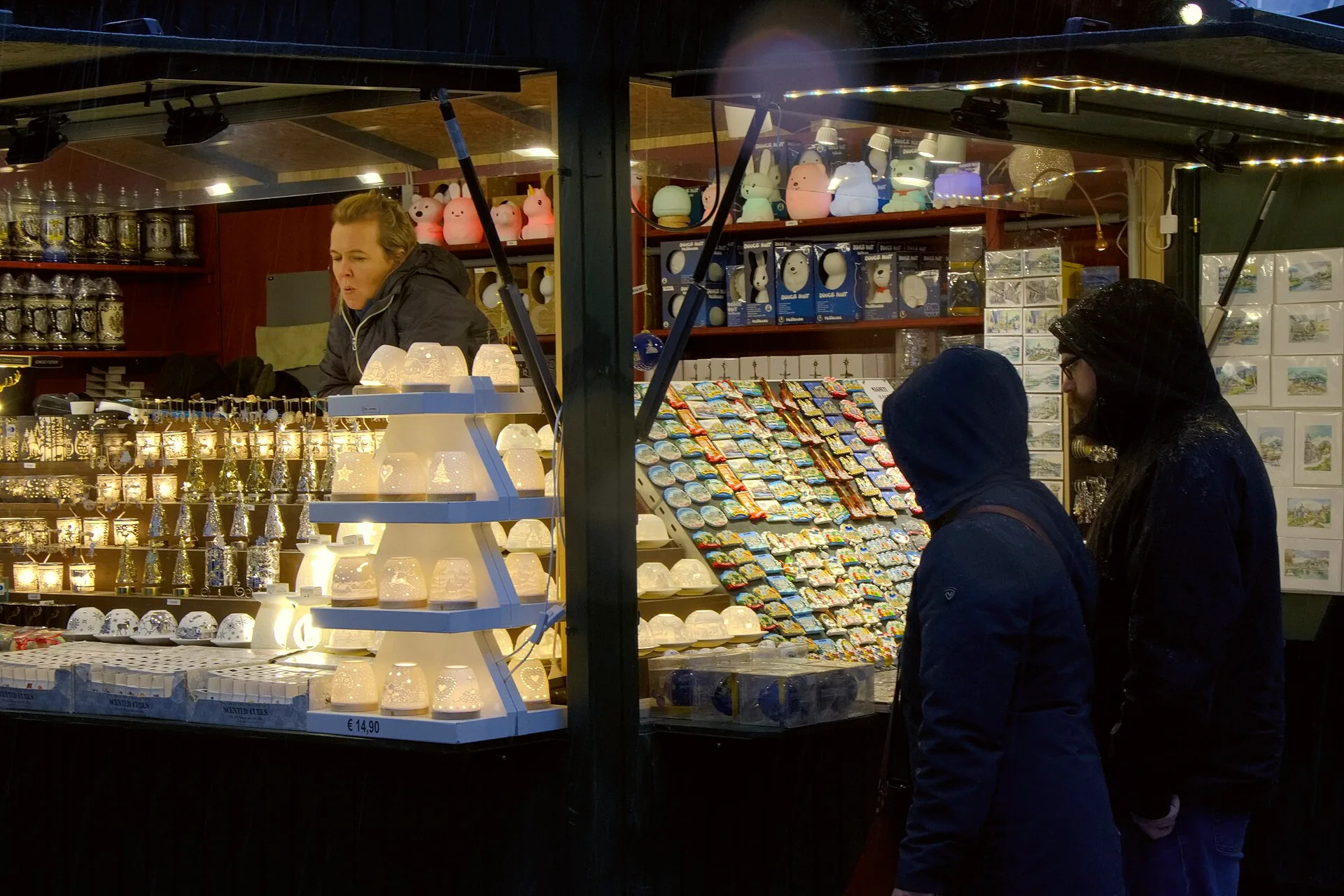
Choose a festive winter visit for the Christmas market, not for long outdoor sightseeing. The Salzburg Christmas Market occupies Cathedral Square (Domplatz) and Residence Square (Residenzplatz), placing its stalls beside the cathedral and the city’s historic ceremonial buildings. The 2026/27 edition runs from 19 November 2026 to 1 January 2027.
Eweht · CC BY-SA 4.0 · Edited
Cold daytime conditions and short days make a winter visit work best as indoor sightseeing punctuated by brief walks. Give the market its own time rather than expecting it to turn a full day outside into a comfortable plan.
Salzburg averaged 49.0 days a year with snow cover at least 1 cm deep in 1991–2020, compared with 76.1 in 1961–1990. Snow is not guaranteed during a city break. Those annual historical counts describe how often cover occurred across a whole year, not the chance of a white market visit on your chosen dates.
For a standard double room, budget roughly €140–250 per night around the Christmas-market period, with Advent weekends and central locations costing more. Outside festive dates, a winter allowance of around €90–160 is more realistic. Quieter streets and lower room costs can suit an indoor-led trip, provided snow is not its deciding attraction.
Quieter hours and seasonal access
- Hellbrunn’s trick fountains, playful water features in the palace grounds, open daily from 28 March in the published 2026 season. Include them when choosing an outdoor-focused spring, summer or autumn visit.
- Mirabell Gardens are freely accessible during the day year-round, but the Hedge Theatre and Dwarf Garden close in winter. The Orangery remains a year-round option, open daily 09:00–16:00; a winter garden visit need not mean every part is accessible.
The Old Town is busiest from late morning through mid-afternoon, especially in summer when tour groups arrive. Choose early morning or later evening for a quieter street walk. After day-trippers leave and shops close, the lanes can be easier to enjoy, but an evening stroll is not a substitute for visiting shop or museum interiors.
Getreidegasse, the Old Town’s prominent shopping street with its characteristic projecting signs, is a particular gathering point. Take time to look at its façades when the flow of visitors is thinner rather than relying on a different month alone to make it quiet.
For a calmer riverside walk, follow the Salzach north towards Mülln and Müllnersteg, the footbridge near that district. Head north of the Old Town rather than simply moving to the nearest riverbank. The bank immediately beside Getreidegasse can itself be loud and crowded, and the quieter alternative is the stretch further north.
Use that contrast to shape the day: enjoy the central lanes at a quieter hour, then give the northern river path time of its own. Seasonal date choices improve the odds of comfortable outdoor sightseeing, while these local choices help you spend that outdoor time away from the busiest gathering points.
Sources & fact-checking
Checks against the sources below cover: key figures and services.
- Salzburg Festival — key figures
- Salzburger Christkindlmarkt — key figures
- GeoSphere Austria (underlying SNOWGRID-CL data; Tauernwetter presentation) — key figures
- Schlossverwaltung Hellbrunn — service
- City of Salzburg — service
- City of Salzburg, MA 02/01 – City Archive and Statistics — key figures
- Klimamittelwerte 1991-2020
- Monthly Normal — SALZBURG-FLUGHAFEN [AUSTRIA]
- timeanddate.com — key figures