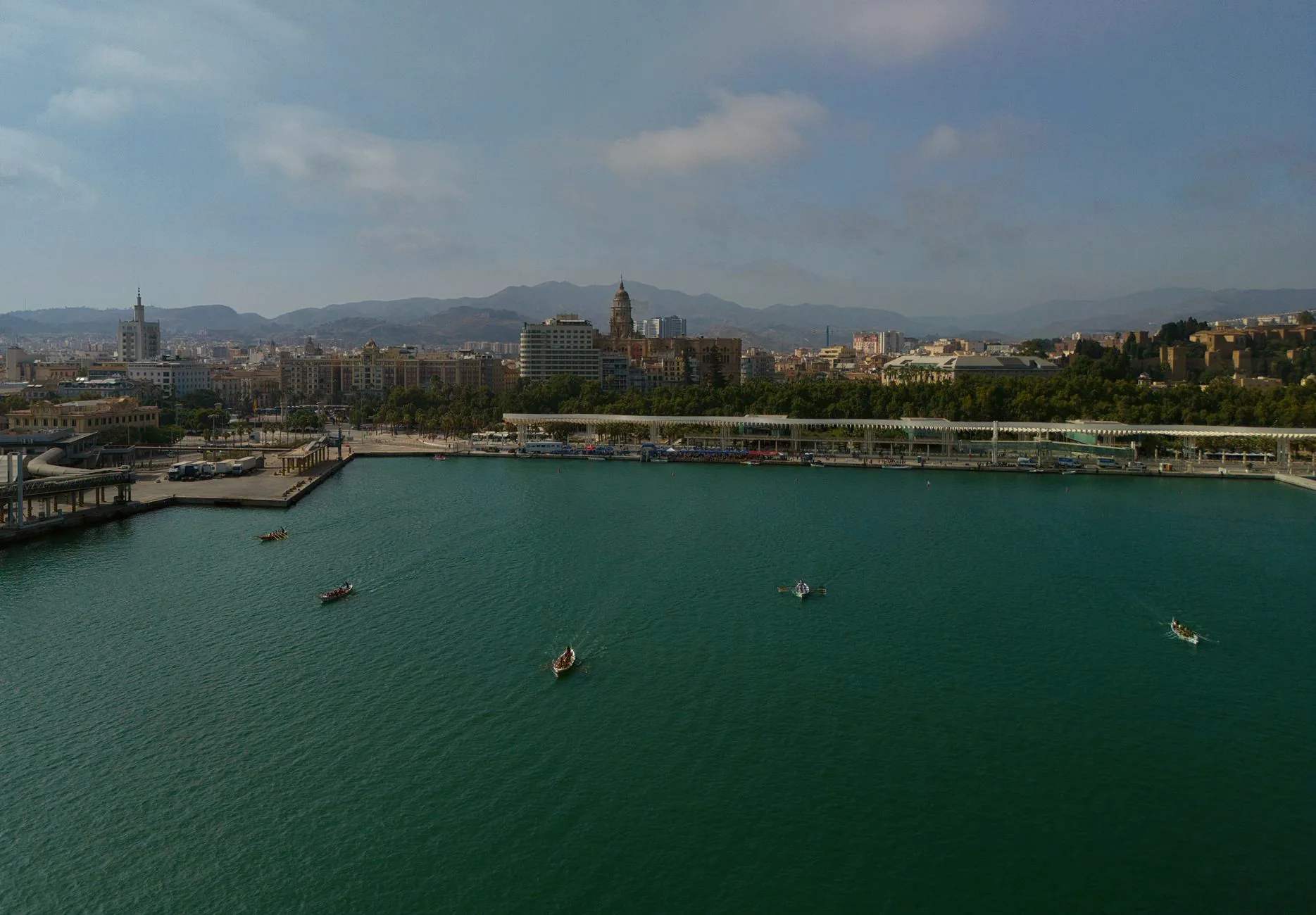
Choose an ordinary weekday after Málaga’s early-December holiday weekend and before the Christmas rush for a winter sightseeing break. You can see the centre dressed for Christmas without committing your whole visit to the busiest lights evenings. The trade-off is changeable weather and cooler nights: this is a city break with a seafront walk, not a reliable swimming holiday.
The December verdict
- Best December window
- Ordinary weekdays after the early-December holiday weekend, before the Christmas rush
- Warmest winter daytime average
- February, 17.7 °C (Málaga Aeropuerto, 1981–2010)
- Coldest winter overnight average
- January, 7.4 °C (Málaga Aeropuerto, 1981–2010)
- Most winter rainfall days
- December, 6.6 days with at least 1 mm (Málaga Aeropuerto, 1981–2010)
- Busiest December spell
- First weekend, especially a long weekend around 6–8 December
December suits you best if the Alcazaba and the old centre matter more than beach time. Winter afternoons are generally mild enough to make outdoor sightseeing appealing, while the illuminated streets give an evening walk a particular purpose. A shower can interrupt that plan, and evenings feel quite different from afternoons, so leave space to swap the order of your stops.
The first weekend can be particularly busy when the holidays around 6 and 8 December line up to make a long break, and other December weekends also draw visitors into the festive centre. The quieter weekday window gives you the lights without making the busiest show crowd the centrepiece of the trip. If you want warm water and long swimming days, choose another season rather than treating a sunny winter afternoon as a beach-weather promise.
December weather compared with January and February
| Month | Mean daily high | Mean daily low | Rainfall days | Visitor pressure | Sightseeing verdict |
|---|---|---|---|---|---|
| December | 17.5 °C | 8.9 °C | 6.6 | Winter lull; festive spike | Mixed: mild days, more rain and Christmas crowds |
| January | 16.8 °C | 7.4 °C | 5.8 | Generally quieter | Good fit: quieter streets, cooler evenings |
| February | 17.7 °C | 8.2 °C | 4.8 | Generally quieter | Good fit: milder highs, fewer rain days |
A December daytime high averages 17.5 °C, but the mean overnight low is 8.9 °C: take advantage of the walking weather in the afternoon and bring a warmer layer for the return after dark. The contrast matters if you visit the Alcazaba by day and stay in the centre for the lights at night.
December’s 6.6 rainfall days on average make an uninterrupted outdoor programme less dependable than February’s 4.8. A day reaching the rainfall threshold need not be wet throughout. Keep a museum visit movable rather than fixing every outdoor stop to an hour: if a shower interrupts your walk, take the indoor stop first and return to the centre’s open-air sights when it clears.
January is the coolest of these months by both mean daily high and overnight low, but its quieter post-Christmas streets may make it more attractive if you have no interest in the lights. February offers the highest average daytime high and the fewest rainfall days in the winter comparison, with generally quieter streets than the Christmas stretch. None of the three is a dependable choice for a trip built around swimming.
Christmas lights and the busy dates
Málaga is a strong Christmas choice if you want the lights enough to accept a busy centre. For the 2026 edition, the illuminated display and sound show are scheduled from 27 November 2026 to 4 January 2027, with the inauguration scheduled for 27 November 2026. That gives you a lights-led visit before the busiest Christmas dates as well as during the holidays.
The principal display runs along Calle Marqués de Larios, usually called Calle Larios, particularly between Plaza de la Constitución and Plaza de la Marina. Start at Plaza de la Constitución if you want to take in the main illuminated street as part of a centre walk, rather than treating the show as a quick stop before moving on. Choose an ordinary weekday evening for a less crowded look; movement around the light shows can slow sharply on weekends and public holidays.
The holiday weekend near the beginning of December and the later Christmas stretch bring extra pressure to the centre. If the show itself is the reason you are travelling, that bustle may be worth accepting, but if you mainly want to explore streets, museums and the Alcazaba, keep your daytime sightseeing separate from the densest evening gathering. Central double rooms can also cost more over the festive stretch, so the date you choose changes more than the feel of the walk.
Winter access and Christmas Day
- Put the Alcazaba’s defensive walls and terraces early in your sightseeing day, leaving the later afternoon for a more flexible centre walk.
- Keep a museum stop available to move into a rainy spell rather than making every outdoor sight a fixed appointment.
- On Christmas Day, make a flexible plan for both an indoor visit and a meal. Do not assume other venues share the Alcazaba’s schedule.
The Alcazaba is worth your daylight hours for its hilltop fortifications and views over the centre. Its winter visiting hours are 09:00–18:00 from 1 November to 31 March. An earlier arrival gives you more of the site in daylight, especially if you also want to see the lights after dark.
Christmas Day is a public holiday in Málaga. In 2026 it falls on Friday, 25 December. The public holiday affects the shape of a city visit, but the Alcazaba’s own schedule does not determine when a museum or restaurant operates.
Who should choose December?
Choose December for an Alcazaba-and-centre break with the lights as an evening highlight, not for a full day of fixed outdoor stops. A wet interval is easier to absorb if you can switch to the Museo Picasso Málaga and return to a seafront walk later. Take layers for the gap between afternoon and evening, plus a light rainproof jacket. Neither a mild daytime average nor a bright spell makes the sea a dependable place to swim.
For a central standard double room, budget roughly €90–150 per night on ordinary December dates, rising to around €120–210 during the festive stretch. On the same room-and-night basis, allow around €75–130 in January and €80–140 in February. Festive demand can change what you pay for the same kind of room: location, room standard and how far ahead you arrange the stay also move the price. A quieter January or February stay is a better fit if you would rather spend on museums and meals than on a Christmas-period room.
The distinction is between a flexible winter walk and a summer-style beach holiday. Give the Alcazaba daylight, enjoy the centre after dark if the festive display appeals, and let a museum take the place of a rainy outdoor stretch. If the lights are not essential and you can shift cities, a winter city break in Seville offers another Andalusian sightseeing choice to weigh against the difference between ordinary weeks and holiday dates.
Sources & fact-checking
Checks against the sources below cover: opening hours, services, and key figures.


