Choose June for a walking-led break in Nice, before the busiest summer stretch. It combines relatively few rainy days with milder nights than spring, while July and August bring stronger visitor and accommodation demand. May and September are good alternatives if you want a mixture of outdoor sightseeing and time indoors.
For a quieter, museum-led stay, ordinary winter weeks are worth considering. Nice is not warm throughout the year, and February Carnival makes an important exception to the quieter-season pattern.
The best months for your visit
- Recommended walking window
- June
- Alternative months
- May and September
- Warmest nights, average daily minimum
- August
- Coldest nights, average daily minimum
- January
- Most rainy days
- November
- Fewest rainy days
- July
- Busiest visitor period
- July and August
The driest part of summer is not the quietest time to visit. Fewer rain interruptions favour long outdoor days, but the main summer holiday season brings busier sightseeing and greater pressure on accommodation. June offers a useful compromise if city walks matter more to you than a peak-season beach holiday.
Visitor numbers generally ease from November through March, with January especially quiet. Spring and early autumn sit between that low season and the summer rush. Accommodation demand rises in summer and peaks in July and August, though Carnival can also lift it during winter.
Choose dates outside the summer peak if quieter sightseeing and less accommodation pressure matter most. May and September leave room for both outdoor exploring and indoor visits, while ordinary winter weeks suit a stay built around museums and shorter walks. Carnival is a different winter choice, with its event window and demand concentrated around the parades.
Monthly overnight temperatures and rainy days
| Month | Mean daily minimum °C (1991–2020) | Rainy days ≥1 mm (1991–2020) | Seasonal crowds | Visit verdict and cause |
|---|---|---|---|---|
| January | 5.8 | 5.8 | Low | Good indoors: cold nights |
| February | 6.1 | 5.1 | Low; Carnival surge | Mixed: cold, event demand |
| March | 8.3 | 4.9 | Low | Mixed: cool early walks |
| April | 10.8 | 6.4 | Moderate | Mixed: rain interrupts walks |
| May | 14.5 | 5.1 | Moderate | Good: walks and museums |
| June | 18.1 | 3.8 | Rising | Good: fewer wet days |
| July | 20.8 | 1.8 | High | Mixed: dry, busy, warm nights |
| August | 21.1 | 2.3 | High | Mixed: warm nights, crowds |
| September | 17.7 | 4.9 | Moderate | Good: mixed sightseeing |
| October | 14.0 | 7.5 | Easing | Mixed: more rain interruptions |
| November | 9.7 | 8.5 | Low | Good indoors: frequent rain |
| December | 6.6 | 6.0 | Low; holiday exceptions | Good indoors: cool nights |
These temperatures describe the cooler part of the day, not afternoon warmth. The mean daily minimum is the average of each day’s lowest air temperature, useful when deciding what to wear at night or for an early start. It is not a daytime maximum or a sea temperature. The airport-side station gives a consistent basis for comparing months, rather than the conditions of every street or hillside.
A rainy day here means a day with at least the precipitation threshold shown in the table. The count describes frequency, not how much rain falls overall or whether an entire sightseeing day is wet. A short shower and a longer wet spell can both count as one day, so keep outdoor plans movable rather than treating each rainy day as a lost day.
Climate averages are a guide to choosing a season, not a forecast for your dates. They summarise a historical observation period: an individual week may be wetter, drier, warmer or cooler. Use the pattern to decide between a walk-heavy stay and one built around indoor visits, but let the actual day’s conditions decide when you take the exposed seafront walk.
Spring: walks and city sightseeing
March to May gradually shifts the balance towards longer city walks. In March, cool early starts favour taking an extra layer out with you, then combining a stroll through Nice’s Old Town with time indoors. Its narrow streets and market area offer a different outing from the open seafront.
April needs more flexibility around rain than the other spring months. Keep the order of your sightseeing loose rather than assigning all outdoor visits to one day. By May, milder nights make an evening walk more appealing, and the season suits a mixture of neighbourhood exploring and cultural visits.
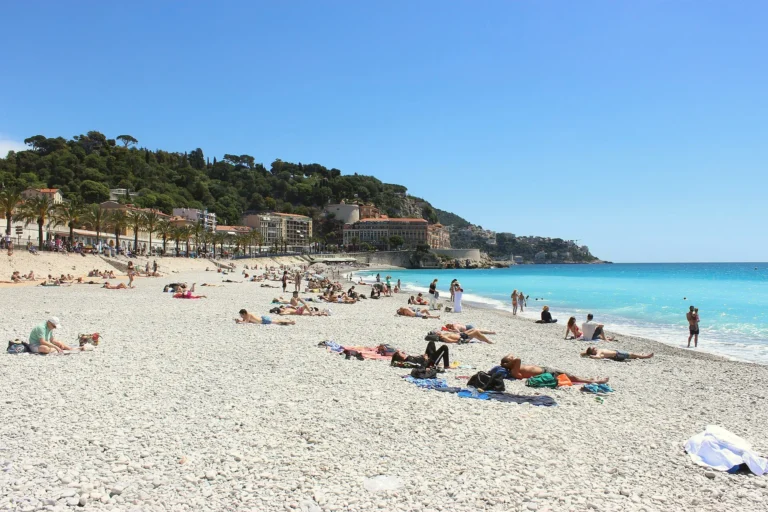
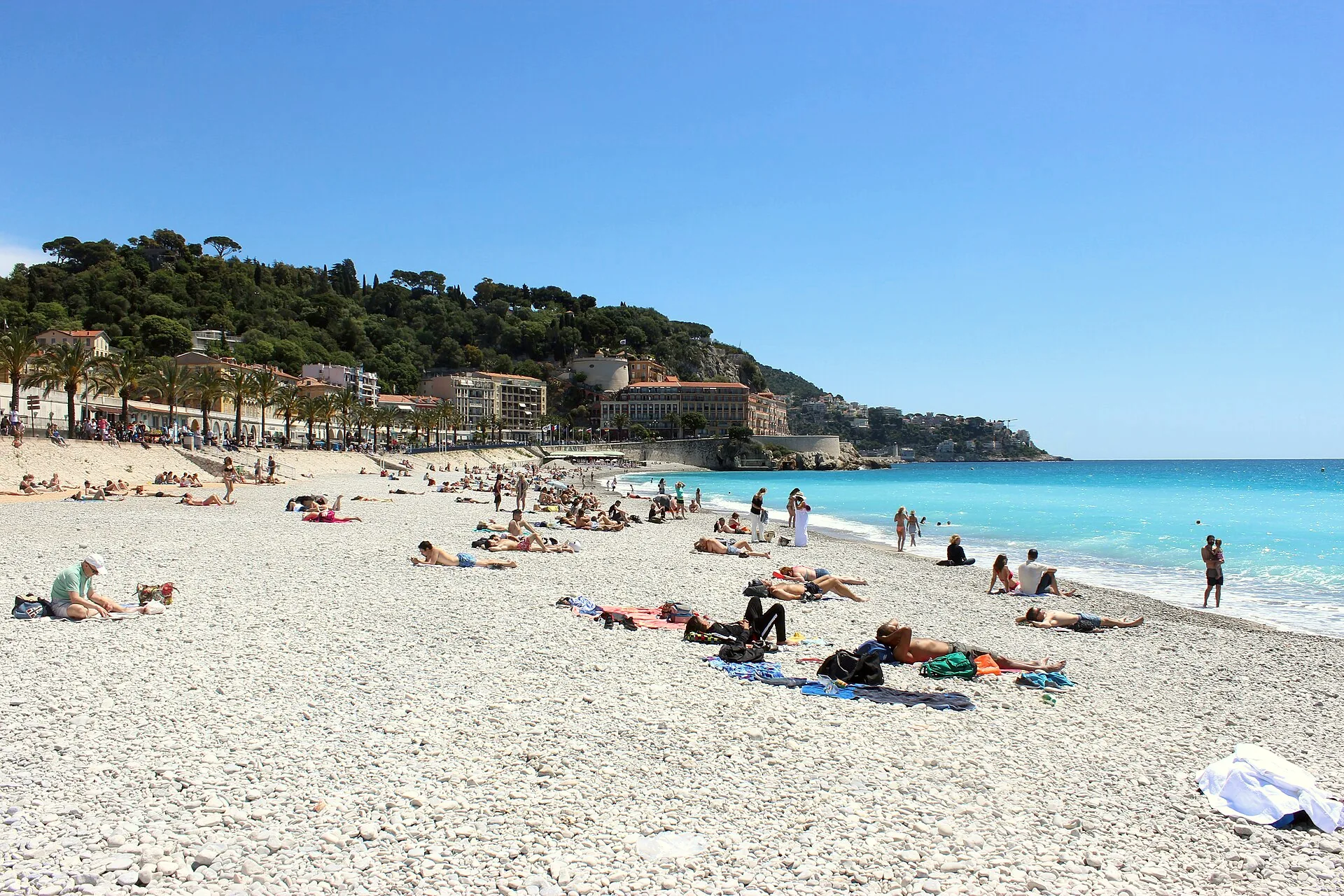
Earlier spring dates generally bring less visitor pressure, while later spring offers more comfortable outdoor time as demand builds. Beach time can simply mean sitting by the sea or walking beside the pebbles, without making swimming the purpose of the trip.
Summer: beach time and busy sightseeing
June to August makes outdoor plans appealing through lower rainy-day frequency, but the choice changes as summer progresses. June suits a walk-heavy stay before peak demand; July and August pair drier conditions with warmer nights and busier beaches and sightseeing. An evening outside can be pleasant, but a room that stays cool matters more at this time of year.
On hot days, take exposed walks early or late and put indoor visits in the middle. The Promenade des Anglais gives you an open seafront outing, so break it into shorter stretches rather than making a long midday walk the centre of the day. Carry water, and drinking water and bottle refills in Nice helps you plan where to replenish it between visits.
Accommodation demand reaches its peak alongside the busiest sightseeing months. If your dates fall in that stretch, settle accommodation earlier rather than relying on a wide last-minute choice. Keep beach visits separate from the decision to swim: the on-site instructions govern entry to the water.
Autumn: city walks and more rainy days
September offers the early-autumn compromise: nights remain relatively mild, and a city break can still give outdoor sightseeing a substantial share of the day. As the summer rush eases, it becomes easier to choose dates for mixed sightseeing rather than a beach-centred holiday.
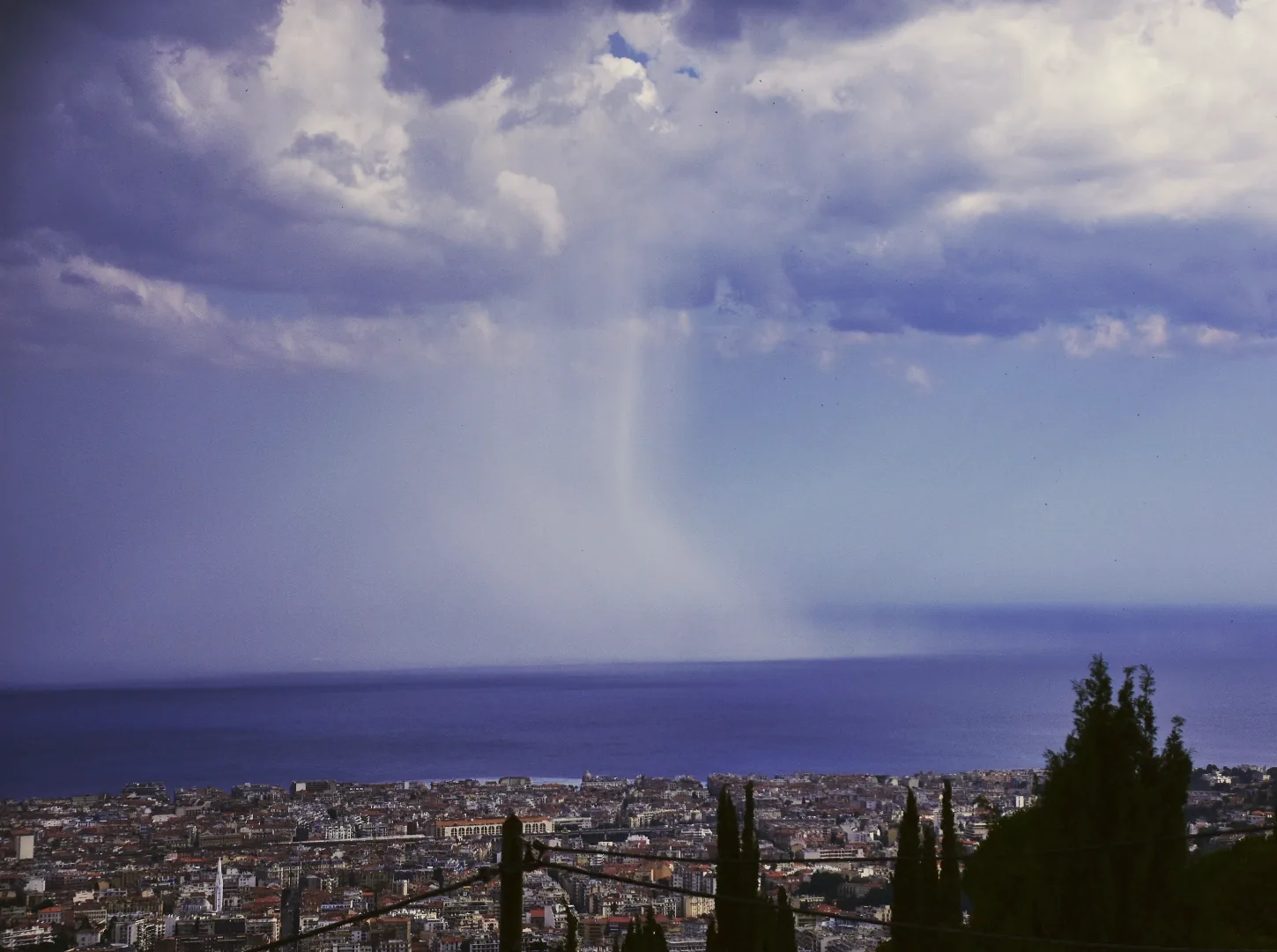
October and November bring more frequent rain interruptions and cooler nights. Swap an exposed Promenade des Anglais walk for a museum visit when rain sets in. The Musée Masséna, beside the promenade, explores Nice’s history, while the Musée Matisse in Cimiez suits a visit centred on the artist’s work. Keep either as a substantial part of the day, rather than rushing indoors only until a shower passes.
Aeroceanaute · CC BY-SA 4.0 · Edited
Later autumn trades quieter sightseeing for a greater need to rearrange outdoor time. Choose September if walks are central to your stay. Later dates suit a museum-led break with seafront outings fitted around dry spells. Event dates can still interrupt the seasonal easing of visitor pressure.
Winter: city breaks and Carnival
Nice is not warm all year: winter nights and early starts need warm layers. December to February works better as an indoor-led city break than a promise of long, warm days outside. Use the shorter daylight for a compact Old Town stroll or seafront walk, with a substantial indoor visit taking up the rest of your sightseeing time.
Ordinary winter dates generally mean quieter visits and lower accommodation demand. Holidays and event stays are different choices: a Carnival weekend puts you among visitors coming for the parades, rather than those choosing winter for a quieter city break.
Nice Carnival runs from 9 to 28 February 2027. Its parades make February an event-led alternative to a quiet winter stay, with accommodation demand concentrated around parade weekends. The 2023 edition drew more than 200,000 spectators. City hotel occupancy reached 63% and peaked at 83% on 18 February 2023. That historical peak explains why a Carnival weekend merits earlier accommodation planning, rather than the assumptions you might make for an ordinary winter week.
Beach safety and swimming conditions
- Choose a supervised bathing area marked by flags.
- Follow posted safety instructions and any swimming bans.
- Stay out of the sea and avoid water sports when weather warnings indicate dangerous conditions.
A day suitable for sitting on the beach is not automatically a day suitable for swimming. Nice’s pebble beaches can be part of a seaside break without entering the water. Decide whether to swim from the conditions and instructions at the beach that day, not from the month’s reputation for dry weather. Monthly air-temperature averages describe the season, but they do not establish safe sea conditions for an individual visit.
Sources & fact-checking
Checks against the sources below cover: closures, key figures, and services.