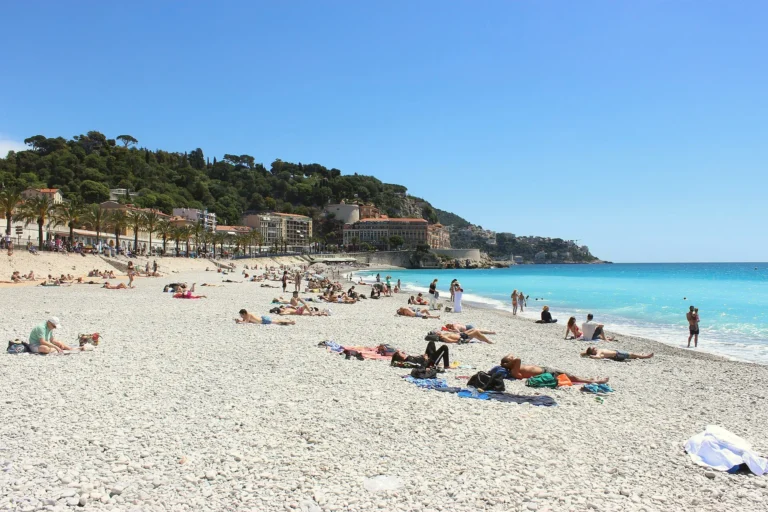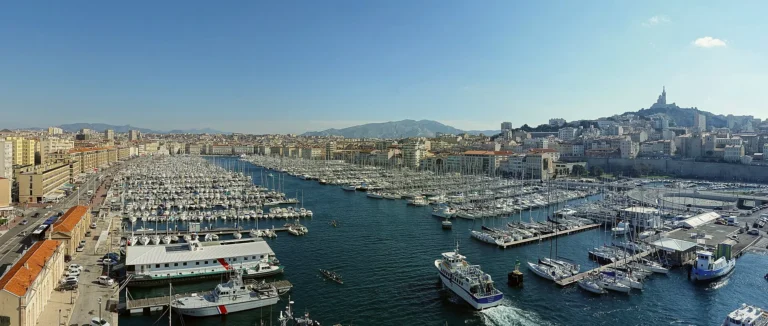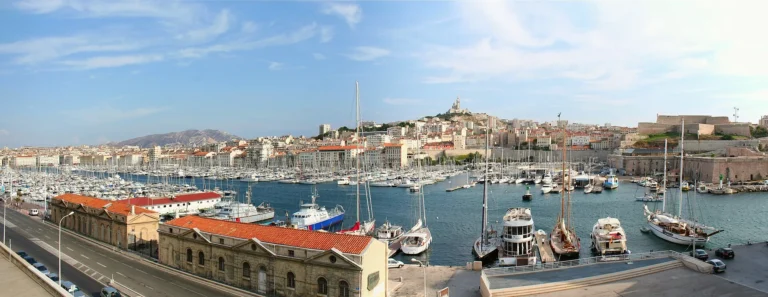
Choose June for a summer sightseeing trip to Nice, before visitor pressure reaches its peak. You get long outdoor days and cooler nights than in July or August. September is the quieter alternative if you can accept more frequent rain and less daylight. If your dates fall in peak summer, put exposed walks such as the Promenade des Anglais in the cooler parts of the day, and leave room for meals, cooling breaks and beach time rather than packing every day with sights.
June, July, August or September?
- Sightseeing choice
- June: long days, before peak visitor pressure
- Quieter alternative
- September: fewer crowds, more frequent rain
- Warmest nights, June–September
- August
- Coolest nights, June–September
- September
- Most rainy days, June–September
- September
- Fewest rainy days, June–September
- July
- Busiest period
- July peak; August remains very busy
Choose July if less frequent rain matters more than crowd relief. Its outdoor appeal comes with greater pressure on popular sights, beaches and restaurants. August offers no clear escape from that pressure, and warmer nights make a room with effective cooling more valuable.
For a trip centred on walking and sightseeing, balance the evening as well as the afternoon: cooler nights can make it easier to rest between outdoor days. If you prefer less crowded meals and beach visits, the adjacent September window trades some freedom to stay outside for more breathing space. Leave your outdoor plans flexible rather than treating any summer month as reliably dry.
Summer nights, rain and daylight
| Month | Mean daily minimum (°C) | Rainy days | Mean wind (km/h) | Mean daylight | Visitor pressure | Sightseeing verdict |
|---|---|---|---|---|---|---|
| June | 18.1 | 3.8 | 11.9 | 15 h 22 min | Busy, building | Good fit: before peak |
| July | 20.8 | 1.8 | 11.9 | 14 h 58 min | Peak | Mixed: drier, crowded |
| August | 21.1 | 2.3 | 12.2 | 13 h 51 min | Very high | Mixed: warm nights, crowds |
| September | 17.7 | 4.9 | 13.3 | 12 h 37 min | Easing | Good fit: quieter, wetter |
The temperature column describes night-time comfort, not afternoon heat. Mean daily minima are averages of each day’s lowest air temperature. In the warmer part of this comparison, prioritise effective room cooling if you find warm nights tiring. An early start is easier to enjoy after a comfortable night’s sleep.
Daylight is the interval between sunrise and sunset, not the amount of sunshine. Long days give you room to separate sightseeing from an evening seafront walk, but they do not make an exposed afternoon stroll cooler. Later in the season, give the outdoor activity you most want to do a place earlier in your day.
With rain possible even in the drier part of summer, leave some freedom to move outdoor activities between days. A seafront walk need not be tied to your first afternoon, especially if it matters more to you than another outdoor stop.
Airport wind averages are not a signal that it is safe to swim. They describe the broader coastal climate, not conditions at your beach. Bathing flags govern the decision to enter the water.
These historical averages describe the climate, while the visitor labels describe a broad seasonal pattern. Neither predicts the conditions of an individual visit. A less crowded month can still have busy days, and a month with fewer rainy days can still interrupt an outdoor plan.
School holidays and jazz-festival dates
Nice’s 2027 summer school holidays begin after classes on 2 July 2027, and classes resume on 1 September 2027. If you are travelling with school-age children, your own school calendar may decide the window before weather or crowd preferences do. If you can travel outside that constraint, do not assume that the whole summer offers the same visitor pressure.
Bastille Day, France’s national public holiday, falls on 14 July every year. Treat it as a date-selection factor when deciding whether you want a holiday visit or prefer an ordinary day for sightseeing.
The Nice Jazz Fest takes place in July. Choose that month if the festival is part of the reason for your trip, rather than rejecting it solely for its crowds. For a sightseeing-led holiday with no interest in the event, the festival is less reason to favour the busiest part of summer.
Sightseeing and beach time in the heat
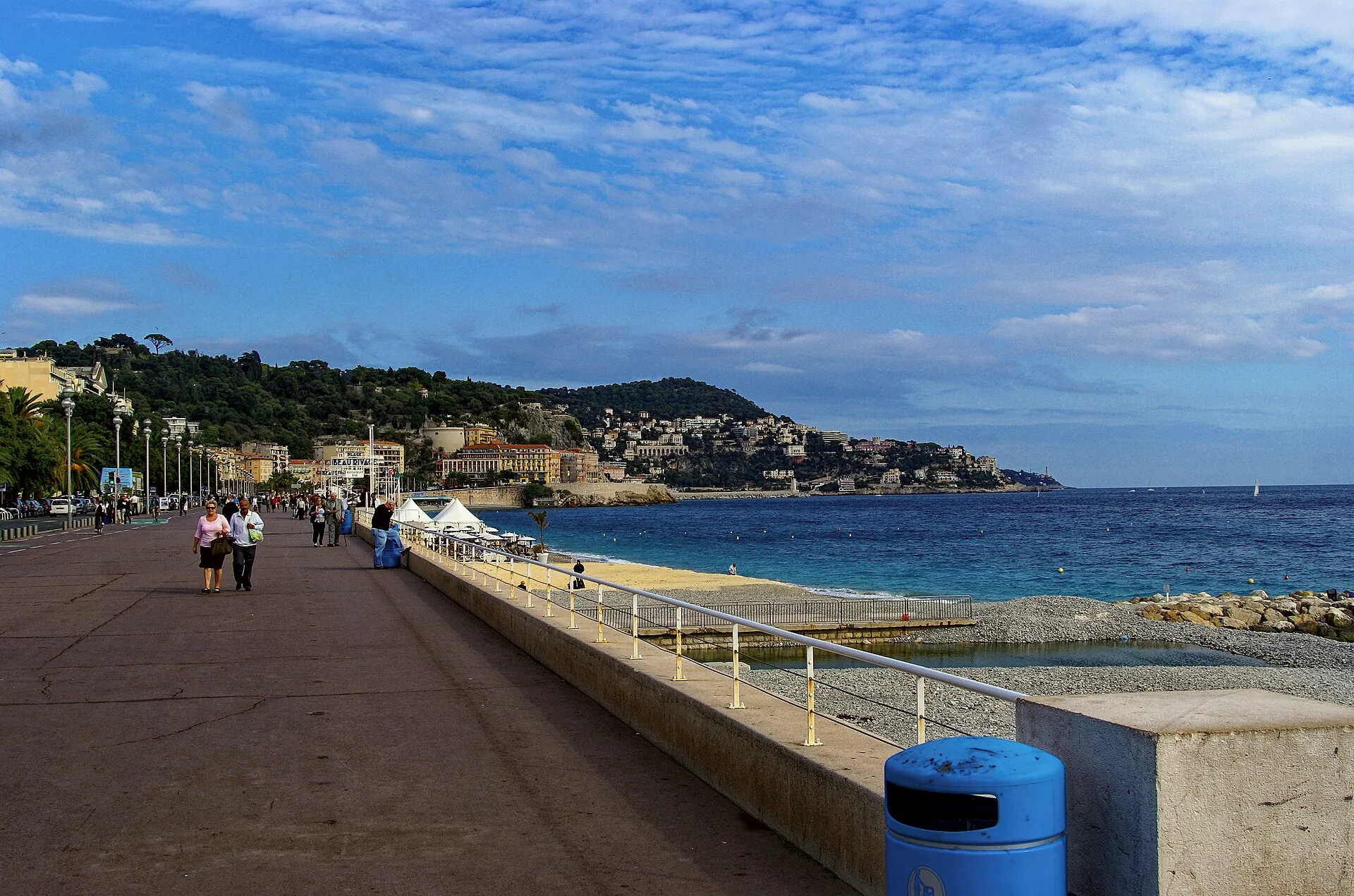
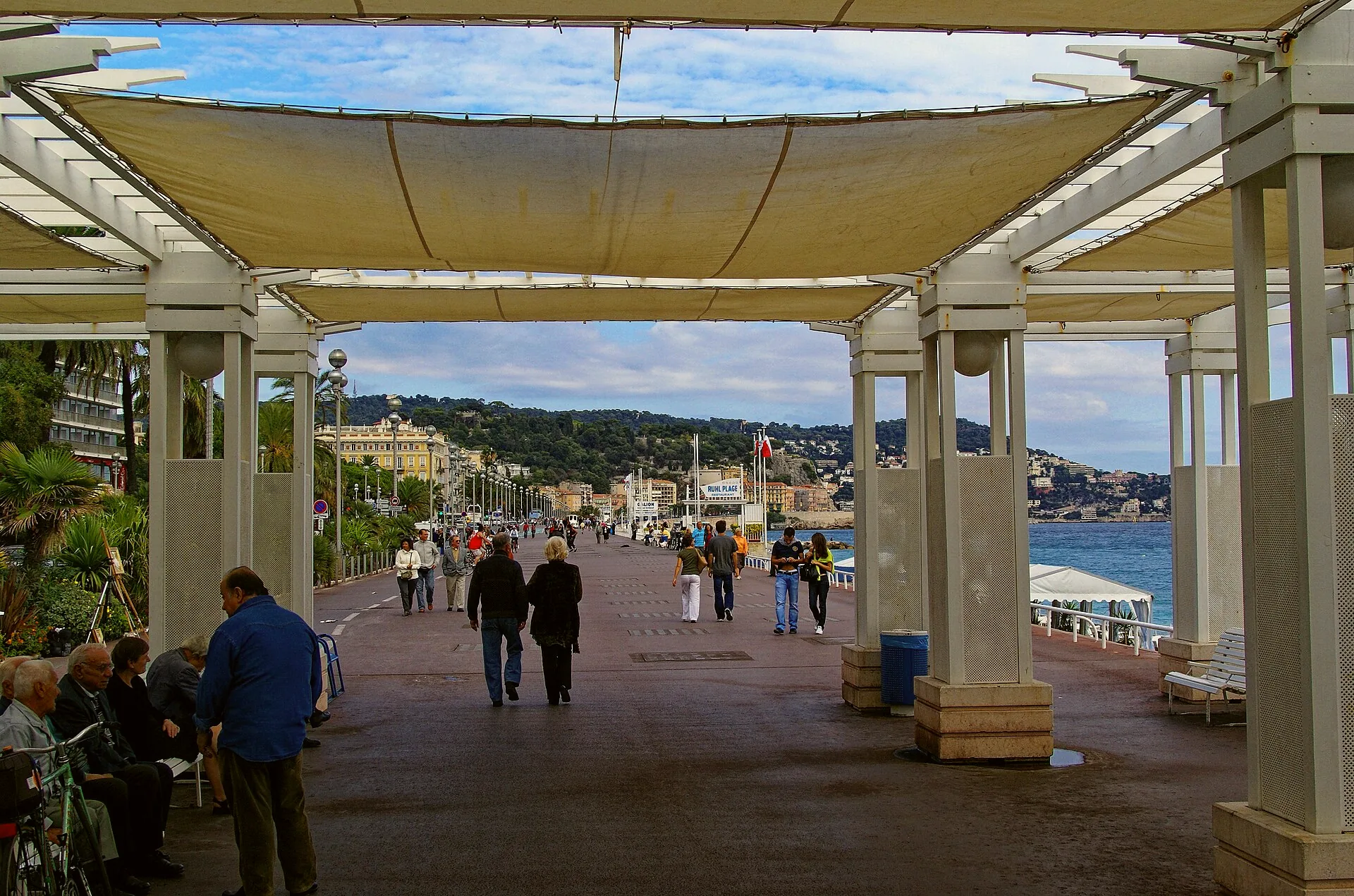
The Promenade des Anglais gives you a seafront walk along Nice’s waterfront, but its exposed stretches are better enjoyed outside the hottest part of the day. Use the cooler morning or evening for a shorter walk, rather than making the entire promenade an afternoon undertaking.
Txllxt TxllxT · CC BY-SA 4.0 · Edited
For fixed high-season dates, choose one main outdoor visit, then give lunch and a cooling break proper space. An indoor visit or a return to your accommodation can separate morning sightseeing from later beach time. The beach is not automatically a cooling break: sitting in direct sun still adds to your heat exposure, so make shade part of the plan.
Arrive near opening where that suits the sight you want to visit, and reduce the number of headline attractions you attempt in one day. This leaves less of your day dependent on queues. Keep a meal or rest flexible enough that a crowded entrance does not force you into a long, exposed walk immediately afterwards.
Arrange drinking water and bottle refills in Nice before setting out on a long walk, so you know how restaurant water and potable refill options fit your day. Carry water with you rather than relying on finding it only when you are already thirsty.
During a heat alert, shorten exposed walking and take more cooling breaks. Drop strenuous outdoor plans rather than trying to preserve every stop. A gentle visit with somewhere cool to rest is a better choice than pushing through a climb or a long seafront walk.
If rain interrupts the day, use the flexible indoor break or reduce the outdoor programme. Leave the seafront for a more suitable spell rather than trying to recover every missed activity that evening.
Bathing flags and supervised areas
- Green flag: bathing is supervised with no apparent danger. Stay attentive to conditions while swimming.
- Yellow flag: bathing is supervised but there is limited or marked danger. Exercise caution, and choose to stay ashore if conditions exceed your ability.
- Red-and-yellow flags: these mark the boundaries of the supervised bathing area. Use them to identify where supervision applies.
Plan beach time separately from the decision to enter the water. A place in your day for the shore does not mean swimming will be suitable when you arrive. Read the safety signal on arrival before deciding whether to swim or spend your beach break ashore. You can still leave time for the waterfront without making a swim the activity on which the rest of your afternoon depends.
Sources & fact-checking
Checks against the sources below cover: key figures, opening hours, and services.