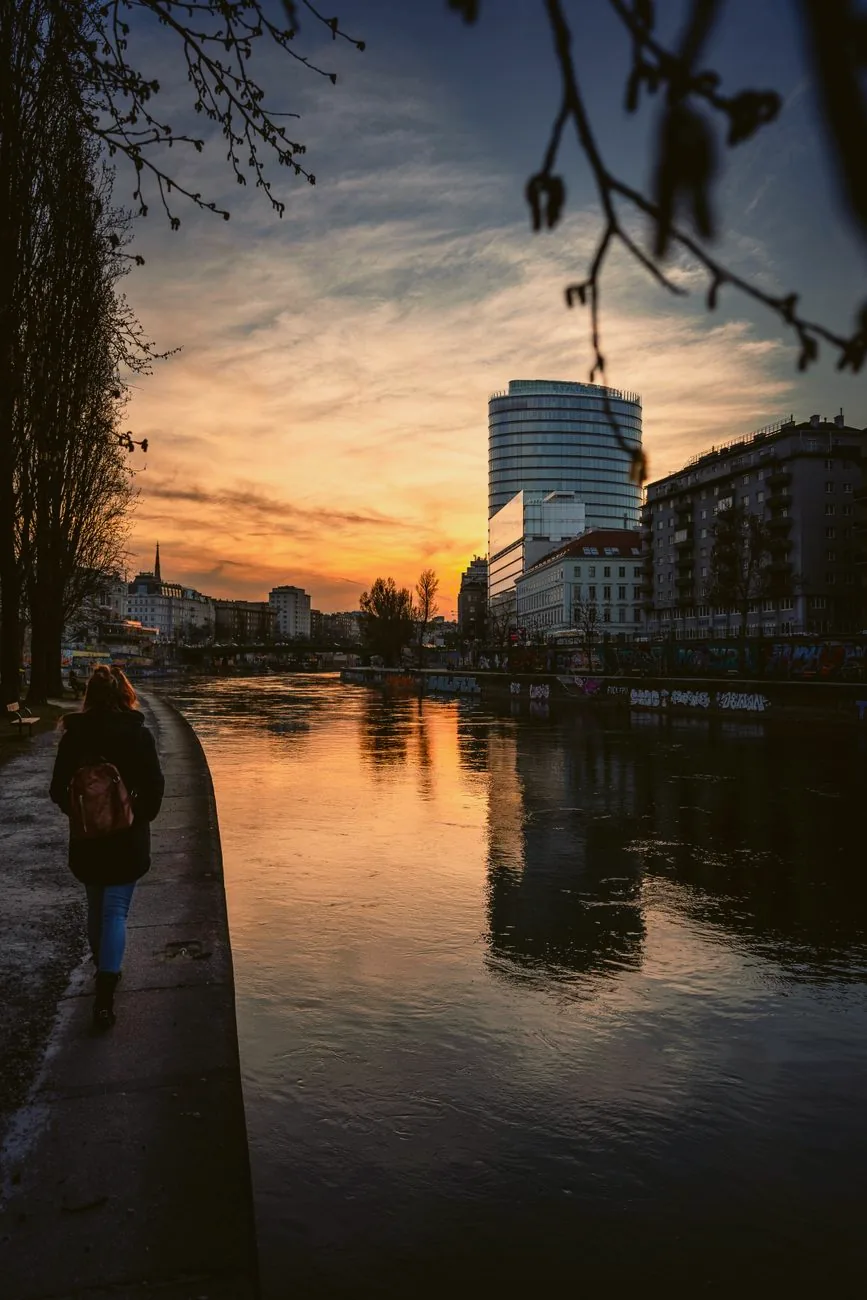
June is the best summer choice for a first visit to Vienna if you want to spend much of the day on foot; September is the cooler alternative when school-holiday dates do not constrain you. July and August reward a different sort of trip, with summer evenings and time by the water, but hotter sightseeing and heavier pressure at popular sights. The monthly comparison below puts those choices alongside comparable room-budget estimates, while the later sections show how to make fixed peak-season dates enjoyable.
When to go in summer
- Best summer choice for walking
- June
- Hottest by mean daytime high
- July, 26.4 °C
- Coolest by mean daytime high
- September, 21.1 °C
- Often busiest at popular sights
- August
Choose June if you want a walking-led first visit without the strongest midsummer crowd pressure. There is more scope to move between the centre’s streets and gardens before retreating indoors, although June can still bring busy sights and rain. September makes long walks more comfortable if you prefer a cooler day, but it is not an empty-city option, and its milder weather gives a water-focused holiday less midsummer warmth.
July and August are worth choosing when outdoor evenings and bathing matter more to you than fitting several major sights into one afternoon. Expect a slower pace around exposed squares and a firmer decision about which attraction gets your best part of the day. Central-room budgets overlap across these months: an ordinary-date estimate is a starting point, not a promise that changing dates will save money.
June to September compared
| Month | Mean daytime high | Typical sight pressure | Room estimate | Verdict |
|---|---|---|---|---|
| June | 25.1 °C | Busy, below peak | €130–220 | Good fit: walking before peak pressure |
| July | 26.4 °C | High, summer peak | €150–250 | Mixed: warm evenings, hot walks |
| August | 26.1 °C | Often highest at sights | €150–250 | Mixed: water time, crowded sights |
| September | 21.1 °C | Busy, easing from peak | €130–230 | Good fit: cooler walks, less bathing warmth |
August’s mean daytime high is 26.1 °C, close to July’s higher monthly average. An individual afternoon can be hotter or cooler than that average, so leave room to change plans if walking becomes uncomfortable. A shower can interrupt a planned riverside afternoon in any of these months. Keep an indoor option ready rather than choosing dates on the assumption that one particular summer month will stay dry.
June is a useful compromise when your priority is covering the historic centre on foot. July’s stronger heat makes a full afternoon of exposed sightseeing less inviting, even when you want to stay out for a long summer evening. August combines near-July warmth with what is often the greatest pressure at popular attractions: choose a highlight rather than measuring success by how many doors you pass through. September gives you a cooler walking day after the usual peak, but its sights can remain crowded and a particular event can raise demand.
The room estimates use the same room and two-person basis in every row, so they are more useful for setting a rough budget than identifying a cheapest month. Actual prices shift with location, weekends and events, and dates within a single month can differ as much as the broad ranges suggest. If your choice is between an ordinary June weekday and a September event weekend, compare the dates you can actually travel rather than relying on a seasonal label.
Hot days and fixed summer dates
On a fixed July or August date, give the coolest part of the day to your main outdoor walk. Start in the historic centre around Stephansplatz and its surrounding streets, or return to them later when you want another stretch outside. Put a museum or a coffeehouse between those walks rather than treating the middle of the day as a second uninterrupted sightseeing shift. This also leaves you somewhere useful to go if rain interrupts a park or riverside plan.
Danube Island is a better choice when you want a longer spell by the water than when you are trying to add one more stop to a packed centre circuit. Set aside one part of the day for it and resist pairing it with a full afternoon at a major palace. For a central route you can trim or split around a hot midday break, use the one-day Vienna itinerary. The aim is to keep the sights you care about, not to complete every stop whatever the conditions.
If Schönbrunn is your chosen major visit, make it the anchor of that day rather than an extra after several hours outdoors. The Vienna U-Bahn guide helps you cross town to the palace without turning the transfer into another long exposed walk. A café or indoor exhibition can take the place of a second outdoor stretch, while a quieter evening remains available for the centre.
When heat or queues take time away, drop the extra cross-city sight first. Keep the single palace or museum visit you most wanted and a manageable nearby walk, and do not force a second large attraction into a shortened afternoon. In June or early September, you may prefer to spend longer walking between central sights before taking an indoor pause. Even then, an occasional rainy interval is a reason to swap the order, not to write off the day.
Palace queues and room costs
Schönbrunn Palace deserves an unhurried visit for its imperial rooms and the scale of its grounds. Choose an early palace slot if it is your headline sight on a busy summer day, then leave the rest of the day less tightly planned. Travellers report booking timed entry in advance during the summer peak to secure a preferred slot and reduce queue uncertainty, but you may still have to wait on arrival.
The same restraint applies to the centre: if you plan to go inside a major museum, allow time to enjoy it rather than pairing it with another cross-city admission on a July or August afternoon. August is often particularly pressured at popular sights, but September’s easier walking weather does not make its entrances empty. An early September trip can still work well if you prioritise walking and choose one indoor highlight.
Room prices complicate any simple off-peak bargain claim. The central double-room estimates use an ordinary-date, two-adult basis throughout, but a weekend or event date can change the price more than your choice of month suggests. Accommodation nearer the centre can also cost more than a room farther out. Compare actual dates and locations within your budget, and choose July or August for their summer activities rather than on the assumption that they must cost a particular amount.
Summer evenings and outdoor bathing
- For an outdoor evening, consider the Rathausplatz Film Festival during its recurring summer-month window, and choose travel dates around the summer programme if that event is central to your visit.
- For a future outdoor-swimming trip, plan around Gänsehäufel’s announced reopening in May 2027 rather than assuming an earlier visit will allow bathing.
The Rathausplatz Film Festival brings an outdoor screen to the square in front of Vienna City Hall, making a summer evening there a different choice from another museum or palace visit. Its recurring window is the summer months, so an evening built around it is a reason to prefer summer dates, not a reason to assume a screening on any particular night. Leave room to enjoy the programme rather than treating it as a quick stop between attractions.
Gänsehäufel, the outdoor bathing area on the Old Danube, serves a different plan: a substantial stretch by the water rather than a short break from sightseeing. Its announced reopening matters if swimming is a leading reason to travel in a future summer. Build the day around bathing and a lighter second activity, instead of trying to fit a full palace visit around it. For an evening-led stay, Rathausplatz makes the stronger case, while for a swimming-led one, the reopening is the relevant date.
Sources & fact-checking
Checks against the sources below cover: key figures and opening hours.