Choose September for a walking-led break in Trento, with earlier dates giving you more daylight. Daytime temperatures sit between the warmer summer months and cooler autumn, making the month a useful choice for exploring the historic centre with an indoor visit alongside your walks. The trade-off is the autumn festival window: late September can bring more visitors and greater demand for accommodation.
September for city sightseeing
- Recommended for city walks
- September
- Warmest mean daily maximum
- August
- Coolest mean daily maximum
- December
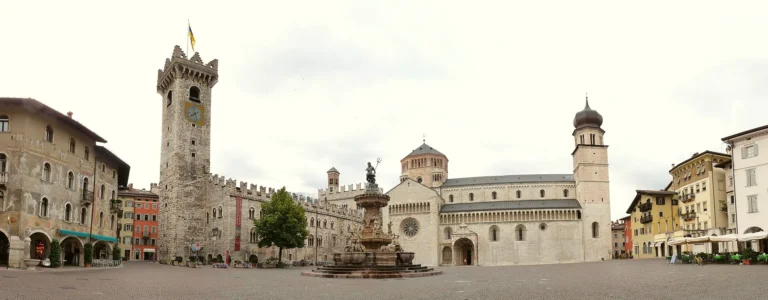
September suits a city break built around time outdoors rather than a succession of indoor visits. You can make walking the main activity while leaving room for a museum and a seated pause. Earlier September is the better choice if you want more light for outdoor sightseeing without making the day feel hurried.
Cooler months favour a different balance: shorter spells outside and a substantial indoor visit as the centrepiece. September’s temperature advantage does not make every date equally quiet, however. If event-related bustle matters more to you than joining festivals, choose outside the late-September and early-October window described below.
Daytime temperatures by month
| Month | Mean daily maximum (°C) | Daytime sightseeing verdict |
|---|---|---|
| January | 5.5 | Mixed: cold, shorter walks |
| February | 8.3 | Mixed: cool, indoor-led days |
| March | 12.9 | Mixed: cool walking conditions |
| April | 16.5 | Good fit: milder walks |
| May | 20.7 | Good fit: warm daytime walks |
| June | 24.7 | Mixed: warmer, allow breaks |
| July | 26.4 | Mixed: heat affects long walks |
| August | 26.9 | Mixed: warmest daytime conditions |
| September | 22.8 | Good fit: warmth below summer |
| October | 16.3 | Good fit: cooler autumn walks |
| November | 10.1 | Mixed: cool, more indoor time |
| December | 5.2 | Mixed: coldest, indoor-led days |
A mean daily maximum is the average of each day’s highest temperature, not the temperature you will experience throughout the day. The Trento Laste series describes the city’s historical daytime pattern, but it is not a forecast for your travel dates or a measure of overnight cold.
September falls below the summer peak but above the following autumn months. That position supports a walking-led visit without assuming that every afternoon will be comfortable for a long, uninterrupted walk. Leave space for a pause rather than treating the daytime average as a reason to stay outdoors all day.
For cold-weather travel, the winter end of the series favours shorter walks linked by indoor stops. Build a winter visit around indoor sightseeing, with the historic centre between visits, rather than copying a September day outdoors. Spring and October occupy a middle ground, where cooler daytime conditions can suit walking but call for a different balance from summer.
Daylight in early and late September
- Daylight on 1 September 2026
- 13 hours 18 minutes
- Daylight on 30 September 2026
- 11 hours 45 minutes
- Calculation basis
- Sunrise to sunset, accounting for atmospheric refraction and local daylight-saving time
Earlier September gives you more room for outdoor sightseeing and a pause before dusk. You might explore the historic centre, sit down for a leisurely break and still return to outdoor sightseeing afterwards. That flexibility is useful if you dislike arranging the whole day around an early finish outside.
Later in the month, put the walks you want to enjoy in daylight earlier in the day. An indoor visit can follow them, rather than taking the brightest part of the afternoon and leaving your main walk until afterwards. For an outdoor evening plan, decide whether you want to see the city before dusk or enjoy it after dark. These are different experiences, not interchangeable uses of the same hours.
Daylight means the interval of available light, not a promise of sunshine. Cloud and rain can still change how you spend it. Nor do you need to fill the whole interval: a shorter walk with an unhurried meal can be a better city-break day than staying outside simply because it is still light.
The autumn festival window
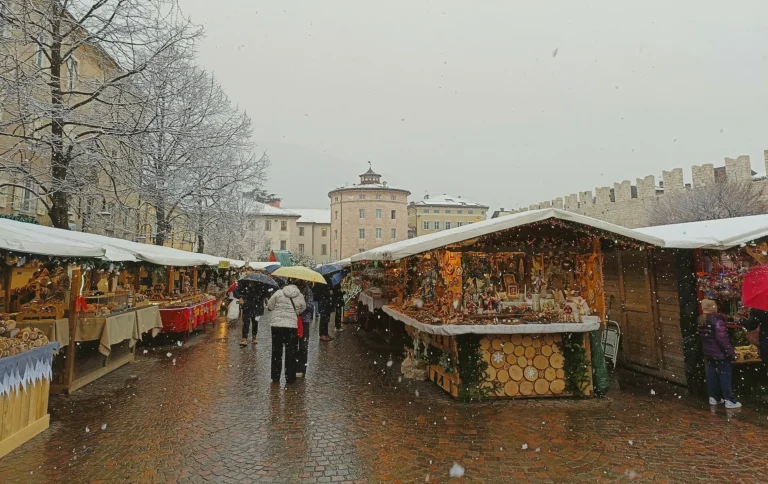
Choose ordinary dates outside the late-September and early-October festival window if quieter sightseeing is your priority. Trentodoc Festival usually occupies a late-September weekend, with Festival dello Sport, the sports festival, and Autumnus bringing further events into early October. Their dates follow each year’s programme rather than a fixed calendar rule.
This festival run can bring a noticeable increase in visitors. It makes the end of September a different choice from an earlier walking-led break: you may welcome the event activity, or prefer to explore without it. Choose the festival period for the events themselves, not on the assumption that autumn means a quiet city.
The same choice affects accommodation planning. Arrange your room earlier if your visit coincides with the festival run, when event visitors add to demand. For a sightseeing-first visit with flexible dates, moving outside that window is the simpler way to avoid competing with festival-related demand.
Rain and higher-ground outings
- Move exposed walks to a drier part of the day when rain makes them uncomfortable or slippery.
- Treat a higher-ground outing as a separate weather decision: Trento’s valley conditions do not stand in for mountain conditions.
- Plan mountain walks for the morning where possible, and watch for rapidly building clouds. In summer, storms are more frequent in the mountains and narrow valleys, usually developing in the afternoon or evening.
Keep an indoor visit movable rather than committing the whole day to outdoor sightseeing. MUSE, the science museum, gives a wet spell somewhere useful to go without turning the day into a sequence of abandoned walks. Make the historic centre your outdoor focus and leave MUSE able to move between parts of the day.
MUSE offers a substantial indoor alternative: exhibition routes combine scientific collections with interactive exhibits and multimedia installations, alongside temporary exhibitions. It is a sightseeing visit in its own right, rather than merely somewhere to wait for rain to pass. Choose it for the science and the exhibitions, then return to walking when conditions suit you.
Nearby higher ground needs a different judgement from the city. Mountain weather can differ from the valley, and a city daytime average cannot describe the conditions of an outing at elevation. Choose September for the city break, with a higher-ground outing as an option, if your main aim is sightseeing in Trento. If the mountain outing is the reason for your trip, the city’s comfortable position in the annual temperature series is not enough to decide when to go.
Sources & fact-checking
Checks against the sources below cover: services and key figures.
- APT Trento, Monte Bondone, Baselga di Piné, Garniga Terme — service
- MUSE – Museo delle Scienze di Trento — service
- Trentino Marketing / Visit Trentino — key figures
- Time and Date AS — key figures
- Meteotrentino, Ufficio previsioni e pianificazione, Dipartimento Protezione civile, foreste e fauna, Provincia autonoma di Trento — key figures
- Comune di Trento, Ufficio studi e statistica — key figures