Choose the Bellecour–Jacobins part of the Presqu’île for a first visit centred on sightseeing and easy returns to your room. Saint-Jean in Vieux Lyon puts Renaissance streets outside your door. The Croix-Rousse plateau suits market mornings if hills do not trouble you. Brotteaux works better for park outings and a short arrival from Lyon Part-Dieu.
With children, the deciding question is whether you want frequent breaks between central sights or more time near Parc de la Tête d’Or. Your room’s position matters as much as the neighbourhood name, particularly beside Rue Saint-Jean’s bars or the clubs around Place Jules Ferry.
Presqu’île, Vieux Lyon, Croix-Rousse or Brotteaux?
| Criterion | Presqu’île: Place des Jacobins | Vieux Lyon: Place Saint-Jean | Croix-Rousse: Place de la Croix-Rousse | Brotteaux: Place Jules Ferry |
|---|---|---|---|---|
| Walk to Place Bellecour | about 350 metres; about 5 minutes | about 650 metres; about 9 minutes | about 2.2 km; about 31 minutes downhill | about 2.8 km; about 39 minutes |
| Sampled arrival from Part-Dieu | about 21 minutes; bus TB11, no change | about 18 minutes; metro B then D, one change | about 27 minutes; bus C6, no change | about 6 minutes; metro B, no change |
| Sampled station-to-square journey distance | about 2.8 km | about 3.8 km | about 3.6 km | about 1.1 km |
| Choose for | Central sightseeing; frequent room breaks | Renaissance streets; old-town stays | Markets; café terraces; neighbourhood time | Park outings; railway arrival |
| Choose elsewhere if | You need unrestricted car access | Cobbles or bar-street activity do not suit | Uphill returns or stairs do not suit | You need frequent central sightseeing breaks |
| Typical mid-range double per night | €120–€190 | €120–€200 | €100–€160 | €110–€180 |
Room ranges are rounded estimates for two adults sharing a standard mid-range private double with a private bathroom, on ordinary spring or autumn weekdays outside holidays and major events, with comparable cancellation terms. They overlap: a room’s standard and position can matter more than its area. Weekends, major events and high demand can push prices above these ranges.
The walks run from the named squares to Bellecour, not from individual accommodation addresses. Transport times are sampled station-to-square journeys, so your approach to the station and final walk to your room sit outside that comparison. Luggage, children and the position of your accommodation affect how an arrival feels.
Central Lyon is walkable, but the plateau’s uphill return changes the choice. Presqu’île and Saint-Jean make central sights easy to combine on foot. Croix-Rousse and Brotteaux involve longer walks, and the former adds steep ground. A downhill outing from the plateau is a different prospect from returning there after dinner.
Presqu’île around Bellecour and the Jacobins
The Bellecour–Jacobins part of the Presqu’île is the most useful central base if you want to move between sights and your room without turning every break into a journey. It lies between the Rhône and Saône in the southern part of the peninsula. Place Bellecour is the visitor-centre landmark, with Place des Jacobins to its north.
The walk south from Jacobins to Bellecour keeps you in the central peninsula rather than taking you across a river or up a hill. That makes it easier to return for a child’s rest, leave purchases behind or head out again for dinner. From Part-Dieu, the sampled arrival uses bus TB11 without a change, followed by your accommodation’s own approach.
Bellecour–Jacobins as a base
Pros
- A strong first-visit choice when central sightseeing shapes your days.
- Useful for families who need frequent returns to the room.
Cons
- A poor match if you want unrestricted private-car access to your accommodation.
- Convenience comes from the central position rather than a distinct market or park focus.
Arrange the hotel’s vehicle access before driving to its door. An open bollard is not permission for unrestricted entry. If you prefer to leave the car in a public car park and explore on foot, the central position becomes an advantage again. Around Bellecour and Jacobins, judge a room by its orientation towards the square or street if early bedtimes matter.
Vieux Lyon around Saint-Jean
Saint-Jean gives you Renaissance façades and cobbled streets close to the Saône. This is the riverside core of Vieux Lyon at the foot of Fourvière, not the accommodation higher on the hillside. Search for Saint-Jean if you want the old-town setting without choosing a hillside base. Above it, the ground rises towards the Jardin du Rosaire and the Fourvière basilica.
Rue Saint-Jean’s distinctive features include traboules, covered passageways linking streets and courtyards. Staying here lets you spend time among the old façades rather than treating the quarter solely as a sightseeing stop. Cobbles can make wheeled luggage and pushchairs less comfortable, however.
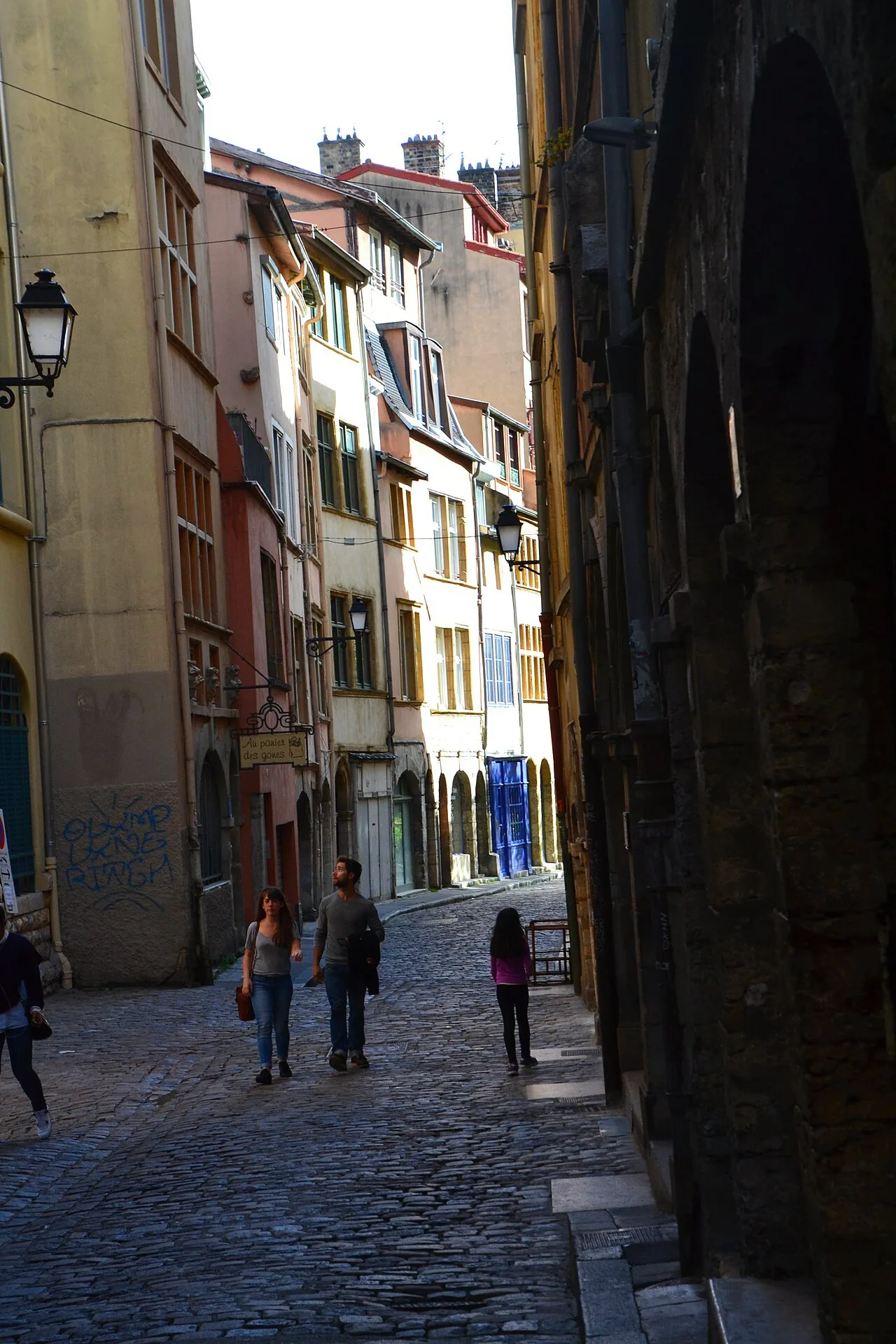
Jeanne Menjoulet from Paris, France · CC BY 2.0 · Edited
The walk from Place Saint-Jean to Bellecour crosses the Saône, bringing you onto the Presqu’île. From Part-Dieu, take metro B and change at Saxe–Gambetta for D towards Vieux Lyon, then continue on foot to the square and your accommodation.
Rue Saint-Jean also has bars and people moving between pubs in the evening. Light sleepers should choose a room away from bar-street activity, rather than relying on the historic setting to mean a quiet night.
Saint-Jean as a base
Pros
- Suited to travellers who want Renaissance streets around their accommodation.
- A river-crossing walk connects the old town with central sightseeing.
Cons
- Reject a busy bar-street room if quiet evenings are essential.
- Cobbles and restricted vehicle access complicate luggage-led or car-led arrivals.
Croix-Rousse plateau and its market
The Croix-Rousse plateau rewards a stay that leaves time for food shopping and café terraces. It extends north from Boulevard de la Croix-Rousse towards Caluire-et-Cuire, while the slopes lie below the boulevard. Search on the plateau, not simply for any Croix-Rousse address, if this is the neighbourhood routine you want.
The boulevard’s food market runs Tuesday–Sunday. Saturday also brings book-and-vintage browsing. You can shop for fresh food, talk over purchases and stop at a terrace before heading into the centre. These activities make a morning near your room worthwhile in its own right.
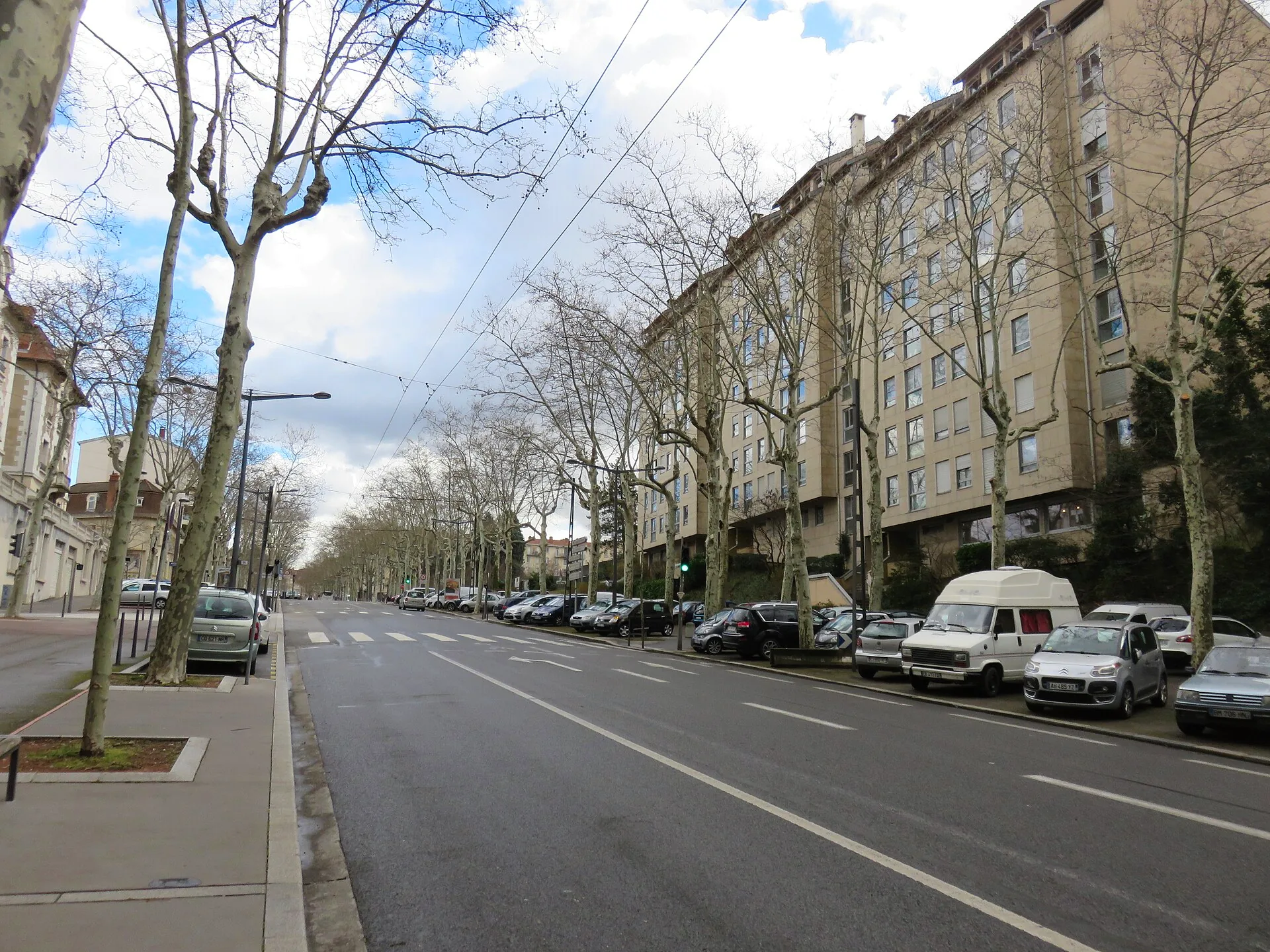
Sebleouf · CC BY-SA 4.0 · Edited
The walk from Place de la Croix-Rousse towards Bellecour descends through steep ground, with stairs and sloping streets depending on the route. Reject this base if a substantial uphill return does not suit your family. After a day in the centre, taking transport back avoids the climb.
The sampled Part-Dieu arrival uses bus C6 without a change. The plateau’s metro service is line C from Hôtel de Ville towards Cuire, useful when you want to avoid walking back up from central Lyon.
Croix-Rousse plateau as a base
Pros
- Suited to market mornings and time spent around neighbourhood cafés.
- A distinctive alternative when central sightseeing is not the whole stay.
Cons
- Repeated trips to the centre bring hill or transport decisions.
- An uphill return or stepped walking route can be a poor fit with tired children.
Brotteaux around Place Jules Ferry
Brotteaux around Place Jules Ferry suits a stay with park outings and a convenient railway arrival. The square stands in front of the former Brotteaux station, east of the Rhône and Parc de la Tête d’Or, with the railway immediately beside it. Choose it for time on this side of Lyon, rather than frequent returns from central sights.

Chabe01 · CC BY-SA 4.0 · Edited
From Part-Dieu, metro B takes you to Brotteaux without a change, followed by the walk to your room. For Bellecour, take B from Brotteaux to Saxe–Gambetta and change to D. Walking instead means a longer outing across to the central peninsula, so a forgotten jumper or a child’s rest is less easy to fit between sights.
Parc de la Tête d’Or has playgrounds and play areas, plus pony rides and a miniature railway as family attractions. The Porte des Enfants du Rhône is a public pedestrian entrance for a park outing from this side of the city. The park gives you a reason to spend part of the day away from the central sightseeing streets.
Place Jules Ferry has bars and clubs, with late activity particularly on Thursday–Saturday evenings and around midnight. For early bedtimes, choose accommodation away from club activity, not a room facing it simply because Brotteaux has family-friendly outings nearby. A late return on foot may take you past partygoers.
Brotteaux as a base
Pros
- Suited to families prioritising park time, provided the room is away from late activity.
- A short sampled arrival from Part-Dieu keeps the railway journey straightforward.
Cons
- Reject it if you need frequent room breaks during central sightseeing.
- A room facing clubs is a poor fit when early nights matter.
Which area should you choose?
- Choose Bellecour–Jacobins for a first visit or family sightseeing with frequent room breaks.
- Choose Saint-Jean for Renaissance streets if cobbles and evening pub activity suit your stay, but light sleepers need a room away from the bars.
- Choose Croix-Rousse plateau for market mornings if hills and the evening metro limits suit you.
- Choose Brotteaux for park-focused days and a short Part-Dieu arrival, with a room away from late activity.
- As a fallback to Presqu’île, choose Brotteaux when railway convenience and park time matter more: its representative walk to Bellecour adds about 34 minutes compared with the walk from Jacobins.
Keep Presqu’île if repeated central sightseeing breaks are the priority. For any of these areas, judge the room’s actual position against the hill, bar street or club square, not just the neighbourhood label. Once you have chosen that balance, select the things to do in Lyon that will shape your days, from old-town walks to food stops and park time.
Sources & fact-checking
Checks against the sources below cover: services and key figures.
- Guide accessibilité TCL
- La gare des Brotteaux
- Voyager la nuit | TCL
- Questions fréquemment posées — Métropole de Lyon
- Presqu’île : les accès
- Office du tourisme de Lyon — service
- City of Lyon — service
- Quartier Fourvière
- Plan du métro et du funiculaire
- FHML_WEB_METRO C_ à partir du 31 août 2026
- Lyon City Hall (4th arrondissement) — key figures