Choose October or a March week outside Holy Week if you want to explore Seville on foot without building your whole day around the weather. October offers warmer afternoons but more chances of rain, while March starts cooler and can turn exceptionally busy during the processions. July and August bring the hardest conditions for long outdoor visits, even if a central room may cost less.
The best months for sightseeing
- Best walking months
- October; March outside Holy Week
- Hottest mean daily high
- July, 36.0°C
- Wettest by days with at least 1 mm rain
- December, 7.5 days
- Coldest mean daily low
- January, 5.7°C
October is the easier choice if you favour warm afternoons, while an ordinary March week gives you cooler starts and comfortable time outdoors. Avoid Holy Week for a quiet sightseeing break: processions draw far more people into central streets and add waits at major sights. If the celebrations themselves are your reason to come, that bustle is part of the point rather than a drawback.
Central standard doubles tend to cost more in the popular walking seasons than in high summer or ordinary winter weeks, and festival dates can be dearer again. Summer savings do not compensate for the heat if your priority is a full day walking between sights. Winter may offer better value if you are content to shorten outdoor stretches and spend more time inside.
Seville weather and crowds by month
| Month | Mean high | Mean low | Rain days | Crowds | Visit verdict |
|---|---|---|---|---|---|
| January | 16.0°C | 5.7°C | 6.1 | Low; holidays busier | Mixed: cool, wet |
| February | 18.1°C | 7.0°C | 5.8 | Low | Mixed: cool starts |
| March | 21.9°C | 9.2°C | 4.3 | Moderate; Holy Week busy | Good outside Holy Week |
| April | 23.4°C | 11.1°C | 6.1 | High at festival dates | Mixed: mild, festival demand |
| May | 27.2°C | 14.2°C | 3.7 | High | Good: warm walking |
| June | 32.2°C | 18.0°C | 1.3 | Moderate | Mixed: hot afternoons |
| July | 36.0°C | 20.3°C | 0.2 | Lower | Avoid for long walks: heat |
| August | 35.5°C | 20.4°C | 0.5 | Lower | Avoid for long walks: heat |
| September | 31.7°C | 18.2°C | 2.4 | Rising | Mixed: lingering heat |
| October | 26.0°C | 14.4°C | 6.1 | High | Good: warmth, some rain |
| November | 20.2°C | 10.0°C | 6.4 | Moderate to low | Mixed: cooler, wetter |
| December | 16.6°C | 7.3°C | 7.5 | Low; holidays busier | Mixed: cool, wet |
Use the monthly pattern to choose the shape of your day: March and October leave more room for walking than midsummer, while cooler winter starts favour a later outdoor stretch. Airport averages cover many years rather than a particular city-centre day, so leave space to swap an outdoor visit with an indoor one if rain interrupts your plans.
July’s near absence of rain days does not make it the most comfortable month: heat limits how long you will want to stay outdoors. April’s temperature is appealing, but Holy Week and the April Fair can change the feel of the city dramatically. Their dates move rather than covering every April week. December’s rain and cool starts favour indoor visits, while the Christmas and New Year period can be busier than other winter dates.
Spring: walking and festival weeks
An ordinary March week suits a walking-led visit: take a light layer for the cooler morning, then use the milder afternoon for the streets around Seville Cathedral and the Real Alcázar. April remains mild, though its greater chance of rain makes a compact umbrella useful. By May, afternoons are warmer and it helps to put the longer outdoor stretch earlier in the day.
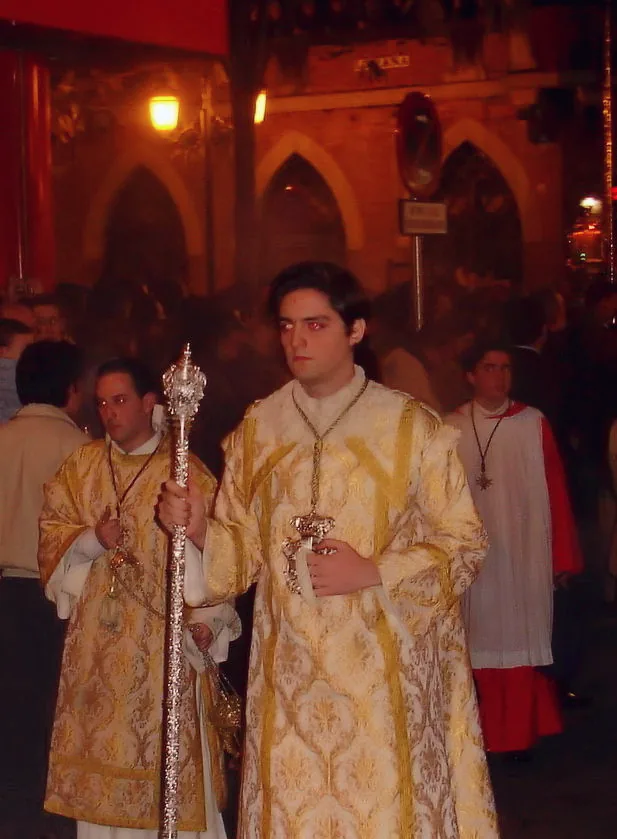
Holy Week is a trip for the processions, not for empty sights. Known as Semana Santa, it draws crowds into central streets and lengthens waits at major attractions. Processions can also interrupt your usual route across the centre. If your aim is the celebrations, leave space between visits rather than filling the day with timed entries. If your aim is quieter sightseeing, choose a March week away from Holy Week.
No machine-readable author provided · CC BY 2.5 · Edited
The April Fair, or Feria de Abril, creates a different demand peak for rooms. The announced 2027 edition runs 13–18 April 2027. For a central standard double, budget roughly €90–150 a night in ordinary spring weeks, rising perhaps to €180–300 or more on festival dates depending on location and how early you secure a room. If the fair is the reason for your visit, arrange accommodation well ahead. Otherwise, choose dates away from it for more choice and a gentler room bill.
Summer: shorter outdoor days
June is already hot enough to favour early visits to outdoor sights. July and August are harder still: plan the Real Alcázar gardens for the morning, retreat indoors or take a break through the hottest part of the day, and return to outdoor streets later. With warm nights too, an early start is more useful than assuming evening will feel cool.
July and August generally see fewer visitors than spring or October, but the quieter streets do not make long exposed walks easier. A central standard double might cost around €70–120 a night, depending on location and facilities. The lower estimate makes most sense if you are willing to shape each day around the heat. Carry water and sun protection, and choose light clothing that still works for a cultural visit: the Seville Cathedral dress code is worth factoring into what you wear before you set out.
Autumn: September to November
September still carries summer’s heat into the afternoon, so it is better for early sightseeing than an unbroken day on foot. October is the autumn walking pick: you gain milder daytime conditions, though rain becomes a more realistic interruption than in September. Visitor demand is stronger than in the quietest summer weeks, so a central location is especially useful if you want to return to your room between sights.
November is cooler and has more rain days than October, so it suits a shorter outdoor circuit paired with the Cathedral or another indoor visit. Take a layer and something for rain rather than assuming the whole day will stay dry. For a central standard double, allow around €100–160 a night in October, depending on location. It is typically dearer than high summer or ordinary winter and can overlap with ordinary spring rates. Outside the October peak, autumn prices can soften, but the same room may vary considerably by date.
Winter: indoor sights and rain
From December to February, shorter daylight, cooler starts and more frequent rain make a shorter walk plus an indoor sight a better plan than a long circuit of open squares. The General Archive of the Indies is one of the free indoor sights in Seville and gives you a useful alternative when a wet spell interrupts a visit around the Cathedral. Wear a warm layer and carry rain protection for the outdoor parts of the day.
Ordinary winter weeks are relatively quiet, but Christmas and New Year bring a recurring rise in visitors, so do not treat the whole season as equally calm. For a central standard double, estimate roughly €75–125 a night in ordinary winter weeks, depending on location; holiday dates may cost more. That is generally better value than October or ordinary spring, provided you are happy to spend less of the day outdoors.
Seasonal openings and festival dates
- Plan the Real Alcázar earlier in the day from 1 October to 31 March: visitor hours are 09:30–17:00, with clearance starting at 17:45. From 1 April to 30 September, visitor hours are 09:30–19:00, with clearance starting at 19:45.
- Allow for Seville Cathedral’s changing cultural-visit hours, including its separate July–August schedule, so put it earlier in the day rather than relying on a late entry.
- If travelling for the April Fair, arrange a central room early: festival demand makes availability tighter and prices higher than in ordinary spring weeks.
A late start costs you more visiting time at the Real Alcázar in its October–March season. Give the palace and gardens the earlier part of your sightseeing day, then use the remaining daylight for a walk through the centre. At the Cathedral, seasonal changes can alter which part of the day is convenient for a cultural visit, so do not build an entire afternoon around a presumed late opening. Festival demand also changes the accommodation decision before it changes your walking route.
Sources & fact-checking
Checks against the sources below cover: key figures, services, and opening hours.
- Seville’s Traditions and Festivals – Visita Sevilla – EN
- Sevilla: imagen de una ciudad
- Agencia Estatal de Meteorología (AEMET) — key figures
- Instituto Nacional de Estadística (INE) — key figures
- Ayuntamiento de Sevilla — service
- Patronato del Real Alcázar de Sevilla; Cabildo Catedral de Sevilla — opening hours