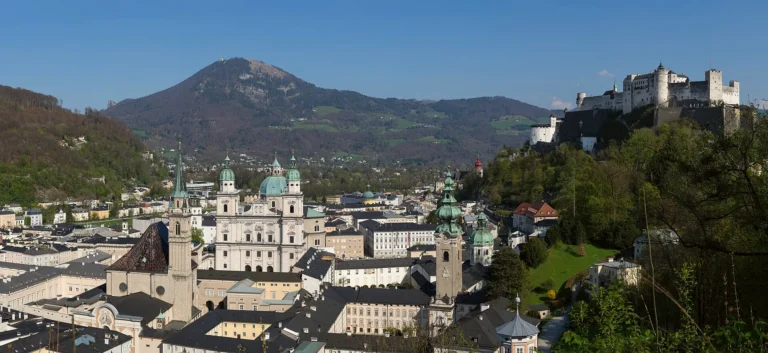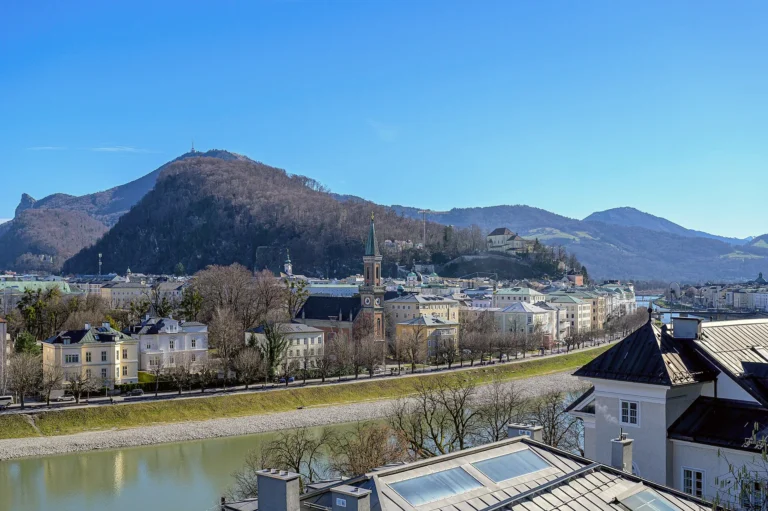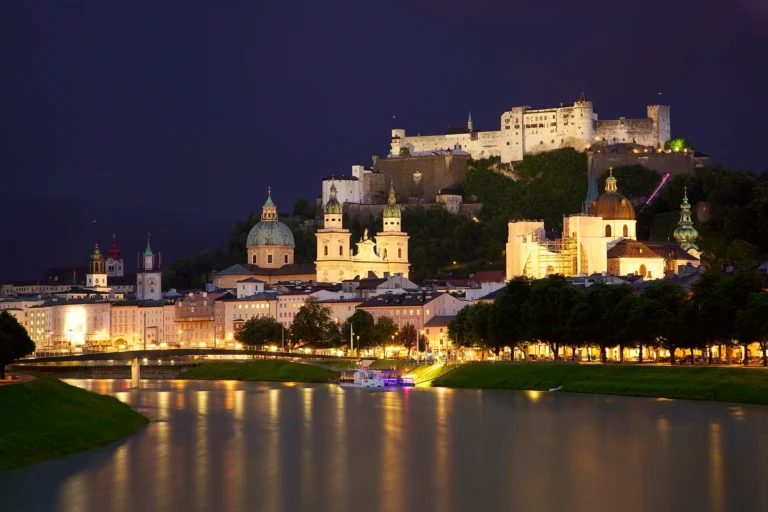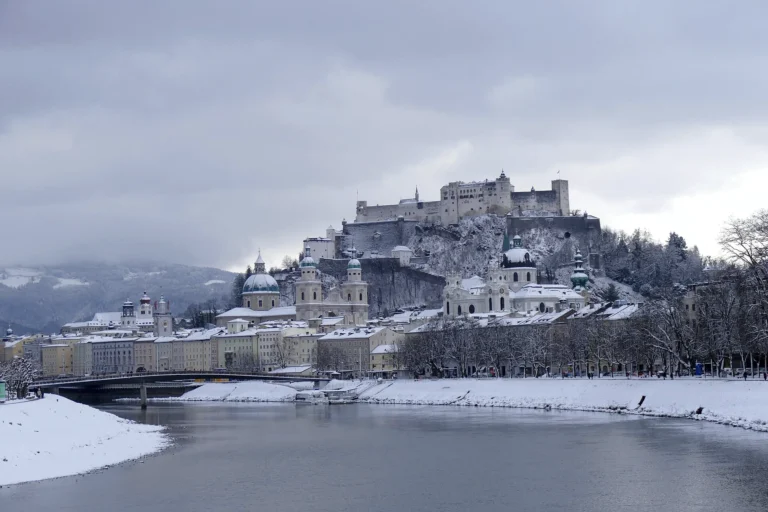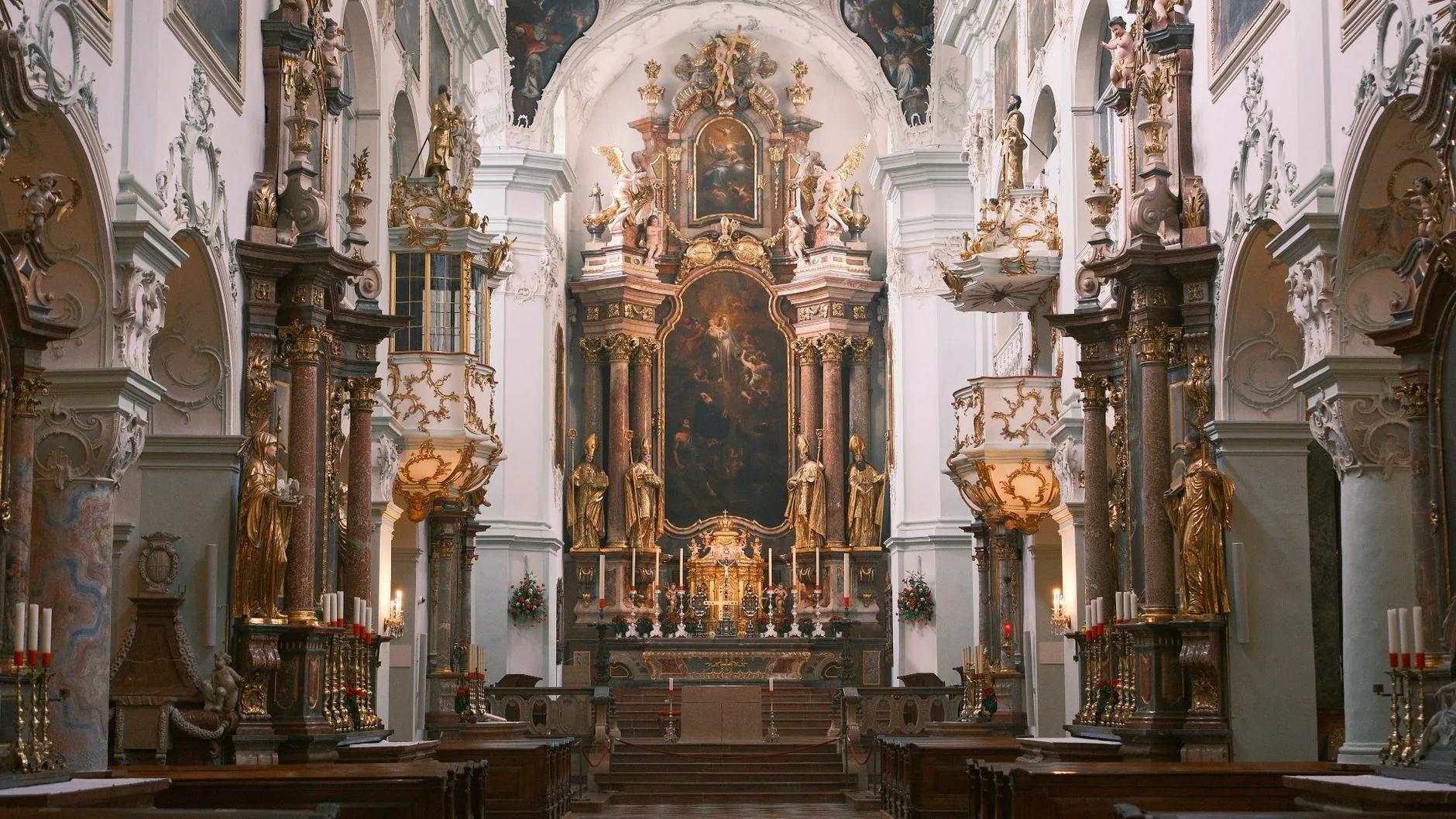
Salzburg suits a short stay built around heritage walks, while Vienna gives you more scope for museums, palaces and varied evenings. Salzburg’s old town gathers much of its appeal beside the Salzach, beneath Hohensalzburg Fortress. Vienna spreads its imperial buildings, art collections and neighbourhood life across a larger city.
The choice also depends on your UK departure airport and travel dates. Salzburg’s wider British flight network is winter-seasonal, while its summer festival puts pressure on central rooms. If you have time to sleep in both cities, start in Salzburg and finish in Vienna.
Salzburg and Vienna at a glance
| Criterion | Salzburg | Vienna |
|---|---|---|
| Sightseeing character | Baroque heritage, Mozart and fortress views | Imperial palaces and varied art collections |
| Sightseeing layout | Compact riverside centre | Larger city with central sightseeing clusters |
| Evenings | Cafés, concerts and old-town dining | Concerts, bars and cultural venues |
| Central mid-range double room, estimated | €130–€200 per room per night | €120–€190 per room per night |
| Adult 24-hour city transport | €5.20 per person advance/machine/mobile/online; €6.40 per person onboard where soldBest | €9.70 per person digital; €10.20 per person standard |
The room estimates are for two adults sharing a central mid-range double in spring or autumn, outside major events, without breakfast. Vienna’s estimated range is €10 lower at each end. Weekends, popular dates and a prime old-town address can push either city above these ranges, while moving beyond the most sought-after central streets can reduce the room bill.
Salzburg’s appeal is concentrated: you can move between church squares, riverside walks and Mozart-related sights without building every day around transport. Vienna offers a larger menu rather than a single sightseeing circuit. Choose a few collections or palace visits rather than trying to cover Vienna’s full range on a short break.
Both cities support a stay centred on cafés and classical music. The difference is the breadth around that shared interest: Salzburg keeps the focus close to its historic core, while Vienna lets you change districts and switch between art, architecture and a bar-led evening. Salzburg’s advance-purchase channels save €1.20 against onboard purchase where available; Vienna’s digital version saves €0.50 against the standard ticket. On the same digital basis, Salzburg costs €4.50 less per adult.
Old towns, museums and evenings
Salzburg’s Baroque old town rewards walking between its cathedral squares and the Salzach. Hohensalzburg Fortress gives the skyline its defining landmark, but reaching elevated viewpoints is a different undertaking from a riverside stroll. An old-town base puts heritage walks on your doorstep, while staying across the Salzach brings Mirabell Gardens into your everyday route.
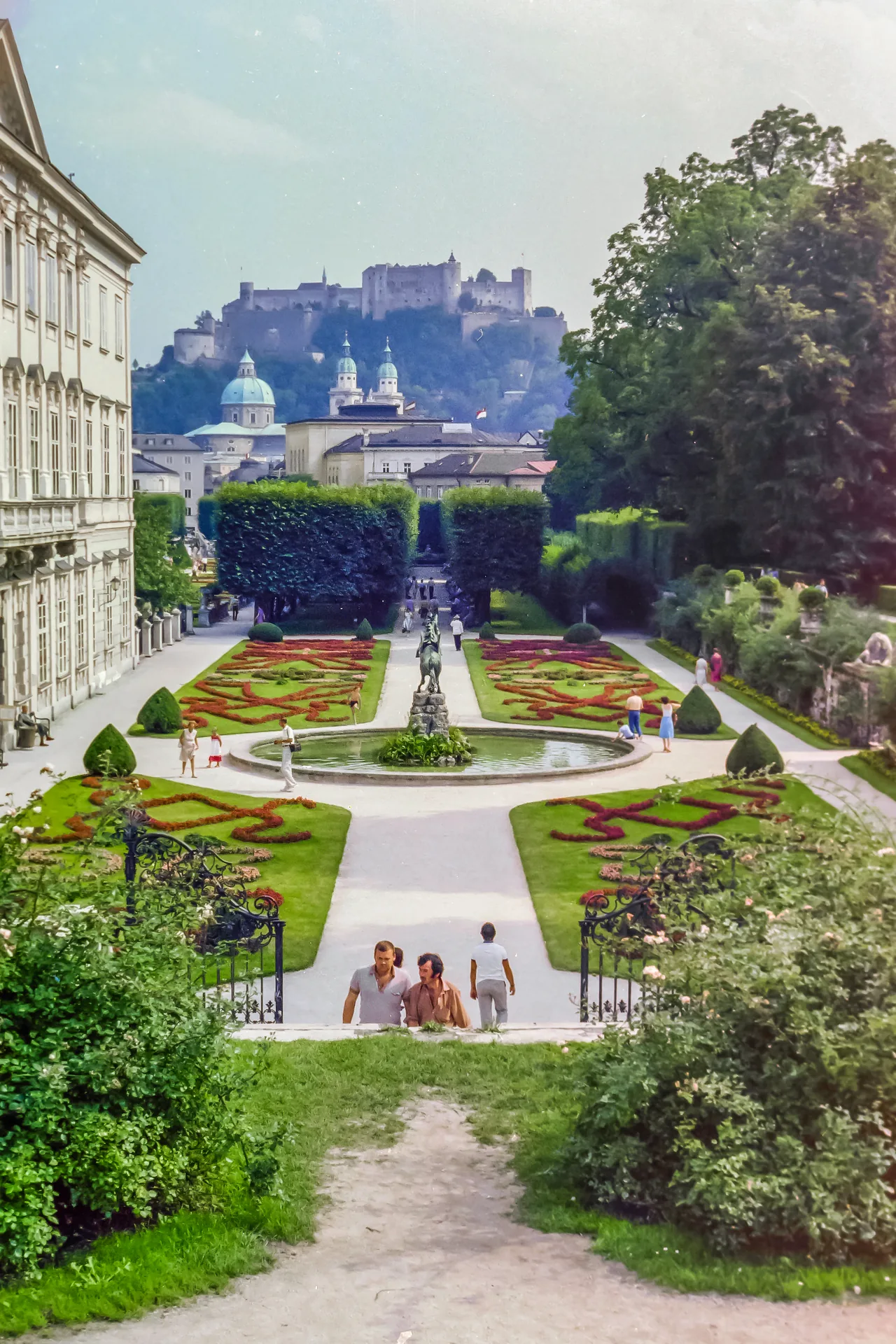
Mirabell Gardens offer formal planting, the Pegasus Fountain and a view towards the fortress. Entry is free. Seasonal access runs April–September, 05:00–23:00, and October–April, 07:00–22:00, but winter brings partial closures. Treat the gardens as a break between visits rather than the centrepiece of a winter day.
- Name
- Mirabell Gardens
- Location
- Mirabellplatz 3 5020 Salzburg Maps
- Site
- stadt-salzburg.at
- Hours
- 06:00–21:00
- Typical visit
- 30 minutes
- Essential fact
- The formal gardens beside Mirabell Palace in central Salzburg.
Raimond Spekking · CC BY-SA 4.0 · Edited
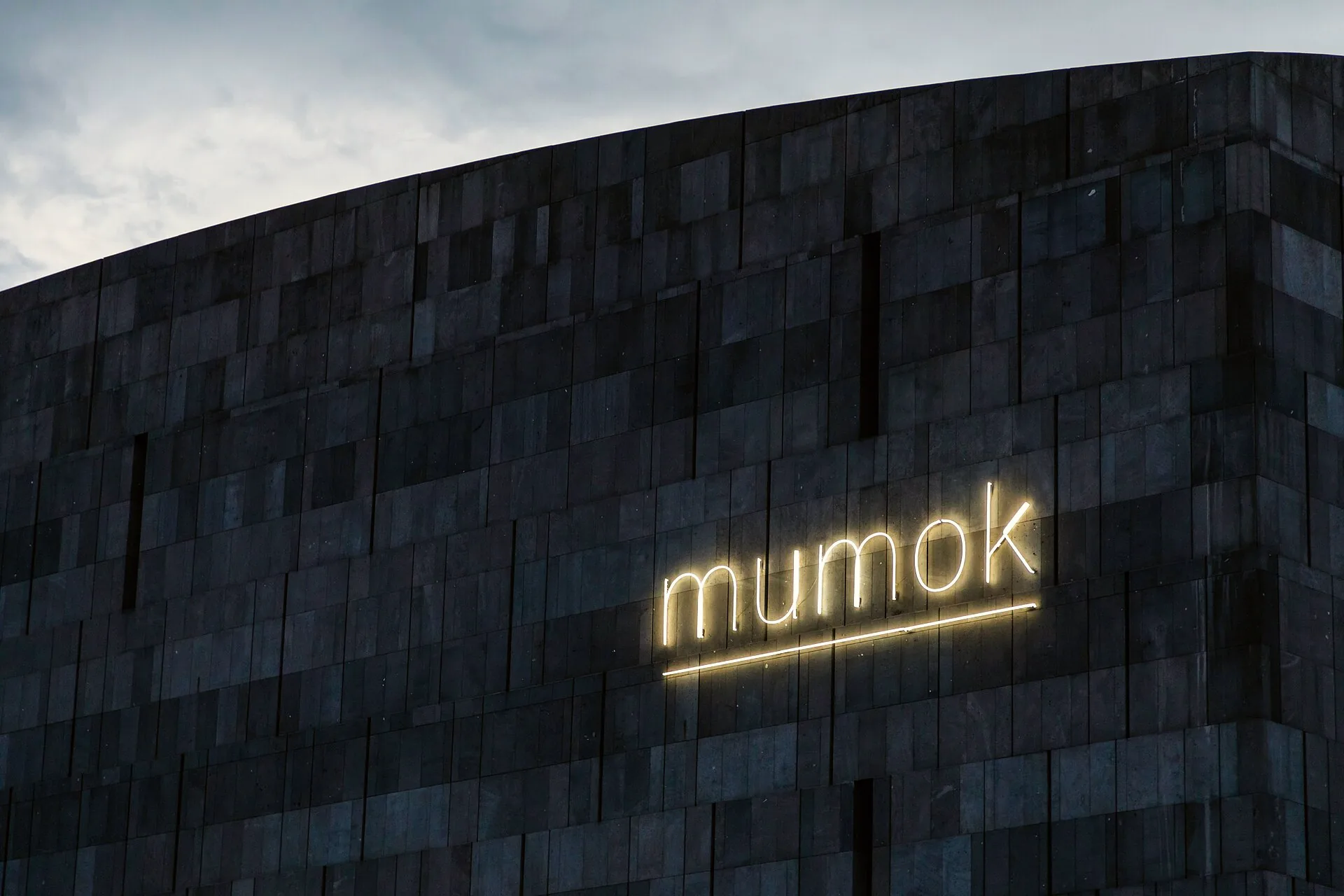
Vienna’s imperial architecture gives you a different scale of sightseeing, from the Hofburg in the centre to Schönbrunn farther out. MuseumsQuartier brings modern and contemporary art together, including the Leopold Museum and mumok, the museum of modern art. Its outdoor courtyards are free to enter and accessible around the clock, but museums, exhibitions and guided tours require tickets.
Dietmar Rabich · CC BY-SA 4.0 · Edited
Stay in Vienna’s centre for the imperial streets and major central landmarks, or in Neubau, beside MuseumsQuartier, for a base with cafés and neighbourhood evenings. Donaukanal, the Danube Canal, adds street art and waterside walking to the museum programme. Vienna nightlife areas help you choose between bar districts, live music and canal-side venues rather than treating the whole city as one evening destination.
Salzburg’s cafés and concerts can anchor an evening without moving far from the old town. Vienna has more ways to carry on after a museum visit, but substantial collections deserve time of their own. Leave space between indoor visits instead of stacking them into an uninterrupted circuit.
Salzburg
Pros
- Heritage walks can alternate with garden and riverside breaks.
- An old-town or opposite-bank base keeps the historic landscape close throughout the stay.
Cons
- Fortress and hill viewpoints involve ascent rather than level riverside walking.
- A smaller selection of major indoor visits gives you fewer ways to reshape several wet-weather days.
Vienna
Pros
- Individual collections and districts can give each day a distinct focus.
- Neighbourhood cafés and cultural venues let you continue beyond the central monuments.
Cons
- Substantial museum collections can occupy much of a day, leaving less time for other interests.
- Outlying palaces and attractions require travel beyond the central sightseeing clusters.
Daily costs and getting around
For equivalent casual dining in either city, allow roughly €15–€25 per person for a main course without drinks, and €3–€6 for a coffee. Takeaway counters tend towards the lower end, while a table in a prominent central café or restaurant moves spending upwards. Choosing by neighbourhood and service style matters more than assuming one city is always cheaper to eat in. Paid museum and palace interiors need their own part of the daily budget.
A central Salzburg base can keep many sightseeing days on foot. Its city ticket covers unlimited public transport within Salzburg itself, with validity beginning at first validation. Buying before you board avoids the higher onboard fare where tickets are sold by the driver or conductor.
Vienna’s city ticket covers buses, trams, the underground, Badner Bahn, ÖBB trains including the S-Bahn, and most regional buses within the city. It is useful when you mix central sights with outlying visits. Tourist services and private inter-city operators such as FlixBus, RegioJet and Westbahn are excluded.
Validate a Vienna paper ticket before your first journey. Its 24-hour validity starts then. Online tickets carry the selected start and validity period. The digital version is the cheaper purchase channel, so choose it if you are comfortable carrying the ticket on your phone.
A cheaper room farther out may add daily journeys and make afternoon returns less convenient. Vienna daily budgets put meals, accommodation, local travel and paid sightseeing together at different spending levels, helping you weigh the whole stay rather than the room alone.
UK arrivals and airport connections
Salzburg Airport is the simplest arrival point for Salzburg when your UK airport has a suitable direct flight. London Gatwick and London Stansted have year-round services. The wider UK choice is winter-seasonal, including routes from Manchester, Birmingham, Bristol, Edinburgh and other regional airports. A route useful for a winter break may not serve a spring or summer stay.
Munich and Vienna airports also offer UK arrivals for Salzburg, but each adds about 2–3 hours by public transport. That onward journey makes the departure-airport choice consequential on a short break: a convenient UK flight is not necessarily a convenient arrival for your hotel.
From Salzburg Airport, trolleybus 2 reaches Salzburg Main Station in about 23 minutes. It runs daily every 15–20 minutes, with a 20-minute interval on Sundays and public holidays. Trolleybus 10 reaches the city centre in about 15 minutes, running Monday–Saturday every 15 minutes. The Salzburg city ticket includes the airport, so it can cover your arrival and subsequent city journeys.
Vienna International Airport is the practical arrival point for Vienna, about 15 km from the centre. Airport buses provide city connections every 20 minutes and trains about every 30 minutes. The separately priced City Airport Train (CAT) runs non-stop to Wien Mitte in 21 minutes, but ordinary rail and bus services are alternatives, not merely feeders to the CAT.
Vienna’s city ticket does not include the airport journey. Budget separately for travel beyond the city boundary, and for airport buses or the CAT. Choose the connection that suits your accommodation’s location, rather than assuming all airport services arrive at the same city stop.
December and the summer festival
Vienna is the stronger December choice if you want substantial indoor art and palace visits, while Salzburg suits a break centred on outdoor heritage walks. Salzburg’s Cathedral Square and Residenzplatz bring the Christmas market into the old-town setting. Vienna’s Rathausplatz market sits before City Hall, but its season does not run as far beyond Christmas.
Winter walking is part of Salzburg’s appeal, but leave room for café stops and indoor visits rather than making gardens and viewpoints the whole day. Vienna makes it easier to build a varied programme around collections when outdoor time matters less to you.
The Salzburg Festival returns every July and August. Central hotel prices rise and rooms become harder to find during festival weeks, particularly in late July and August. Arrange accommodation well ahead for a festival stay, and decide whether proximity to performances matters enough to pay for a central address.
Combining Salzburg and Vienna
For a split stay, visit Salzburg first and Vienna second: begin with compact heritage walks, then widen the programme to art collections, palaces and different evening districts. Sleeping in both gives you evenings as well as sightseeing days, without making the return train the deadline for every visit.
From Salzburg Hauptbahnhof, the main station, a direct RJX service reaches Vienna Hauptbahnhof in about 2 and a half hours, station to station. There are two direct trains per hour during the day. Allow separately for reaching the departure station, waiting and getting from the arrival station to your accommodation.
ÖBB standard second-class single fares depend on purchase lead time and sales channel, and buying online costs less than buying at a machine or ticket office. Sparschiene discounted tickets are limited in number and tied to a specific train. They are available to any traveller up to 180 days ahead, with no further discounts applied.
A Salzburg day trip from Vienna is worthwhile for a targeted old-town visit if that is your main interest. For fortress views, garden breaks and an unhurried evening as well, an overnight stay is the better fit. The rail journey takes a substantial part of a day trip in each direction.
Which city fits your stay?
- Choose Salzburg for a short heritage-focused stay, riverside walks and little need for city transport.
- Choose Vienna for several days of museums, palaces and varied evenings, especially if indoor visits are your December priority.
- Choose Salzburg for December outdoor heritage and a market-focused post-Christmas stay within its market season.
- Let useful direct flights from your UK departure airport decide a close choice. Salzburg’s wider regional network is winter-seasonal.
- With time for overnight visits to both, take Salzburg first and Vienna second, moving from compact old-town sightseeing to a broader cultural programme.
If both cities suit your interests equally, favour the one with the simpler flight from your UK departure airport.
Sources & fact-checking
Checks against the sources below cover: opening hours, fares and charges, and services.
- Salzburger Christkindlmarkt — opening hours
- stadt wien marketing gmbh — opening hours
- Salzburg Festival — opening hours
- ÖBB — fares and charges
- Westbahn Management GmbH — fares and charges
- ÖBB-Personenverkehr AG — service
- ÖBB — service
- Salzburg Tourism — service
- What Vienna Airport offers its customers
- Flugplan Winter 2026/27
- Public Transportation
- City Airport Train (CAT) – Vienna Airport
- Salzburger Verkehrsverbund (SVV) — service
- Tickets – Wiener Linien
- MuseumsQuartier Wien — opening hours
- MuseumsQuartier Wien — fares and charges
- Wiener Linien — fares and charges
- 24 Stunden WIEN