Choose March or October for a walking-led visit to Seville, while August works only if you are happy to spend a substantial part of the day indoors. The Royal Alcázar’s gardens still deserve time, but a summer city break needs shorter outdoor visits and a cooled room you can return to easily.
Is August a good time to visit?
- Recommended months for walking
- March or October
- Hottest month by average daytime maximum
- July
- Coldest month
- January
- Wettest month
- December
August is too hot for a city break built around long, exposed walks. It can suit a short visit with one main sight each morning, a substantial indoor pause and a modest evening outing. The trade-off is not simply carrying more water: you give up outdoor sightseeing time to make the visit comfortable.
Move your dates if gardens, wandering between neighbourhoods or spending most of the day outside are your main reasons for travelling. July and August are the least suitable choices for that kind of trip. If heat tires you quickly, a cooler month gives you more freedom to linger rather than retreat.
A lower room price can make summer tempting, but it only helps if the room provides effective cooling and is easy to reach during the day. Treat that retreat as part of the visit, not an interruption you hope to avoid. Travellers content with fewer sights and longer rests have a better reason to choose August than those trying to fit in everything.
August weather and the cooler alternatives
| Month | Maximum °C | Minimum °C | Rainfall mm | Climate-based verdict |
|---|---|---|---|---|
| January | 16.0 | 5.7 | 66 | Mixed: cool, rain possible |
| February | 18.1 | 6.7 | 50 | Good fit: mild days |
| March | 21.9 | 8.7 | 36 | Good fit: comfortable walking |
| April | 23.4 | 10.5 | 54 | Good fit: warmth, some rain |
| May | 27.2 | 14.0 | 30 | Mixed: warmer walks |
| June | 32.2 | 17.8 | 10 | Mixed: heat limits walks |
| July | 36.0 | 20.0 | 2 | Avoid long walks: peak heat |
| August | 35.5 | 20.1 | 5 | Avoid long walks: sustained heat |
| September | 31.7 | 17.6 | 27 | Mixed: still hot |
| October | 26.0 | 13.6 | 68 | Good fit: warmth, rain risk |
| November | 20.2 | 9.1 | 91 | Mixed: wetter days |
| December | 16.6 | 6.2 | 99 | Mixed: cool and wet |
August’s warmth extends into the night, so an evening outing is not automatically a cool one. Dry weather makes rain less likely to interrupt sightseeing, but it does not make an exposed garden or square comfortable. Plan around shelter and rest rather than treating clear skies as an invitation to stay outside all day.
March offers a gentler setting for sustained walking. October keeps more warmth but brings a greater chance of rain, so it suits a visit with indoor alternatives. September is a compromise, not a clean escape from summer heat. For the crowd and event trade-offs behind moving your dates, the best time to visit Seville adds the wider seasonal picture.
Leave enough flexibility to shorten an outdoor outing when conditions feel uncomfortable. For a walking-led trip, choose a milder month so that gardens and time between sights can remain part of the day rather than being squeezed around a long indoor rest.
Sightseeing around the afternoon heat
Make the early morning your main outdoor sightseeing period, rather than saving it for the afternoon. August’s daily temperature cycle is coolest overnight and in the early morning, rises to a hot afternoon peak, then falls in the evening. This hourly pattern covers historical observations and model reconstructions from 1 January 1980 to 31 December 2016.
Choose one main outdoor visit, such as the Royal Alcázar’s gardens, and leave room to enjoy it without adding a long walk afterwards. Opening times still govern when a visit can begin: early morning is also useful for a shorter walk before entering a sight. Follow the visit with lunch and a substantial pause in your cooled accommodation.
Shade outdoors is not a substitute for an indoor break with effective cooling. A shaded courtyard can reduce direct sun exposure, but you are still outside in hot air. Drink water regularly, rest and shorten exposed walks rather than pressing on to complete a list of sights. Keep water accessible, not packed away until the next meal.
Later, choose a shorter walk in Santa Cruz, Seville’s old Jewish quarter, if conditions suit. Its narrow lanes make a compact outing possible without committing to a long cross-city walk. Keep the evening outing optional if it still feels too hot. If reducing outdoor visits would spoil the reason for your trip, moving to a cooler month is the better choice.
Accommodation value in the heat
A cheaper room is good value only if it supports the afternoon retreat you need. Effective air conditioning matters more than extra floor space, and a location near your main sights makes returning indoors easier. A distant room may save money while adding an unwelcome journey in the heat.
Compare the saving with the visit you actually want. If long walks and gardens are the priority, paying less for accommodation does not compensate for losing much of the outdoor day. If you enjoy a slower break with fewer outings, a comfortable room becomes useful time well spent rather than merely a place to sleep.
For room ranges and the rest of your spending, Seville accommodation costs and daily budgets helps you weigh the whole trip, rather than letting one attractive nightly rate decide your dates.
Summer access and August holidays
- Plan the Royal Alcázar around its summer season, 1 April–30 September: the published visitor-opening window is 09:30–19:00, with visitor clearing beginning at 19:45.
- Place the Museum of Fine Arts earlier in the day, before your long afternoon rest.
- Allow for the Assumption public holiday on 15 August each year.
- Keep meal choices flexible: some independent neighbourhood shops, bars and restaurants close for August holidays, while central and tourist-facing businesses are more likely to remain open.
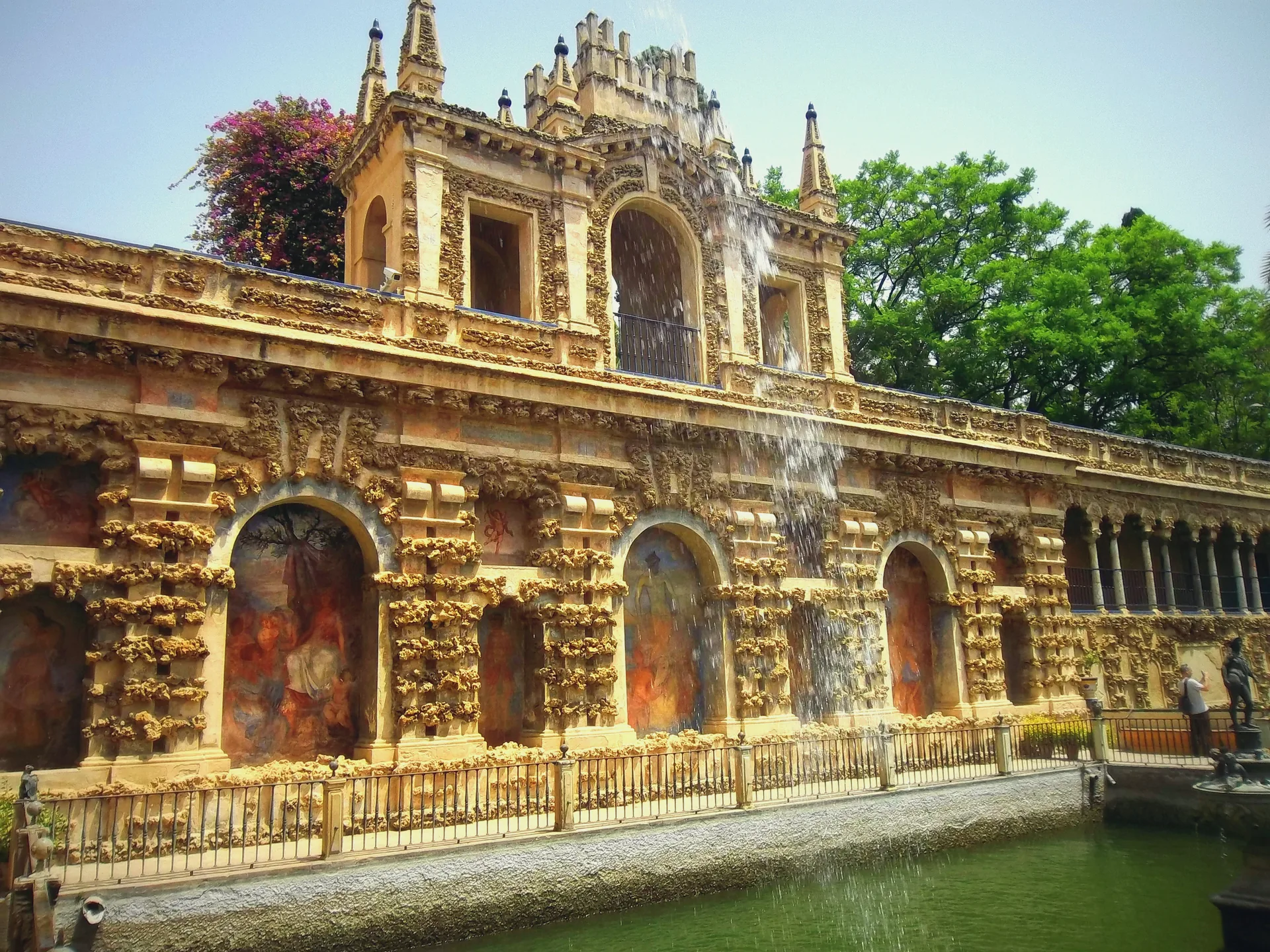
The Royal Alcázar combines decorated palace rooms with gardens of ponds, planting and pavilions. Give the gardens the cooler part of your visit rather than treating them as an afternoon add-on. The palace-and-garden combination includes outdoor time, but moving between its different spaces does not replace a proper cooled break.
Playerest · CC BY-SA 2.0 · Edited
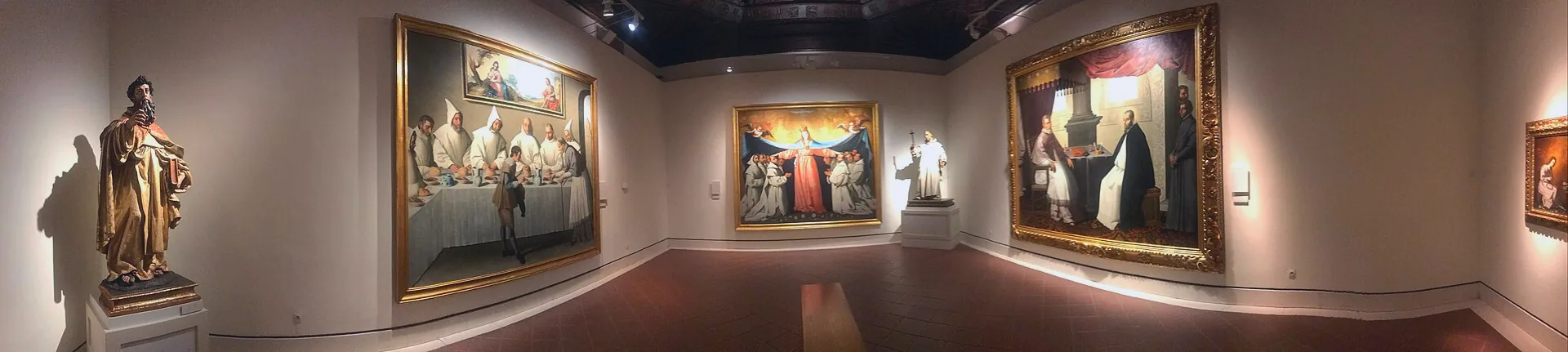
Seville’s Museum of Fine Arts offers an indoor painting-gallery visit in a former convent, with particular depth in Spanish religious art. Works by Murillo and Zurbarán give it a reason to feature in your day beyond escaping the sun. Allow yourself time to look at the paintings rather than arriving near the end of the visiting day.
Marsupium · CC0 · Edited
Holiday closures are uneven, not a citywide shutdown. If a particular neighbourhood bar or restaurant is closed, choose another nearby rather than crossing the city for a single meal. Central areas give you more alternatives, which is especially useful when you want lunch followed by a straightforward return to your room.
Sources & fact-checking
Checks against the sources below cover: opening hours and key figures.