July in Seville is worth considering if you can put your walks in the morning and evening and spend the hottest part of the day indoors. If your dates are flexible and you want to stay outside longer, choose September instead. July’s dry weather and potentially lower room rates are useful, but they do not make an afternoon of exposed sightseeing comfortable.
Is July worth visiting?
- July verdict
- Good for short morning and evening outings; poor for all-day walking
- Better nearby month
- September for longer daytime walks within June–September
- Highest average daily high
- July, 36.0°C (Sevilla Airport, 1981–2010)
- Lowest average daily high
- September, 31.7°C (Sevilla Airport, 1981–2010)
- Lowest average daily low
- June, 18.0°C (Sevilla Airport, 1981–2010)
- Most rainy days
- September, 2.4 days with at least 1 mm (Sevilla Airport, 1981–2010)
- Most city hotel guests
- September, 356,812 (Seville municipality, June–September 2025)
The deciding trade-off is how much of your trip you want to spend outdoors in daylight. July suits a short break built around an early visit, a long indoor pause and an evening return to the streets. It is a poor choice for uninterrupted walks between monuments or an exposed inland day trip. September is gentler by the daytime temperature average, although it is not a cool-weather substitute.
A lower ordinary-date room estimate in July may leave more to spend elsewhere, but it cannot buy back comfortable afternoon walking hours. If you must travel in July, treat the middle of the day as part of the plan rather than an interruption to it; if you can choose dates, let the kind of sightseeing you enjoy determine the month.
June to September: heat, rain and visitors
| Month | High | Low | Rain days | Hotel guests | Relative pressure | Central double/night | Verdict |
|---|---|---|---|---|---|---|---|
| June | 32.2°C | 18.0°C | 1.3 | 330,131 | Lowest of four | €90–140 | Mixed: hot afternoons |
| July | 36.0°C | 20.3°C | 0.2 | 341,396 | Middle of four | €75–120 | Mixed: severe heat |
| August | 35.5°C | 20.4°C | 0.5 | 335,819 | Lower of four | €75–120 | Avoid long walks: heat |
| September | 31.7°C | 18.2°C | 2.4 | 356,812 | Highest of four | €100–160 | Best of four: milder days |
Allow for hotter afternoons than the monthly average. Dry July days offer little relief from direct sun, so use the morning for longer walks and keep an indoor option for later.
At Sevilla Airport, the highest July monthly mean of daily maximum temperatures in the 1951–2026 series was 39.4°C in July 2022. A whole month of unusually hot days can limit even morning walks. Shorten your outdoor plans when conditions are severe.
The 2025 hotel-guest figures cover stays across Seville municipality. At the Alcázar and Cathedral, follow your admission time rather than using the citywide total to guess how long you will stand outside. Central room estimates vary with weekends, events and the property, so compare like-for-like rooms on your dates.
July crowds and timed entry
Seville is manageable in summer if you limit your time in exposed streets, rather than trying to cover every sight on foot at midday. The Royal Alcázar rewards an early visit for its palaces and gardens, but reaching its Puerta del León entrance still means allowing for time outdoors. The city’s hotel-guest total is no substitute for an admission queue estimate.
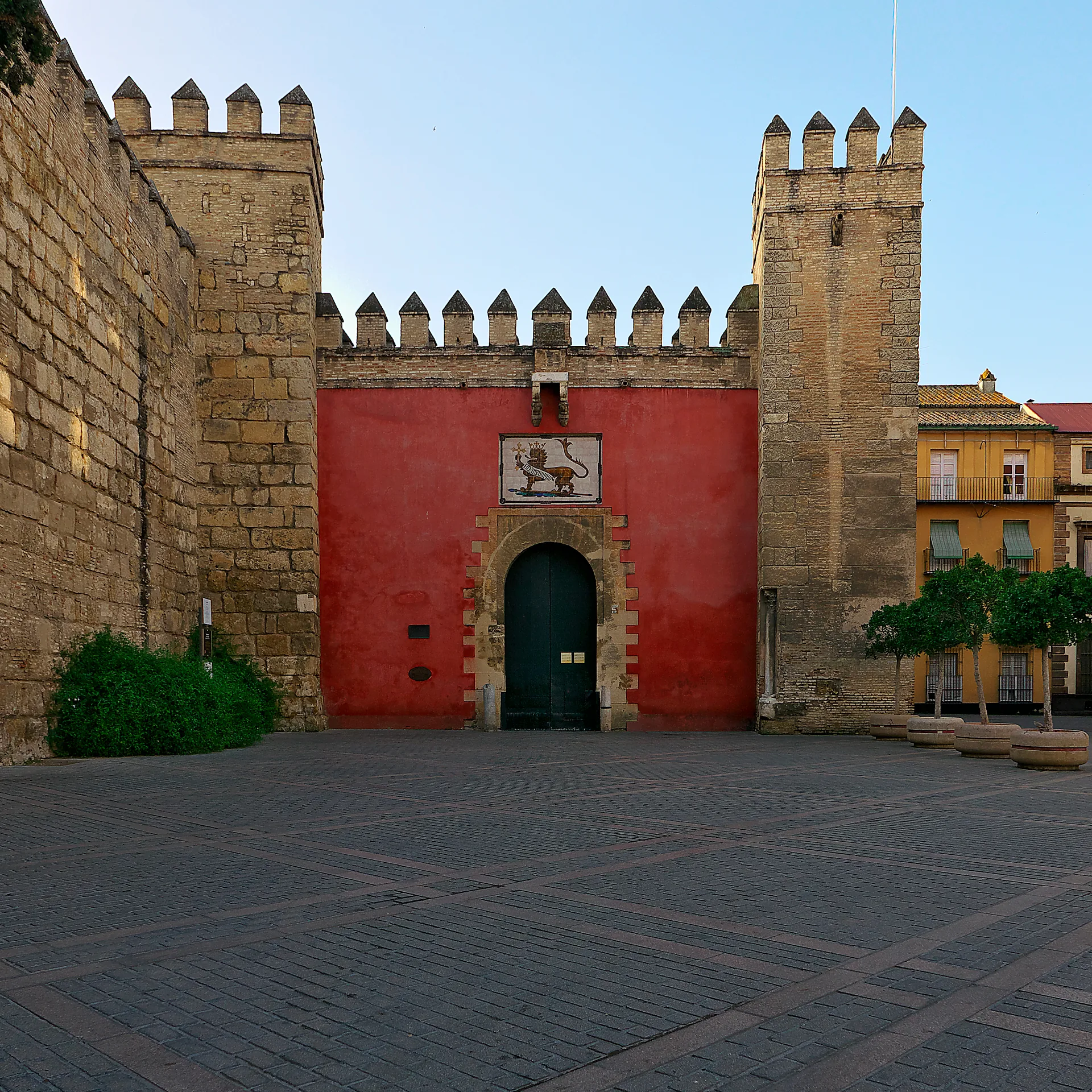
José Luis Filpo Cabana · CC BY 4.0 · Edited
The Alcázar sells timed tickets online, with entry in half-hour sessions. Its ticket office opens at 09:00 and offers same-day tickets only for sessions still available. Online sessions can sell out beforehand. Choose the session you can actually reach, then leave room around it for security and the heat outside, rather than assuming an empty approach because hotel guest numbers are lower than in September.
Seville Cathedral is worth time for its immense Gothic interior, but its admission is also tied to the time printed on your ticket. Advance booking through its official portal is recommended, while the Puerta del Príncipe ticket office is an alternative, subject to limited capacity. An indoor visit does not remove the outdoor wait before admission, so do not stack both sights at awkward midday times.
How to spend a July day
- Visit the Royal Alcázar within its July daily opening window of 09:30–19:00. A ticket admits you for its assigned session, not whenever you arrive.
- On an official heat-alert day, stay indoors from midday until late afternoon, but if you must go out, seek shade, cover your head, wear light-coloured clothing and carry water.
- During a heat alert, drink plenty of water, avoid alcohol and strenuous activity in the hottest hours, and spend the break somewhere cool or air-conditioned. Take particular care of children, older visitors and people with chronic illnesses. Never leave anyone in a closed car.
Start with an outdoor walk while the streets are more usable, then make the Royal Alcázar or another indoor visit the main appointment. Reserve the hottest part of an ordinary July day for a proper indoor pause rather than repeatedly crossing the centre in direct sun. A seated lunch and time indoors make more sense than trying to squeeze in another exposed square.
Wear light clothing and take a hat or other head covering for the stretches between shelter. Carry water even for a short city walk. On an alert day, the stronger advice in the list takes precedence over an ordinary sightseeing plan: move the walk to another part of the day instead of merely slowing your pace.
Return to the streets in the evening for a meal or a shorter wander. An inland excursion built around open ground is not a cool escape from Seville, so shorten the exposed part or leave it for a gentler season. If you have only one day, choosing fewer stops gives you time to enjoy the places you do enter without making the afternoon a forced march.
July or another summer month?
Avoid July and August if you want full-day outdoor sightseeing. The July heat makes long midday walks particularly demanding, and August remains very hot even though its daytime average is slightly lower. Both suit a trip focused on early visits and evenings better than a continuous walking route or an exposed inland excursion.
June gives you somewhat gentler daytime conditions and the lowest hotel-guest total of these four months in the documented year, yet afternoons can still be hot. If you enjoy evening outings and can rest indoors during the day, July may be a reasonable choice when your dates are fixed, especially if you find a lower ordinary-night room rate at a suitable central property. A room saving is conditional on your dates and location, not a reason to schedule longer walks.
September is the strongest of the four for someone who wants more daytime walking, though its average is still warm. Its 2025 citywide hotel-guest count leads this summer comparison, so an early September visit is not a promise of empty sights, because that monthly count says nothing about the queue on a particular morning. The extra rainy days compared with July may also call for a more flexible outdoor plan.
If you can move beyond these four months, the best time to visit Seville across the year offers cooler possibilities. For a summer-only choice, decide first whether you want extended daytime walks or mainly a morning visit followed by a late meal and evening streets, then compare ordinary-date rooms on that basis.
Sources & fact-checking
Checks against the sources below cover: key figures, opening hours, and services.
- Instituto Nacional de Estadística (INE) — key figures
- Patronato del Real Alcázar de Sevilla — opening hours
- Agencia de Emergencias de Andalucía (EMA), Junta de Andalucía — service
- Standard climate values: Sevilla Aeropuerto
- Valores extremos. Sevilla Aeropuerto
- Patronato del Real Alcázar de Sevilla — service
- Chapter of Seville Cathedral — service
- Patronato del Real Alcázar y Casa Consistorial de Sevilla — key figures