Choose June for Seville if you can keep outdoor sightseeing to the morning and evening, with a substantial indoor break between them. It is a more manageable summer choice than July or August, but March outside Holy Week or October is better for long walking days. The Real Alcázar rewards an early visit. Quieter summer streets do not make its gardens comfortable throughout the afternoon.
Is June too hot?
- Summer compromise
- June, with shorter outdoor visits
- Walking-led visit
- March outside Holy Week, or October
- Hottest period
- July–August; July has the highest mean maximum
- Coldest month
- January
- Wettest month
- December
- Spring crowd peaks
- Holy Week and the April Fair
June is too hot for an uninterrupted day of outdoor sightseeing, rather than too hot for every visit. You need to be happy shortening walks and returning indoors instead of pressing on through the afternoon. If heat affects you strongly, or your main pleasure is wandering for hours, choose a cooler month.
June offers a trade-off: generally lighter citywide summer crowds and accommodation demand below spring festival peaks, but more heat than a walking-led break needs. Avoid July and August if heat is already your concern. The best time to visit Seville also depends on whether you want spring celebrations or quieter sightseeing, not simply the lowest room rate.
June weather and the surrounding seasons
| Month | Maximum °C | Minimum °C | Rain mm | Daylight h:min, 2026 | Crowds | Sightseeing verdict |
|---|---|---|---|---|---|---|
| January | 16.0 | 5.7 | 66 | 306:14 | Low; holiday peaks | Mixed: cool, wet |
| February | 18.1 | 7.0 | 50 | 300:49 | Low | Good: mild days |
| March | 21.9 | 9.2 | 36 | 368:17 | Rising; Holy Week peak | Good: mild walking |
| April | 23.4 | 11.1 | 54 | 392:34 | High; festival peaks | Good: warmth, showers |
| May | 27.2 | 14.2 | 30 | 437:48 | High | Mixed: growing heat |
| June | 32.2 | 18.0 | 10 | 440:29 | Lighter summer pressure | Mixed: hot afternoons |
| July | 36.0 | 20.3 | 2 | 449:11 | Quieter | Avoid: intense heat |
| August | 35.5 | 20.4 | 5 | 422:50 | Quieter | Avoid: intense heat |
| September | 31.7 | 18.2 | 27 | 375:09 | Rising | Mixed: lingering heat |
| October | 26.0 | 14.4 | 68 | 350:36 | High | Good: warmth, rain |
| November | 20.2 | 10.0 | 91 | 307:20 | Easing | Mixed: wetter days |
| December | 16.6 | 7.3 | 99 | 299:13 | Low; holiday peaks | Mixed: cool, wet |
June moves beyond May’s warmth into heat that changes how you spend the day. The step up to midsummer makes it worth choosing June if summer is your only opportunity. October offers a better balance for extended walks, though you should allow flexibility for rain. Spring and autumn draw more visitors. The cooler weather does not also promise empty sights.
These averages describe the climate, not a forecast for your dates. Individual days can be hotter than the monthly mean maximum. The minimum describes the overnight low, not the temperature you can expect when sitting outside at dinner.
Long daylight gives you room for evening walks, but plan outdoor time around the heat and each sight’s visiting hours. Sunrise-to-sunset duration includes cloudy weather, unlike actual sunshine. Use the evening for a short walk or a meal outside, and for palace gardens, choose an admitted visiting time in the more manageable part of the day.
Crowds, rooms and June holidays
Quieter summer streets do not mean easy entry to the Real Alcázar or Seville Cathedral. June still brings long queues and strong ticket demand at the principal sights. The cathedral’s vast Gothic interior makes it a different visit from the Alcázar’s palace rooms and gardens, so leave room to enjoy each rather than assuming you can enter both whenever you pass.
Accommodation generally offers better value than during Holy Week or the April Fair, when festival demand puts pressure on rooms. June still attracts visitors, so it tends to cost more than quieter midsummer. Property and date matter more than a promise of summer bargains. When weighing visiting Seville in July for a cheaper stay, set that saving against the greater heat and the time you will want to spend indoors.
Corpus Christi falls on the Thursday 60 days after Easter Sunday, with Seville observing it that day. Its procession brings a short-lived surge of locals and visitors into the historic centre. If quiet streets are a priority, choose dates away from the celebration, although the procession crowd is concentrated around the event rather than lasting throughout the day.
Sightseeing around the heat
- Choose a Real Alcázar entry within its April–September visiting window of 09:30–19:00, and prefer a morning slot for the gardens.
- Reserve general admission online for a specific date and time, then arrive within the entry window printed on your ticket.
- Enter through the Lion Gate. A timed admission ticket gives you entry, not a separate guided tour.
- Use the on-site ticket office only if you can accept limited same-day availability, rather than depend on getting a particular time.
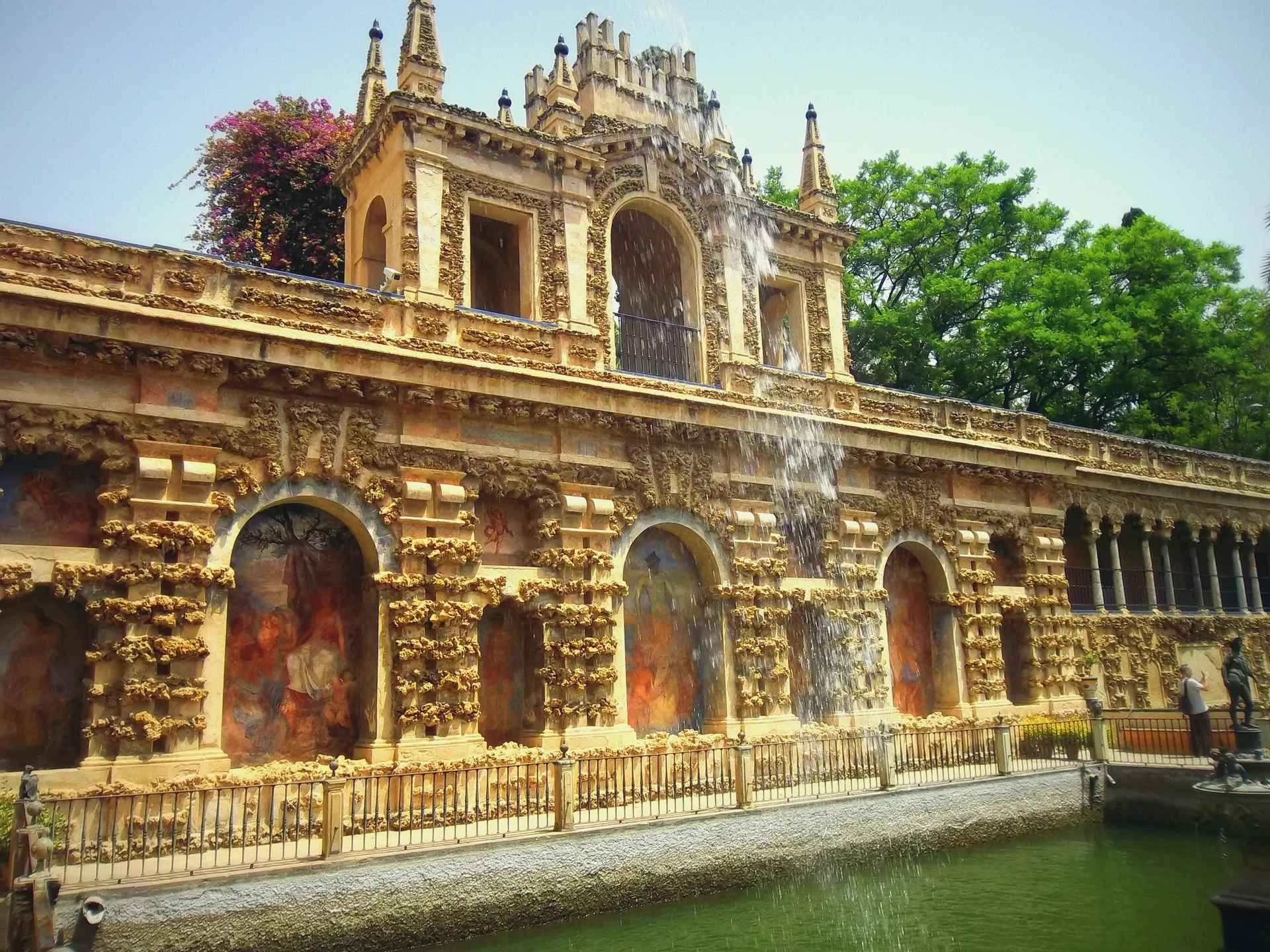
The Real Alcázar deserves time for its decorated palace interiors, courtyards and extensive gardens, not just a quick stop between walks. Give the palace rooms as much attention as the gardens. A morning visit leaves room to pause over the decoration and explore outside before returning indoors for the afternoon.
After that morning visit, return indoors for a substantial afternoon break. Lunch followed by a rest at your accommodation is a workable choice, especially if you plan to go out again in the evening. An indoor gallery, such as the Museum of Fine Arts with its collection of Spanish painting, offers another way to spend time away from exposed streets, but it need not replace rest if you are tired.
A less crowded afternoon can still be the wrong time for an outdoor visit. Do not choose a garden or an exposed walk simply because you expect fewer people. Save another short walk or time outside over dinner for the evening, while remaining ready to head indoors if the heat is still uncomfortable.
Drink water regularly, keep outdoor stretches short and take breaks before you feel worn out. Choose accommodation with effective cooling and a location that makes a daytime return easy. That practical benefit may matter more than a small saving on a room farther from the places you want to visit.
If your plans depend on strenuous climbs, lengthy exposed walks or long outdoor day trips, choose a cooler season instead. The same applies if you are particularly sensitive to heat: dividing the day helps, but it does not turn June into mild weather. Leave enough space between visits to enjoy the palace, a meal and an evening outside without having to push through the hottest part of the day.
Sources & fact-checking
Checks against the sources below cover: key figures, opening hours, and services.